
To protect leather boots from water saturation, a dedicated wax-based conditioner and waterproofing treatment, such as Nikwax, is highly recommended. These products work by impregnating the leather fibers to prevent them from absorbing water like a sponge, while simultaneously conditioning the material to maintain its flexibility and prevent cracking.
The goal is not just to create a waterproof barrier, but to do so while preserving the leather's natural breathability and structural integrity. A simple sealant can trap moisture inside, while a proper treatment maintains the material's performance and extends its life.
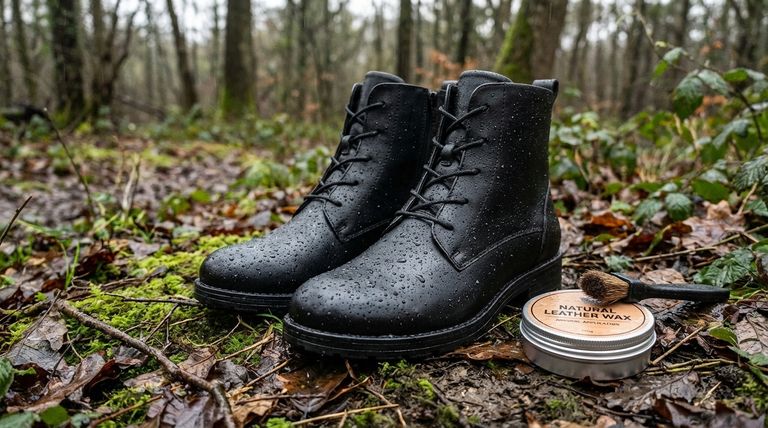
Why Untreated Leather Fails in Wet Conditions
Understanding how water damages leather is the first step toward protecting it effectively. Leather is a natural, porous material that requires specific care.
The "Sponge Effect" of Water Saturation
Untreated leather is highly absorbent. When it becomes saturated with water, its fibers swell and the material loses its supportive structure, becoming heavy and pliable.
This also eliminates the air pockets trapped within the leather, destroying its natural insulating properties and leaving your feet cold and damp.
The Drying Problem: Cracking and Stiffness
The real damage occurs when waterlogged leather dries. As water evaporates, it draws out the leather's natural oils and fats that keep it supple.
This process leaves the leather stiff, brittle, and highly prone to cracking, especially in flex points like the ankle and toe box. This damage is often irreversible.
The Breathability Factor
One of leather's greatest strengths is its ability to breathe, allowing sweat vapor to escape. This is critical for foot comfort and health during prolonged wear.
Using the wrong type of waterproofing, like a heavy grease or a plastic-like sealant, can clog these pores. This traps moisture inside the boot, leading to discomfort and blisters.
The Correct Application Process for Maximum Protection
The effectiveness of any waterproofing product depends entirely on proper preparation and application. Simply applying a product to dirty boots will yield poor results.
Step 1: Thorough Cleaning
You must begin with a clean surface. Use a brush to remove all caked-on mud, dust, and grime. If necessary, use a damp cloth or a dedicated leather cleaner.
Applying a treatment over dirt will trap abrasive particles against the leather and prevent the product from penetrating the pores evenly.
Step 2: Apply to Clean, Damp Leather
Most modern wax-based treatments are designed to be applied to damp leather. This is because the water already present in the material helps draw the waterproofing agents deep into the fibers for more thorough protection.
Check the instructions on your specific product, but this is a common best practice for water-based formulas like Nikwax.
Step 3: Natural Drying is Crucial
After applying the treatment, you must allow the boots to dry slowly and naturally at room temperature.
Never use a direct heat source like a radiator, campfire, or hairdryer. Intense heat can cook the leather, causing it to shrink and crack permanently.
Understanding the Trade-offs
Choosing a waterproofing method involves balancing competing priorities. There is no single perfect solution for every boot or situation.
Waterproofing vs. Breathability
This is the central challenge. The most waterproof treatments (like heavy greases or oils) tend to be the least breathable. Modern wax-based formulas offer the best compromise.
They provide excellent water resistance by coating the leather fibers but leave the pores between them open enough to allow some moisture vapor to escape.
Impact on Appearance
Be aware that nearly any conditioning or waterproofing treatment will slightly darken the color of your leather.
This effect is usually most noticeable on lighter-colored leathers. It's always wise to test the product on a small, inconspicuous area first if the exact shade is important to you.
The Need for Reapplication
No waterproofing treatment is permanent. It will wear away with use, abrasion, and repeated wetting and drying cycles.
Plan to re-treat your boots regularly, especially after heavy use in wet conditions or after a thorough cleaning.
Making the Right Choice for Your Boots
Your choice of treatment should align with your boots' material and your primary goal.
- If your primary focus is maximum protection for hiking or work boots: A high-performance wax-based proofer like Nikwax provides the best balance of robust water resistance, conditioning, and breathability.
- If your primary focus is light water resistance for casual boots: A simple silicone-free waterproofing spray can offer protection from light rain without significantly altering the leather's appearance.
- If your boots are already old and stiff: You must first use a dedicated leather conditioner to restore oils and flexibility before applying a waterproofing product.
Properly cleaning and treating your leather boots is the single most important step you can take to ensure they protect your feet for years to come.
Summary Table:
| Key Factor | Recommendation | Why It Matters |
|---|---|---|
| Best Product Type | Wax-based conditioner (e.g., Nikwax) | Impregnates leather fibers to repel water while conditioning. |
| Primary Goal | Balance water resistance with breathability | Prevents water saturation without trapping moisture inside. |
| Application Tip | Apply to clean, damp leather | Helps the treatment penetrate deeply for thorough protection. |
| Maintenance | Re-treat regularly after heavy use or cleaning | No waterproofing treatment is permanent; it wears away over time. |
Need to source high-quality, durable leather boots for your customers?
As a large-scale manufacturer, 3515 produces a comprehensive range of footwear for distributors, brand owners, and bulk clients. Our production capabilities encompass all types of durable shoes and boots, built to perform in demanding conditions.
Partner with us to provide your customers with reliable footwear.
Contact our team today to discuss your manufacturing needs and how we can help you deliver superior products.
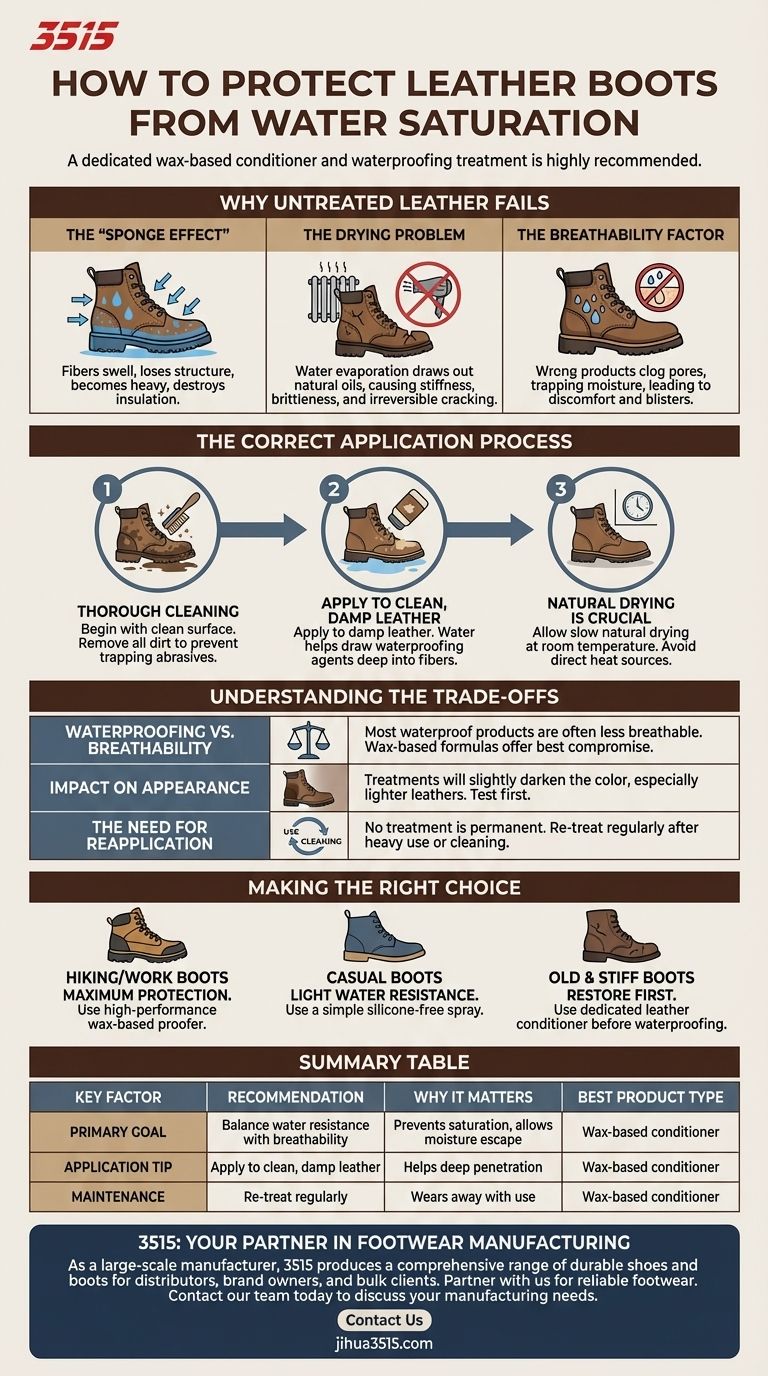
Visual Guide
Related Products
- Wholesale Waterproof Tactical Boots Custom Suede & High-Traction Soles
- Durable Waterproof Rain Boots | Custom Manufacturer for Wholesale & Brands
- Factory Direct Wholesale Rain Boots Durable Waterproof & Fully Customizable
- Premium Wholesale Waterproof Safety Boots High Performance Protection for Industrial Markets
- High Performance Fire-Retardant Waterproof Safety Boots
People Also Ask
- What waterproof technology is used in tactical boots? Unlock All-Weather Performance & Protection
- What are the advantages and disadvantages of waterproof tactical boots? A Guide to the Key Trade-Offs
- What is the significance of waterproof functionality in tactical boots? Essential for Health & Performance
- What is the role of professional 3D medical imaging software in optimizing tactical boot design and performance?
- What features enhance breathability and comfort in tactical boots? A Guide to Superior Footwear Performance





