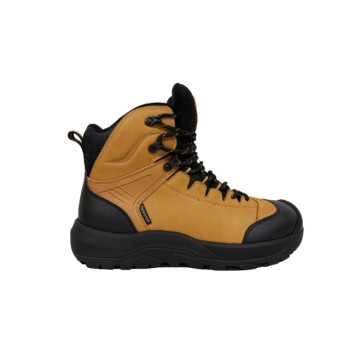
The primary materials in winter-specific cycling shoes are a system of advanced waterproof/breathable membranes like Gore-Tex, thermal insulation to trap heat, and rugged outer shells. These are combined with specialized closure systems like Boa dials and weatherproof zippers, all designed to create a sealed barrier against cold, wind, and moisture while allowing sweat to escape.
The effectiveness of a winter cycling shoe does not come from a single material, but from a deliberate system of construction. It combines a waterproof outer layer, an insulated core, and a sealed design to create a microclimate that keeps your feet warm and dry.
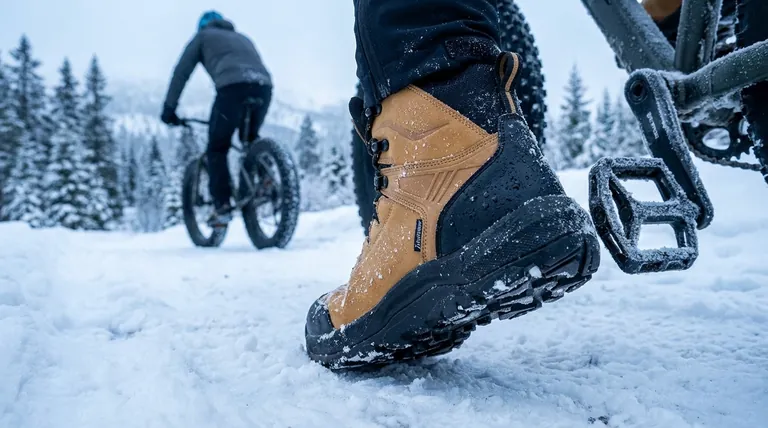
The Core Components of a Winter Cycling Shoe
A winter shoe is best understood as a multi-layered defense system. Each component serves a distinct purpose in protecting your feet from the elements, and their integration is what determines the shoe's overall performance.
The Waterproof and Breathable Membrane
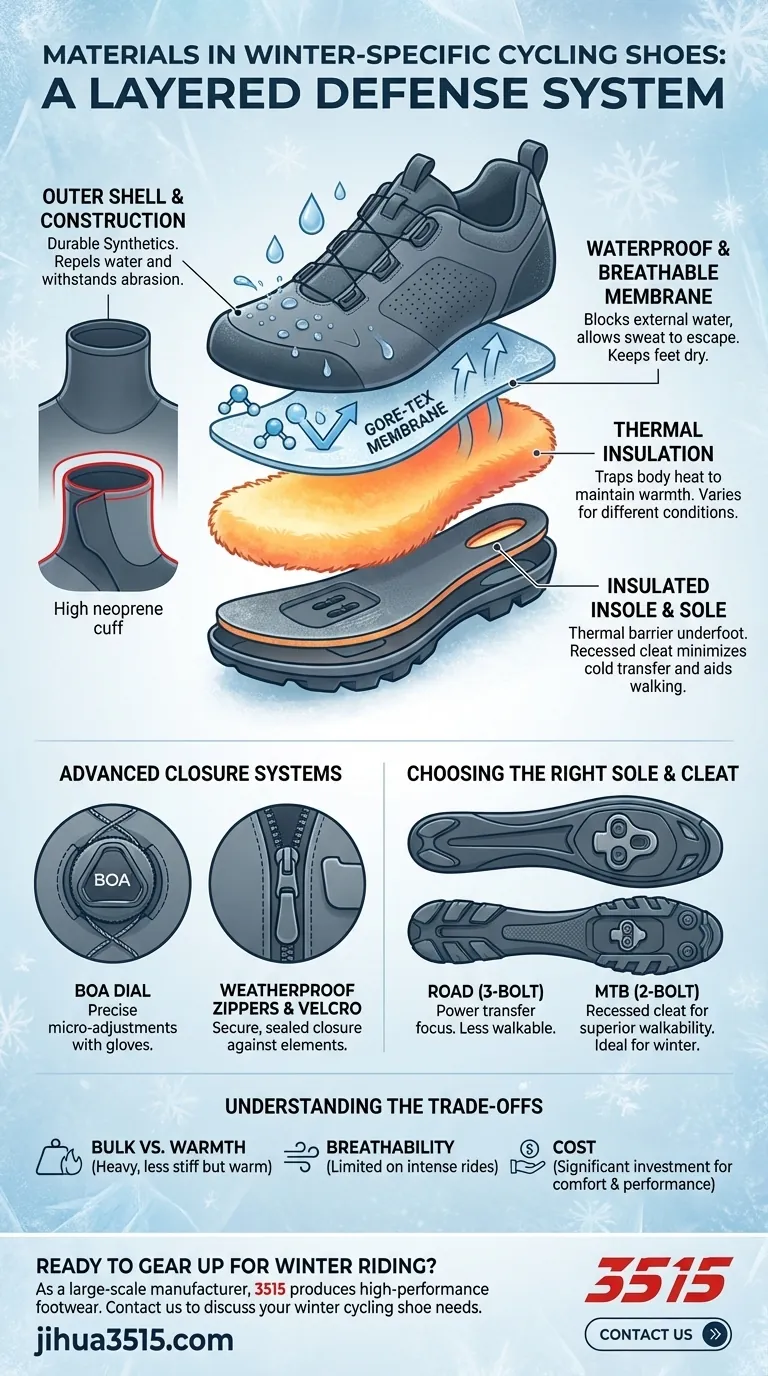
The heart of any serious winter shoe is its inner membrane. This is a specialized layer, often made from materials like Gore-Tex, that is engineered to be waterproof from the outside while remaining breathable from the inside.
This technology allows water vapor (sweat) to escape, preventing your socks from becoming damp and cold from your own perspiration. At the same time, it completely blocks larger water molecules from rain, snow, and road spray from getting in.
Thermal Insulation
Beneath the outer shell and membrane lies the thermal insulation. This material's job is simply to trap warm air, creating a buffer between your foot and the cold exterior of the shoe.
The amount and type of insulation determine the shoe's temperature rating. More heavily insulated shoes are designed for deep winter conditions, while lighter versions are suitable for cooler transitional seasons.
The Outer Shell and Construction
The exterior of the shoe is its first line of defense. It's typically made from durable, synthetic materials that can withstand abrasion and repel water.
Crucially, high-quality winter shoes feature a continuous tongue or a high neoprene cuff. This design eliminates the gaps found in traditional shoe construction, creating a seamless barrier that prevents water and wind from entering around the ankle and instep.
Advanced Closure Systems
Laces are rarely used on winter shoes because they absorb water, freeze, and are nearly impossible to adjust with gloves on. Instead, winter shoes use systems designed for security and ease of use in harsh conditions.
Boa dials are extremely popular because they allow for precise, micro-adjustments with a simple twist, even with numb or gloved hands. Weatherproof zippers and large Velcro tabs are also common, providing a secure and sealed closure.
Insulated Insoles and Soles
A significant amount of heat is lost through the bottom of the foot, especially where the metal cleat bolts to the sole. Winter shoes combat this in two ways.
First, they use insulated insoles to add a thermal barrier directly under your foot. Second, the sole itself is constructed to isolate the cleat area, minimizing the direct transfer of cold from the pedal into the shoe.
Choosing the Right Sole and Cleat System
The choice of sole is a critical decision that impacts both performance and practicality. Winter shoes are available in the two standard cleat configurations.
Road (3-Bolt) vs. MTB (2-Bolt)
Road-style shoes use a 3-bolt system with a large, external cleat, optimized for power transfer. MTB-style shoes use a smaller, 2-bolt cleat that is often recessed into the outsole's tread.
For winter riding, the MTB (2-bolt) style is often the more practical choice. The recessed cleat makes walking off the bike—a common occurrence on icy or slick surfaces—significantly easier and safer.
Understanding the Trade-offs
While winter-specific shoes offer immense benefits, they are a specialized piece of equipment with inherent compromises. Understanding these is key to setting realistic expectations.
Bulk vs. Warmth
There is no way around physics: insulation and waterproofing add material. Winter shoes are inherently heavier, bulkier, and less stiff than their lightweight summer counterparts. This is the direct trade-off for warmth and protection.
Breathability Limitations
Even the most advanced membranes have their limits. On very intense rides or in milder conditions, your feet can still sweat faster than the membrane can vent the moisture, leading to a damp feeling. The goal is to manage this, not eliminate it entirely.
Cost
The advanced materials and complex construction make winter cycling shoes a significant investment. They are often one of the most expensive pairs of shoes a cyclist will own, but their value is measured in the comfort and consistency they add to your winter training.
Making the Right Choice for Your Goal
Selecting the right shoe depends entirely on your specific riding conditions and priorities.
- If your primary focus is riding in extreme cold and wet conditions: Prioritize a shoe with a reputable membrane like Gore-Tex and a high level of thermal insulation.
- If your primary focus is versatility and frequent dismounts: Choose an MTB-style (2-bolt) shoe for its superior walkability in slippery conditions.
- If your primary focus is ease of use and on-the-fly adjustments: Look for a shoe featuring a Boa dial closure system, which is far superior to other options when wearing thick gloves.
Investing in the right winter cycling shoes transforms winter from a season to endure into a season to enjoy.
Summary Table:
| Component | Key Material/Feature | Primary Function |
|---|---|---|
| Membrane | Gore-Tex (Waterproof/Breathable) | Blocks external moisture while allowing sweat to escape |
| Insulation | Thermal Materials (e.g., synthetic fills) | Traps body heat to maintain warmth |
| Outer Shell | Durable Synthetics (e.g., Nylon, TPU) | Provides abrasion resistance and water repellency |
| Closure System | Boa Dials, Weatherproof Zippers | Ensures a secure, adjustable, and sealed fit |
| Sole/Insole | Insulated Insoles, Recessed Cleat Design | Reduces heat loss and improves walkability |
Ready to Gear Up for Winter Riding?
As a large-scale manufacturer, 3515 produces a comprehensive range of high-performance footwear for distributors, brand owners, and bulk clients. Our production capabilities encompass all types of shoes and boots, including advanced winter cycling shoes built with the precise material systems described above.
We help you deliver reliable, season-ready footwear that keeps cyclists comfortable and confident in harsh conditions.
Contact us today to discuss your winter cycling shoe needs and leverage our manufacturing expertise!
Visual Guide
Related Products
- Premium Insulated Safety Boots and Shoes for Wholesale & Bulk Orders
- Wholesale Durable Camouflage Canvas Shoes with High-Traction Cleated Rubber Sole
- Premium Suede Sport Safety Shoes for Wholesale & Bulk Orders
- Advanced KPU Athletic Safety Shoe with Steel Toe Cap Anti-Slip Rotary Lacing System
- Lightweight Breathable Sneakers with Wet-Traction Grip for Wholesale & Private Label
People Also Ask
- What are the recommended insulation ratings for mild winter conditions? A Guide for Active & Stationary Workers
- How does insulation thickness correlate with temperature ranges? A Guide to Choosing the Right Warmth
- What insulation level is needed for severe cold and stationary work? 1200g or Higher is Essential
- What safety advantages do insulated boots offer beyond warmth? Dielectric Protection & Superior Grip
- How does fleece lining contribute to the warmth of insulated boots? Trapping Air for Superior Cold Protection