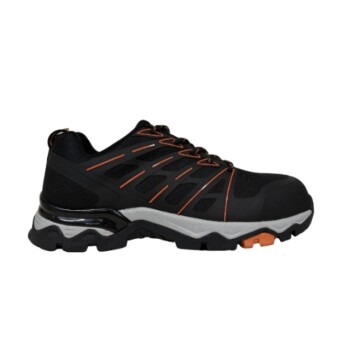
For workers requiring long-term wear, especially those managing health conditions like plantar fasciitis or diabetes, the recommended footwear material is Polyurethane (PU). Its superior cushioning and lightweight properties provide essential comfort and support for long hours on your feet, directly addressing the pain and pressure associated with these conditions.
The choice of footwear material is a critical balance between specialized comfort and environmental resilience. While Polyurethane (PU) offers unparalleled cushioning for chronic foot conditions, you must weigh this benefit against its specific limitations in high-heat or chemically aggressive environments.
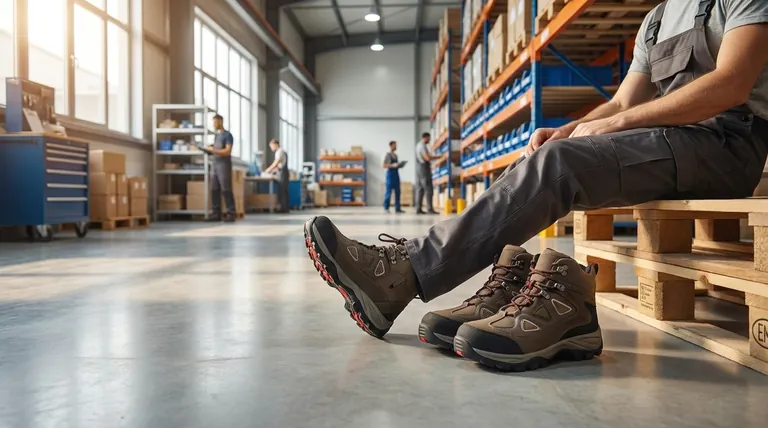
Why PU Excels for All-Day Comfort
Polyurethane's unique molecular structure makes it an ideal material for workers who prioritize comfort and the mitigation of foot-related health issues. It is engineered to reduce the stress of standing and walking for extended periods.
The Science of Superior Cushioning
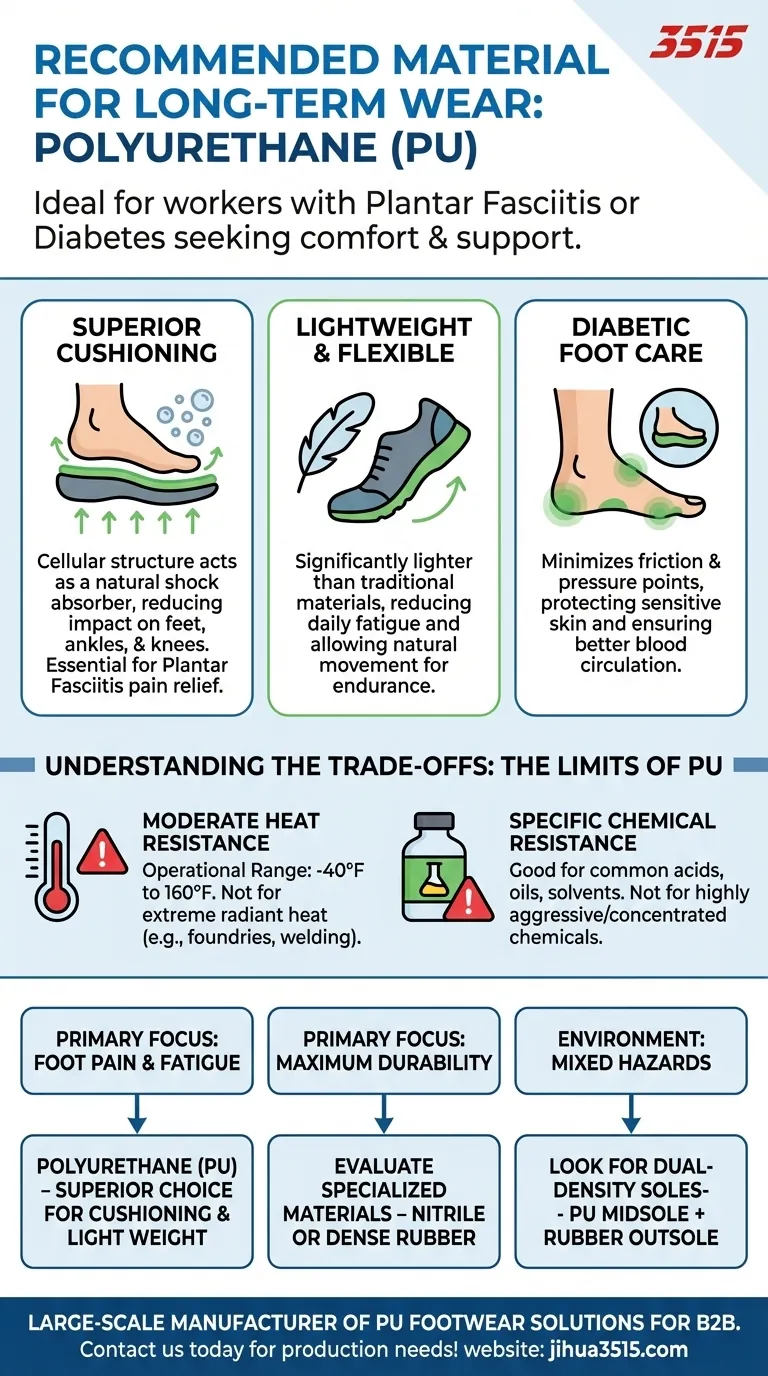
A PU sole contains millions of tiny air bubbles. This cellular structure makes it a natural shock absorber, compressing with each step to dissipate the impact that would otherwise travel to your feet, ankles, and knees.
This quality is particularly beneficial for plantar fasciitis, as it reduces the strain on the plantar fascia ligament.
Lightweight and Flexible by Design
Compared to traditional materials like solid rubber, PU is significantly lighter. This reduction in weight translates directly to less fatigue over the course of a long workday, allowing for greater endurance and comfort.
Its inherent flexibility also allows the foot to move more naturally, preventing the stiff, restrictive feeling common in heavier work boots.
A Critical Component of Diabetic Foot Care
For individuals with diabetes, preventing foot injuries and pressure sores is paramount. The soft, forgiving nature of PU minimizes friction and reduces pressure points on the foot.
This helps protect sensitive skin and ensures better blood circulation, which is a critical consideration for diabetic health.
Understanding the Trade-offs: The Limits of PU
No single material is perfect for every situation. Being a trusted advisor means highlighting not just the strengths but also the objective limitations. Understanding these trade-offs is key to making an informed safety decision.
Moderate Heat Resistance
PU is not intended for high-temperature environments. While its operational range of -40 to 160 degrees Fahrenheit is suitable for the vast majority of workplaces, it will degrade in settings with extreme radiant heat, such as foundries or welding operations.
Specific Chemical Resistance
The material offers good resistance to common workplace substances like acids, oils, and solvents. However, it is not designed for environments with constant exposure to highly aggressive or concentrated chemicals, where a more specialized material like Nitrile would be necessary.
Making the Right Choice for Your Goal
Your final decision should be guided by your primary challenge. Assess your daily work environment and the specific needs of your feet to select the optimal material.
- If your primary focus is alleviating foot pain and fatigue from conditions like plantar fasciitis or for diabetic care, Polyurethane (PU) is the superior choice for its cushioning and light weight.
- If your primary focus is maximum durability in harsh environments with high heat, sharp objects, or aggressive chemicals, you must evaluate specialized materials like Nitrile or dense Rubber.
- If your environment involves mixed hazards, look for dual-density soles that combine a comfortable PU midsole with a durable rubber outsole, offering a balance of both comfort and resilience.
Ultimately, selecting the right material is about aligning the specific needs of your feet with the specific demands of your work.
Summary Table:
| Feature | Benefit for Workers |
|---|---|
| Superior Cushioning | Reduces impact on feet, ankles, and knees; ideal for plantar fasciitis. |
| Lightweight Design | Decreases fatigue during long shifts, enhancing endurance. |
| Diabetic Foot Care | Minimizes pressure points and friction to protect sensitive skin. |
| Heat Resistance | Suitable for temps from -40 to 160°F, but not extreme heat. |
| Chemical Resistance | Good for common acids/oils, but not aggressive chemicals. |
As a large-scale manufacturer, 3515 produces a comprehensive range of footwear for distributors, brand owners, and bulk clients. Our expertise in Polyurethane (PU) materials ensures your workers get the comfort and support they need for long-term wear, especially those managing plantar fasciitis or diabetes. Let us help you create durable, health-focused footwear solutions—contact us today to discuss your production needs!
Visual Guide
Related Products
- Premium KPU Injection Athletic Style Safety Shoes
- Advanced KPU Athletic Safety Shoe with Steel Toe Cap Anti-Slip Rotary Lacing System
- Premium KPU Athletic Safety Shoes for Wholesale
- Premium Safety Shoes with Rotating Buckle Safety Sneakers
- Premium Suede Sport Safety Shoes for Wholesale & Bulk Orders
People Also Ask
- How do athletic-style safety shoes balance flexibility and safety? Perfect Agility for Active Professionals
- What is a recommended alternative to using hairspray for slip resistance? Ditch Unreliable Hacks for Real Safety
- What workplace hazards indicate the need for safety shoes? Identify risks to protect your workforce.
- Why should ergonomics and comfort be prioritized when selecting safety shoes? Boost Compliance & Worker Health
- What role does blockchain play in footwear supply chain transparency? Enhance Safety Shoe Traceability and Verification