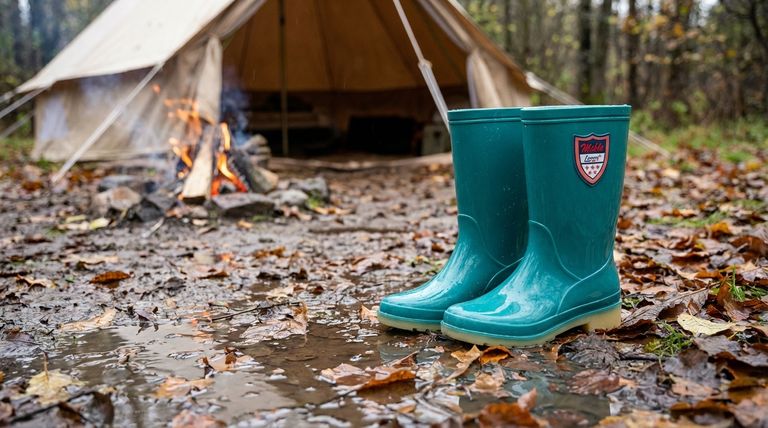
At their core, wellington boots are essential for camping because of their unmatched ability to keep your feet completely dry. In rainy weather, navigating damp fields, or dealing with morning dew, their simple, waterproof design provides a reliable barrier against moisture where other footwear might fail.
The real question isn't whether wellies are useful, but when they are the right tool for the job. The decision to pack wellies over hiking boots hinges entirely on the expected weather, the terrain of your campsite, and the activities you have planned.
When Wellies Are the Unbeatable Choice
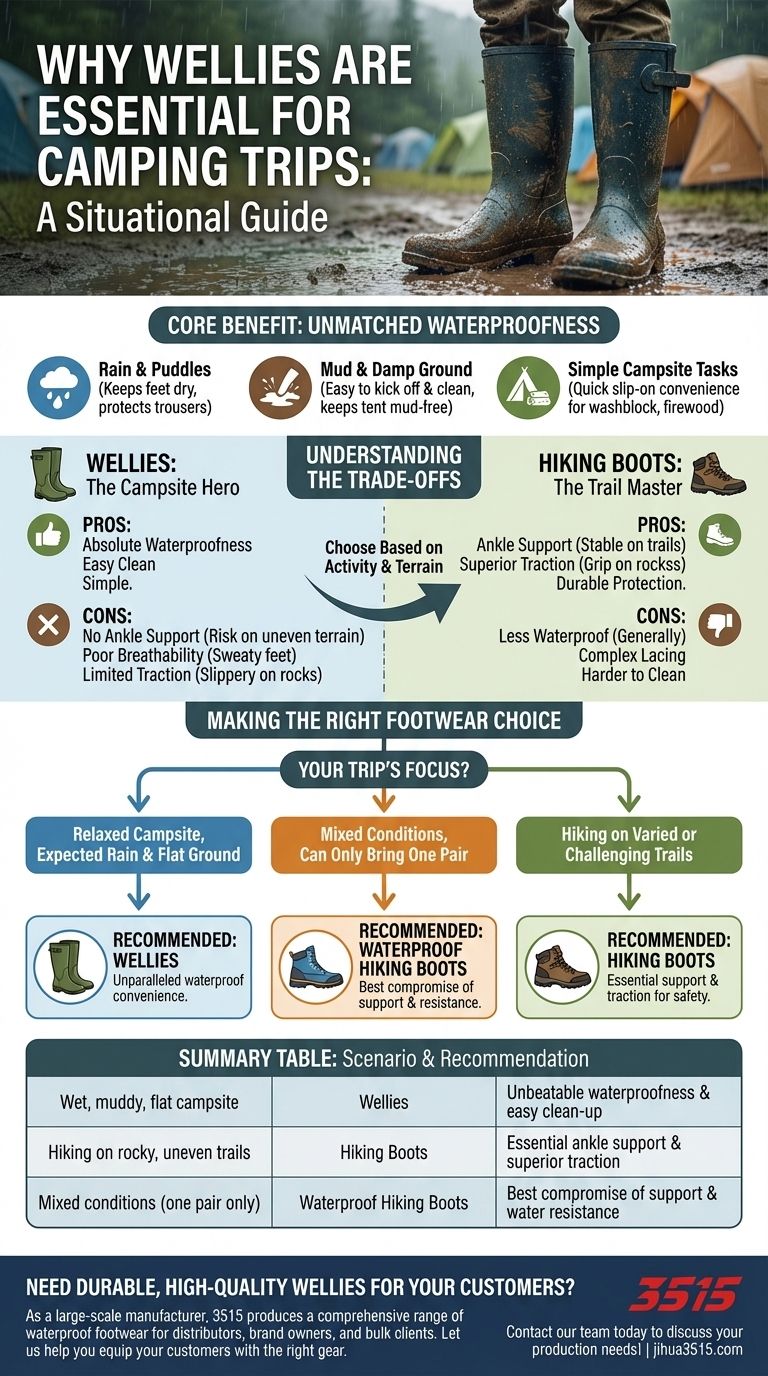
The primary value of a wellington boot is its absolute waterproofness. This makes it the superior choice in specific, common camping scenarios.
Navigating Rain and Puddles
When a downpour turns your campsite into a series of puddles, wellies allow you to walk around without a second thought. Their high design protects not just your feet but your lower trousers as well.
Conquering Mud and Damp Ground
From muddy fields at a festival to the sodden ground after a night of rain, wellies are the ideal tool. They can be easily kicked off at the tent door and rinsed clean, keeping your living space free of mud.
Simplicity for Campsite Tasks
For short trips to the washblock at night or a quick walk to gather firewood, slipping on a pair of wellies is far easier than lacing up a complex hiking boot. They offer convenience for the simple, wet tasks of camp life.
Understanding the Critical Trade-offs
While excellent for wetness, wellies are a specialized tool with significant limitations. Understanding these trade-offs is crucial to avoid discomfort or injury.
The Lack of Ankle Support
Wellies offer virtually no ankle support. Their loose-fitting, unstructured design makes them unsuitable and potentially dangerous for walking on uneven, rocky, or sloped terrain where a twisted ankle is a real risk.
The Breathability Problem
A welly's greatest strength is also its weakness. The rubber that keeps water out also traps all moisture in. On warmer days or during strenuous activity, this lack of breathability leads to sweaty, uncomfortable feet.
Limited Traction on Technical Terrain
The simple soles on most wellies are designed for mud and flat, wet grass. They do not provide the specialized grip needed for slick rocks, steep inclines, or demanding mountain trails.
Wellies vs. Hiking Boots: A Situational Guide
Choosing the right footwear means matching the boot to your environment and goals. For anything beyond the campsite itself, a hiking boot often becomes the more appropriate choice.
The Role of Hiking Boots
Hiking boots are engineered for performance on trails. They prioritize ankle support, durable traction, and protection from rocks and roots. Many offer water resistance, but their primary function is support over long distances.
Evaluating Your Terrain
If your trip involves serious hiking on medium-to-high difficulty trails, a proper hiking boot is non-negotiable. For a flat, grassy campsite that is prone to becoming waterlogged, wellies are the more practical option.
Considering Your Climate
In warm, dry climates, a light and breathable hiking shoe is ideal for comfort. In consistently wet and cool—but not mountainous—conditions, the simple waterproofness of a welly may be all you need.
Making the Right Footwear Choice for Your Trip
Your decision should be a direct response to the conditions you anticipate facing.
- If your primary focus is a relaxed campsite experience with expected rain: Pack the wellies for unparalleled waterproof convenience around your tent and on flat ground.
- If your primary focus is hiking on varied or challenging trails: Choose a proper hiking boot that provides the essential support and traction for safety and comfort.
- If you face mixed conditions and can only bring one pair: A quality waterproof hiking boot offers the best compromise between support and water resistance.
Ultimately, choosing the right footwear is about ensuring your comfort and safety, allowing you to focus on enjoying your time outdoors.
Summary Table:
| Scenario | Recommended Footwear | Key Reason |
|---|---|---|
| Wet, muddy, flat campsite | Wellies | Unbeatable waterproofness & easy clean-up |
| Hiking on rocky, uneven trails | Hiking Boots | Essential ankle support & superior traction |
| Mixed conditions (one pair only) | Waterproof Hiking Boots | Best compromise of support & water resistance |
Need Durable, High-Quality Wellies for Your Customers?
As a large-scale manufacturer, 3515 produces a comprehensive range of waterproof footwear for distributors, brand owners, and bulk clients. Our production capabilities encompass all types of boots, including the reliable wellington boots perfect for outdoor and camping markets.
Let us help you equip your customers with the right gear for any adventure. Contact our team today to discuss your production needs!
Visual Guide
Related Products
- Wholesale Durable Camouflage Canvas Shoes with High-Traction Cleated Rubber Sole
- Wholesale Breathable Training Shoes Custom Athletic Footwear Manufacturer
- Durable Waterproof Rain Boots | Custom Manufacturer for Wholesale & Brands
- Lightweight Breathable Training Shoes for Wholesale & Custom OEM Manufacturing
- Wholesale Durable Safety Boots Manufacturer Customizable Steel Toe Work Boots
People Also Ask
- Why is the selection of high-strength fabric materials necessary in the production of canvas shoes and training shoes?
- What are the properties of canvas as a shoe material? A Guide to Lightweight Comfort & Style
- Can canvas shoes be worn in rainy conditions? The Truth About Water Resistance
- What are some examples of vulcanized shoes? Discover the Flexibility and Board Feel of Classic Sneakers
- What are the characteristics of canvas as a shoe material? A Guide to Lightweight, Breathable Footwear