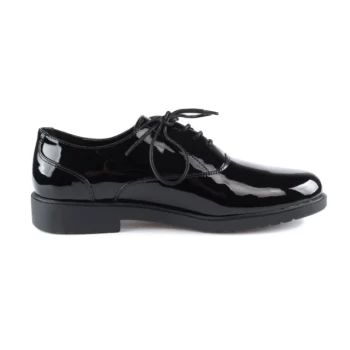
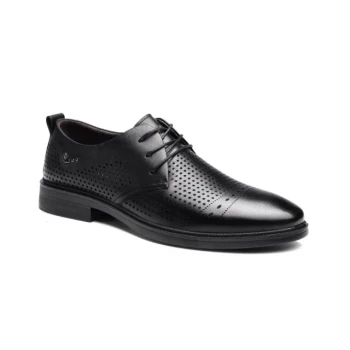
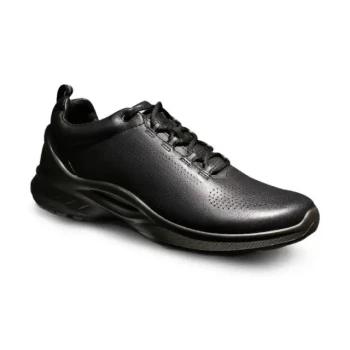
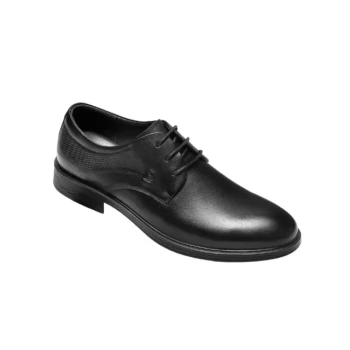
Oxfords achieve their versatility through a unique combination of structural design and timeless style. Their defining feature is a closed lacing system, where the eyelet tabs are stitched underneath the front part of the shoe. This creates an exceptionally clean and sleek silhouette that allows the shoe to adapt seamlessly, pairing as elegantly with formal dresses as it does with casual jeans.
The core of the oxford's versatility is not just its classic look, but its clean, structured silhouette. This fundamental design allows it to anchor a professional outfit or elevate a casual one with equal authority.
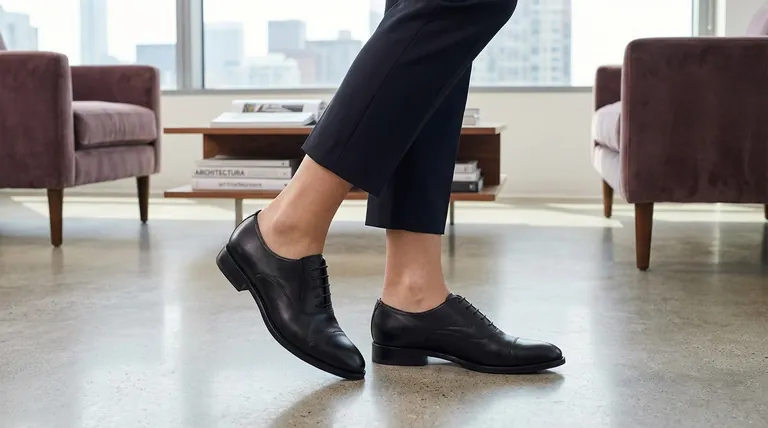
The Anatomy of Versatility: What Defines an Oxford?
To understand why the oxford is so adaptable, you must first understand its specific construction. Its versatility is not accidental; it is engineered into the shoe's fundamental design.
The Closed Lacing System
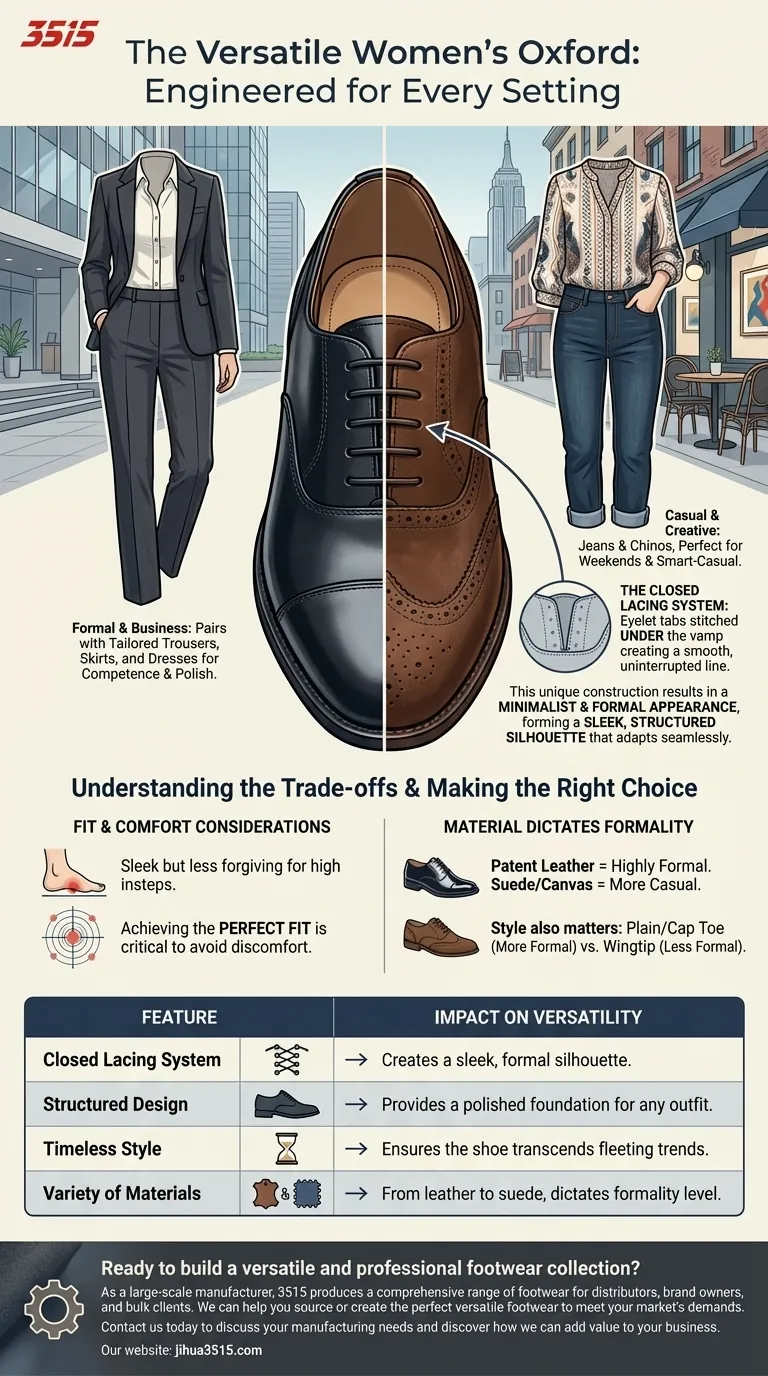
The single most important feature of an oxford is its closed lacing system. The pieces of leather holding the eyelets (the quarters) are stitched under the front part of the shoe (the vamp).
This construction method creates a smooth, uninterrupted line across the top of the foot. It results in a minimalist and formal appearance that distinguishes it from more casual shoe types.
A Sleek, Structured Silhouette
The closed lacing directly contributes to the oxford's sleek and stylish silhouette. This clean profile provides a polished foundation that is formal enough for business settings.
At the same time, this understated structure offers a sophisticated contrast to casual wear, instantly elevating a simple outfit.
A Foundation of Timelessness
Oxfords have remained a staple in footwear since the 1800s. Their enduring popularity proves their design is not a fleeting trend but a classic form that transcends eras and styles.
This long history has cemented the oxford as a universally recognized symbol of polished taste.
How to Style Oxfords Across a Wardrobe
The oxford's design allows it to bridge the gap between formal and informal, making it one of the most functional shoes you can own.
For Formal and Business Settings
The shoe's inherent structure makes it a natural fit for professional environments. Paired with tailored trousers, a skirt, or a dress for a business meeting, the oxford provides a look of competence and polish.
For Casual and Creative Looks
Despite its formal roots, the oxford pairs exceptionally well with jeans or chinos. This high-low combination creates a sophisticated yet relaxed look perfect for weekends or smart-casual settings.
For those in creative fields, patterned or brightly colored oxfords serve as a form of self-expression, adding a unique touch to an outfit without sacrificing the shoe's classic shape.
Understanding the Trade-offs
While highly versatile, the oxford is not without its limitations. Understanding its specific characteristics is key to choosing the right shoe for your needs.
Fit and Comfort Considerations
The closed lacing system, while sleek, can be less forgiving for individuals with a high instep. The fixed opening provides less flexibility than shoes with an open-lacing design.
Therefore, achieving a perfect fit is critical to avoid discomfort. Ensure there is proper arch support and that the shoe feels comfortable to walk in from the start.
Material Dictates Formality
The material used in an oxford dramatically impacts its versatility and a suitable setting. A patent leather oxford is highly formal, while a suede or canvas oxford leans much more casual.
The style of the oxford—such as a cap toe, plain toe, or decorative wingtip—also influences its level of formality. A plain-toe oxford is generally considered more formal than a heavily brogued wingtip.
Making the Right Choice for Your Wardrobe
To select the perfect oxford, first identify its primary role in your wardrobe.
- If your primary focus is maximum versatility for a professional wardrobe: Choose a classic plain-toe or cap-toe oxford in a neutral leather like black, brown, or oxblood.
- If your primary focus is bridging business-casual and weekend wear: Consider a style with more detail, like a wingtip, or one made from a softer material like suede.
- If your primary focus is creative self-expression: Explore oxfords in unique colors, patterns, or two-tone designs to make a statement while maintaining a polished foundation.
By understanding its core design, you can select an oxford that serves not just as a shoe, but as a strategic foundation for a truly adaptable wardrobe.
Summary Table:
| Feature | Impact on Versatility |
|---|---|
| Closed Lacing System | Creates a sleek, formal silhouette. |
| Structured Design | Provides a polished foundation for any outfit. |
| Timeless Style | Ensures the shoe transcends fleeting trends. |
| Variety of Materials | From leather to suede, dictates formality level. |
Ready to build a versatile and professional footwear collection?
As a large-scale manufacturer, 3515 produces a comprehensive range of footwear for distributors, brand owners, and bulk clients. Our production capabilities encompass all types of shoes and boots, including the classic oxfords detailed in this article. We can help you source or create the perfect versatile footwear to meet your market's demands.
Contact us today to discuss your manufacturing needs and discover how we can add value to your business.
Visual Guide
Related Products
- Wholesale Women's Leather Derby Shoes Custom Factory Production
- Wholesale Patent Oxford Dress Shoes | Custom & Bulk Manufacturing
- Wholesale Breathable Perforated Leather Derby Dress Shoes for Custom Brands
- Wholesale Leather Derby Shoes Manufacturer | Customizable Business & Dress Footwear
- Classic Leather Derby Dress Shoes Wholesale & Custom Manufacturing
People Also Ask
- How do Derby shoes fit into business casual attire? Master the Perfect Balance of Professional Style
- What are the features and appropriate occasions for wearing derby shoes? A Guide to Versatile Style
- What is the main difference between Derby Shoes and Oxford Shoes? It's All in the Lacing.
- What historical figure is associated with the Derby shoe? The Earl of Derby's Comfort Revolution
- How do Derby shoes differ from Oxford shoes? A Guide to Formality, Fit & Style