
Choosing the right wellies for a young child is about more than just keeping their feet dry. The most suitable brands design their boots specifically for the developmental needs of babies and toddlers, focusing on features like a lightweight construction, a highly flexible sole, and a secure, comfortable fit. These elements work together to support a natural walking gait and ensure stability on uncertain terrain.
The best wellies for babies and toddlers are not just miniature adult boots. They are thoughtfully engineered to be lightweight and flexible, prioritizing healthy foot development and stability over the rigid protection found in standard wellies.
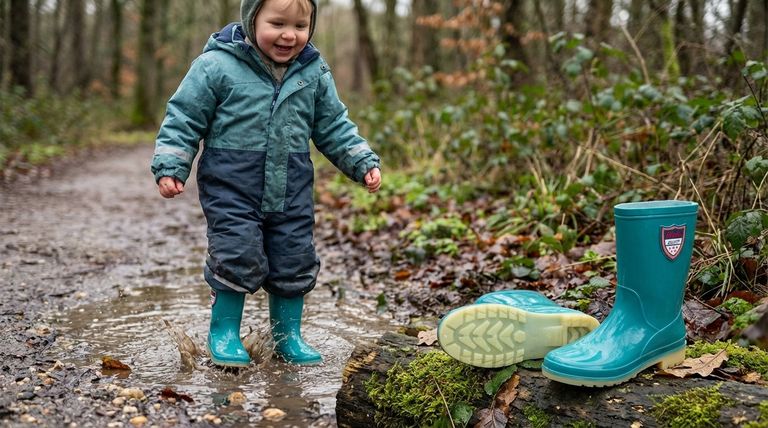
The Challenge with Standard Wellies
Before diving into the ideal features, it's important to understand why a typical, heavy welly can be problematic for a child who is still mastering the mechanics of walking.
The Problem of Weight and Rigidity
Most conventional wellies are relatively heavy and stiff. For a small child, this added weight can be tiring and can negatively affect their natural gait and balance.
Preserving a Natural Gait
A toddler's foot needs to bend and feel the ground to develop properly. Rigid, clunky footwear can interfere with this crucial sensory feedback, almost acting like a cast and forcing an unnatural walking pattern.
Key Features of Developmentally Sound Wellies
Brands that specialize in children's footwear focus on a core set of features designed to support, not hinder, a child's physical development and active play.
Lightweight Construction
The boot should feel almost weightless to the child. A lightweight design reduces strain on their legs, allowing for more natural and confident movement without causing premature fatigue.
The Flexible Sole
This is perhaps the most critical feature. A sole that bends easily with the foot allows for proper muscle engagement and helps the child balance. It mimics the feeling of being barefoot, which is essential for developing strength and coordination.
A Grippy, Stable Base
While the sole must be flexible, it also needs to be thick enough to provide protection and a reliable grip. Deep treads are essential for maintaining traction on wet, muddy, or slippery surfaces, preventing falls and building confidence during play.
Warmth, Dryness, and Independence
Beyond the core structure, look for practical details. A fleece lining provides warmth in colder weather, while an elasticated top is excellent for preventing rain, puddle splashes, and snow from getting inside the boot.
Some designs also include features like an easy-removal heel kick, which empowers toddlers to take their boots off independently and helps develop fine motor skills.
Understanding the Trade-offs
Choosing the perfect boot involves balancing a few key factors. There is no single "best" welly, only the one that is best for your child's situation.
Flexibility vs. Puncture Protection
An extremely flexible, thin sole provides excellent ground-feel but may offer less protection from sharp rocks or thorns. A slightly thicker (but still flexible) sole is often a good compromise for varied terrain.
Lined vs. Unlined
A fleece-lined boot is fantastic for autumn and winter but can be too warm for summer use. Unlined boots are more versatile across seasons but will require thick, warm socks for cold days.
The Perfect Fit Dilemma
While it's tempting to buy a larger size for longevity, boots that are too big can be a serious tripping hazard. A proper fit is crucial for safety and ensuring the boot's features work as intended.
Making the Right Choice for Your Child
To select the ideal pair, consider your child's stage of development and your most common environment.
- If your primary focus is an early walker (baby or new toddler): Prioritize the most lightweight and flexible options available to avoid interfering with their natural gait.
- If your primary focus is an active, confident toddler: Ensure the sole has an excellent, deep-tread grip for slippery conditions while still offering good flexibility.
- If your primary focus is all-weather comfort and use: Look for practical features like a fleece lining for warmth and an elasticated top to keep snow and rain out.
By focusing on these core design principles, you can ensure their first adventures are safe, comfortable, and developmentally sound.
Summary Table:
| Feature | Why It Matters for Babies & Toddlers |
|---|---|
| Lightweight Construction | Reduces leg strain, prevents fatigue, and supports natural movement. |
| Highly Flexible Sole | Allows foot to bend naturally, crucial for muscle development and balance. |
| Grippy, Stable Base | Deep treads provide traction on wet/slippery surfaces to prevent falls. |
| Secure, Comfortable Fit | Ensures stability and prevents the boot from being a tripping hazard. |
| Fleece Lining & Elasticated Top | Offers warmth and keeps rain, puddles, and snow from getting inside. |
Ready to Find the Perfect Fit for Your Little Explorer?
As a large-scale manufacturer, 3515 produces a comprehensive range of high-quality footwear. We understand the precise design needs for developing feet. Our production capabilities encompass all types of children's boots, engineered with the perfect balance of flexibility, grip, and lightweight comfort.
Partner with us to provide your customers with wellies that support healthy development and endless fun. We work with distributors, brand owners, and bulk clients to bring superior products to market.
Contact our team today to discuss your manufacturing needs!
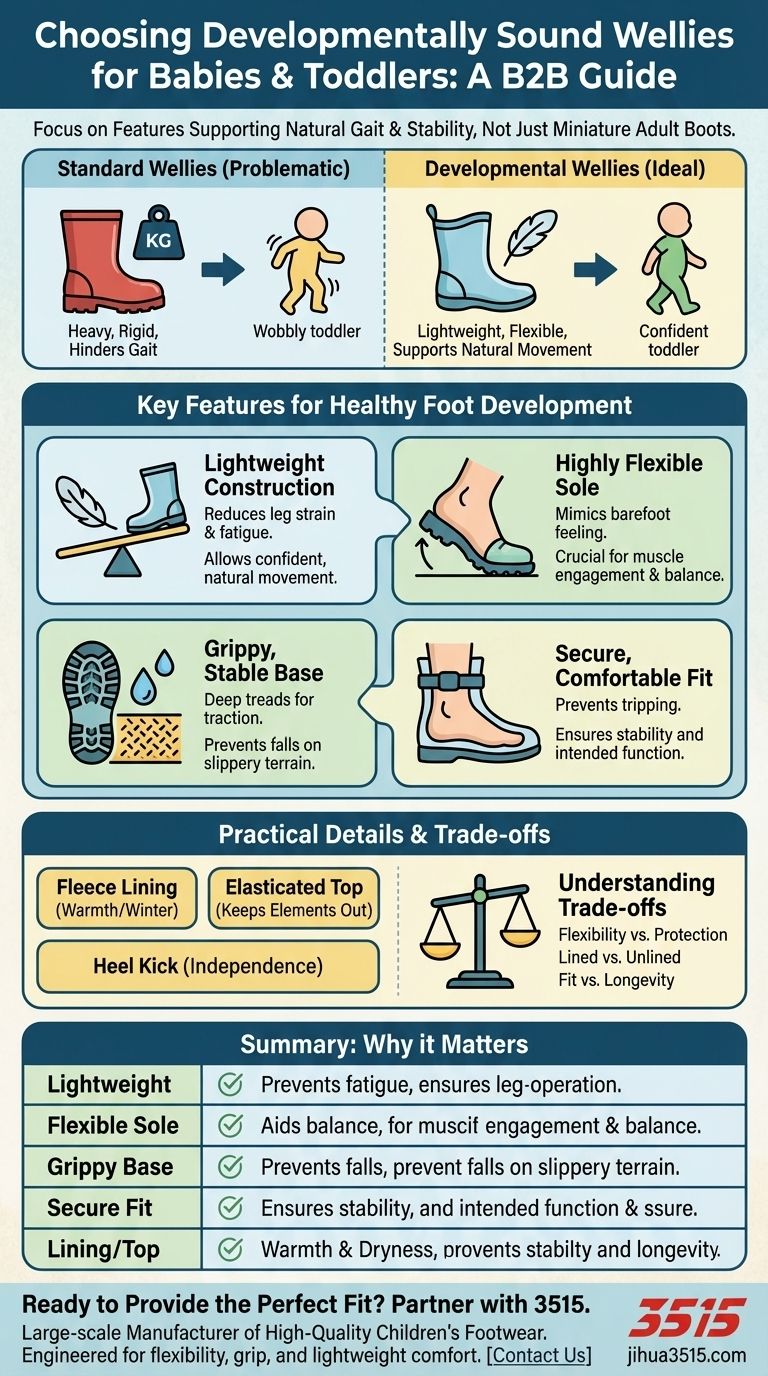
Visual Guide
Related Products
People Also Ask
- What are the main materials for waterproof rain boots? Choose the Right Material for Durability & Comfort
- What is the overall recommendation for choosing rain boot materials? A Guide to Rubber vs. PVC
- How does boot height affect waterproofing? Choose the Right Height for Ultimate Protection
- Why are rain boots more flexible and comfortable than snow boots? The Key Differences Explained
- What are the best types of shoes for different gardening conditions? Find Your Perfect Match.
