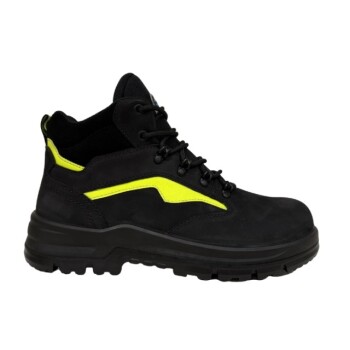
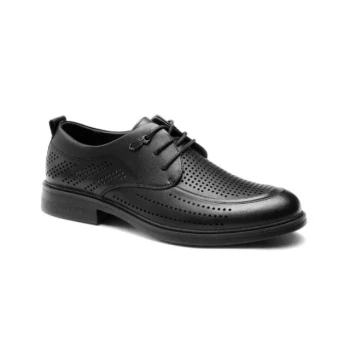
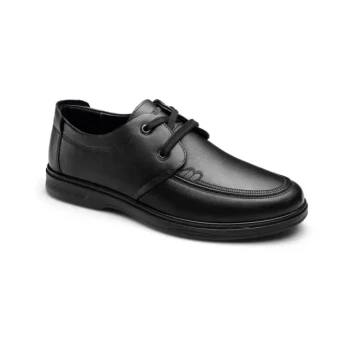
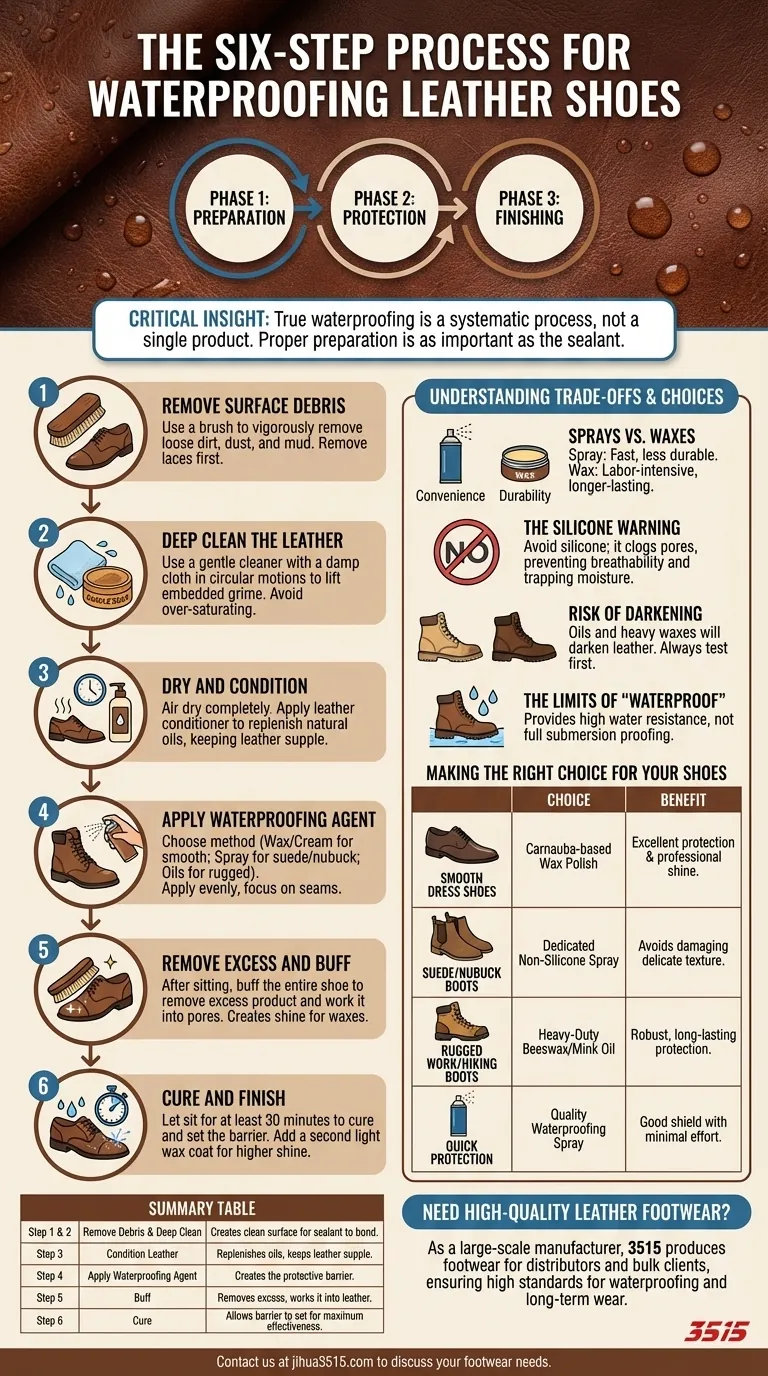
The definitive six-step process for waterproofing leather shoes involves three distinct phases: preparation, protection, and finishing. The core method requires you to first thoroughly clean and condition the leather, then apply your chosen waterproofing agent like a wax or spray, and finally buff the shoes and allow the treatment to cure properly.
The most critical insight is that true waterproofing is not about a single product, but a systematic process. Properly cleaning and conditioning the leather before applying a sealant is as important as the sealant itself, ensuring a durable and effective barrier against moisture.
The Foundation: Preparing Your Leather
Before you can protect your shoes, you must create a clean and nourished surface. Applying a waterproofing agent to dirty or dry leather will trap debris and fail to bond correctly, leading to poor results.
Step 1: Remove Surface Debris
First, remove the laces to ensure you can access the entire shoe, including the tongue.
Use a horsehair brush or a soft, dry cloth to vigorously brush away any loose dirt, dust, or mud caked onto the shoe.
Step 2: Deep Clean the Leather
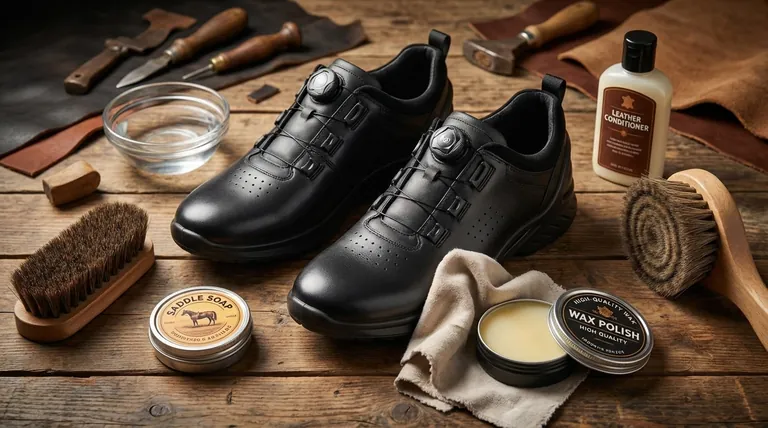
Dampen a clean cloth with water and a small amount of a gentle cleaner like saddle soap or a dedicated leather cleaner.
Work in small, circular motions to lift away embedded grime and old polish. Pay special attention to the seams and welt, where dirt often accumulates. Avoid over-saturating the leather.
Step 3: Dry and Condition
Allow the shoes to air dry completely at room temperature. Never use direct heat from a hairdryer or place them in the sun, as this can cause the leather to crack.
Once dry, apply a leather conditioner. This step is vital—it replenishes the natural oils in the leather, keeping it supple and preventing it from drying out underneath the waterproof seal.
Choosing Your Waterproofing Method
The right method depends on your shoe type, the level of protection you need, and the finish you want to achieve.
Wax-Based Polishes and Creams
These are the most effective options for smooth leather. A quality wax polish not only creates a robust water-resistant barrier but also nourishes the leather and provides a high-quality shine.
Waterproofing Sprays
Sprays are the most convenient option and the best choice for textured leathers like suede or nubuck, where a wax would ruin the nap. They create a quick protective layer but offer less durability than waxes.
Natural Oils and Waxes
Products based on beeswax, mink oil, or coconut oil offer heavy-duty protection, making them ideal for rugged work or hiking boots. These compounds penetrate deeply but will almost certainly darken the leather.
The Application Process
With your shoes prepped and your method chosen, you can now apply the protective barrier.
Step 4: Apply the Waterproofing Agent
For waxes or creams, use a soft cloth to apply the product in small, circular motions across the entire shoe. Focus on vulnerable areas like seams and stitching. Gently warming the wax and boots can help the product absorb more evenly.
For sprays, hold the can at the recommended distance and apply a light, even coating over the entire surface.
Step 5: Remove Excess and Buff
After letting the initial application sit for a few minutes, take a clean brush or cloth and buff the entire shoe. This removes any excess product and works the agent into the leather's pores.
For waxes, this buffing step is what creates the final shine.
Step 6: Cure and Finish
Let the shoes sit for at least 30 minutes, or as long as the product instructions recommend. This curing period allows the protective barrier to fully set.
For a higher shine on smooth leather, you can add another very light coat of wax and buff again.
Understanding the Trade-offs
No single method is perfect for every situation. Understanding the compromises is key to choosing correctly.
Sprays vs. Waxes
The primary trade-off is convenience versus durability. A spray is fast and easy but may need reapplication every few weeks. A proper wax treatment is more labor-intensive but can last for months.
The Silicone Warning
Many sources recommend avoiding silicone-based sprays. While effective at repelling water, silicone can clog the leather's pores. This prevents the material from "breathing," which can trap moisture and dry out the leather from within over the long term.
The Risk of Darkening
Be aware that most conditioning and waterproofing treatments, especially oils and heavy waxes, will darken the color of your leather. Always test the product on a small, inconspicuous area first.
The Limits of "Waterproof"
For leather, most treatments provide high water resistance, not a truly impervious, rubber-boot level of waterproofing. They will protect your shoes from rain and puddles but will not survive full submersion.
Making the Right Choice for Your Shoes
Your specific footwear dictates the best course of action.
- If your primary focus is smooth leather dress shoes: A high-quality carnauba-based wax polish is your best choice for providing both excellent protection and a professional shine.
- If your primary focus is suede or nubuck boots: You must use a dedicated, non-silicone waterproofing spray to avoid damaging the delicate texture.
- If your primary focus is rugged work or hiking boots: A heavy-duty beeswax or mink oil compound will offer the most robust and long-lasting protection, even if it darkens the leather.
- If your primary focus is quick and easy protection: A quality waterproofing spray provides a good shield against unexpected rain with minimal effort.
By following this systematic approach, you transform a simple chore into a lasting investment in the life and appearance of your footwear.
Summary Table:
| Step | Key Action | Purpose |
|---|---|---|
| 1 & 2 | Remove Debris & Deep Clean | Creates a clean surface for the sealant to bond properly. |
| 3 | Condition Leather | Replenishes natural oils, keeping leather supple under the seal. |
| 4 | Apply Waterproofing Agent | Creates the protective barrier against moisture. |
| 5 | Buff | Removes excess product and works it into the leather. |
| 6 | Cure | Allows the protective barrier to set completely for maximum effectiveness. |
Need to source high-quality, durable leather footwear that's ready for treatment?
As a large-scale manufacturer, 3515 produces a comprehensive range of footwear for distributors, brand owners, and bulk clients. Our production capabilities encompass all types of shoes and boots, from rugged work boots perfect for heavy-duty wax treatments to stylish dress shoes ideal for wax polish. We ensure the leather quality and construction meet the highest standards for effective waterproofing and long-term wear.
Contact 3515 today to discuss your footwear needs and how our manufacturing expertise can provide the reliable foundation for your products.
Visual Guide
Related Products
- Wholesale Premium Waterproof Nubuck Safety Shoes Boots
- Premium Wholesale Waterproof Safety Boots High Performance Protection for Industrial Markets
- Heavy-Duty Waterproof Nubuck Safety Boots Safety Shoes for Bulk Supply
- Wholesale Waterproof Tactical Boots Custom Suede & High-Traction Soles
- Durable Waterproof Rain Boots | Custom Manufacturer for Wholesale & Brands
People Also Ask
- Why are waterproof safety boots recommended for certain work environments? Essential Protection for Wet & Hazardous Jobs
- What materials are commonly used in waterproof boots? The Complete Guide to Durable, Breathable Protection
- What are the drawbacks of waterproof boots? The Breathability vs. Protection Trade-Off
- What is the advantage of one-piece construction in waterproof boots? Unbeatable Seamless Protection
- What is the difference between waterproof, water-resistant, and water-repellent boots? Choose the Right Protection for Your Feet