
The primary purpose of a shoe lining is to manage the environment inside your shoe to ensure comfort, protection, and performance. This internal layer, often constructed like an integrated sock, is in direct contact with your foot, where it works to wick away moisture, prevent abrasions, and regulate temperature.
The lining is not simply a layer of fabric; it is an engineered microclimate system for your foot. Its effectiveness at managing moisture and friction is the single most important factor in preventing blisters and ensuring comfort on the trail.
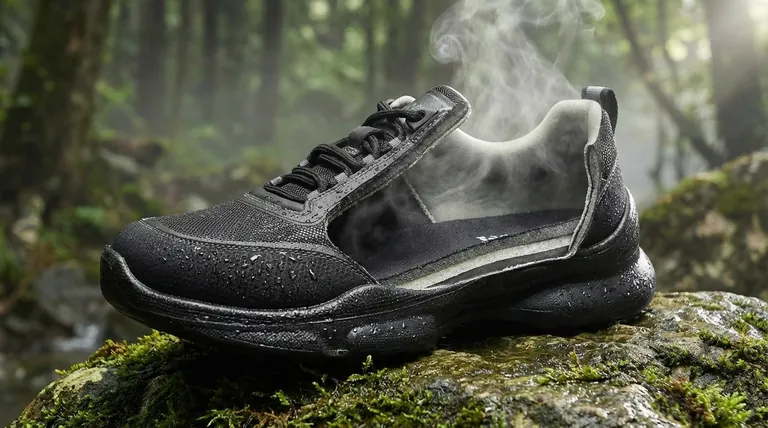
The Core Functions of a Shoe Lining
A high-performance lining is more than just a soft interior. It serves several distinct and critical functions that directly impact your experience outdoors.
Climate Control: Managing Heat and Moisture
The lining is your foot's first line of defense against moisture, both from the inside (sweat) and the outside (the elements).
Effective linings are made from materials with high air permeability, allowing heat and water vapor from sweat to escape. This process is often called breathability.
By actively pulling or "wicking" sweat away from your skin and dissipating it, the lining helps your foot stay dry. This is critical for preventing the softened, blister-prone skin that results from prolonged dampness.
Comfort and Protection: The First Line of Defense
The lining creates a smooth, protective barrier between your foot and the shoe's tougher structural components.
Its seamless, sock-like construction is designed to minimize friction points, significantly reducing the risk of hot spots, chafing, and blisters.
Materials are selected for their abrasion resistance and ability to provide a comfortable, cushioned contact surface, absorbing minor shocks and impacts with every step.
Durability and Material Choices
The materials used in a lining dictate its performance characteristics and longevity.
Most modern linings are made from synthetic textiles because they excel at moisture-wicking and dry quickly. Natural materials like leather are also used for their durability and ability to mold to the foot, though they can be slower to dry.
Some advanced linings incorporate special temperature-regulating textiles or thin films (membranes) to provide specific performance benefits like waterproofing.
Understanding the Trade-offs: Breathability vs. Waterproofing
One of the most critical decisions in selecting an outdoor shoe involves the trade-off between keeping water out and letting sweat escape.
The Waterproof-Breathable Dilemma
Many outdoor shoes feature a waterproof lining, which is a membrane or "film" laminated to the interior fabric that blocks liquid water from entering.
While these membranes are designed to be "breathable" (allowing water vapor to pass through), they will always be less breathable than a shoe without one.
This creates a trade-off. In wet, cool conditions, a waterproof lining is invaluable. In hot, dry conditions, the reduced breathability can lead to hotter, sweatier feet compared to a more open, non-waterproof lining.
How to Choose the Right Lining for Your Activity
Your intended use should guide your choice, as no single lining is perfect for every situation.
- If your primary focus is hiking in hot, dry conditions: Prioritize a shoe with a highly breathable, moisture-wicking synthetic mesh lining and no waterproof membrane.
- If your primary focus is trekking in wet, unpredictable weather: Choose a shoe with a proven waterproof-breathable membrane lining to keep your feet dry from external moisture.
- If your primary focus is all-day comfort and blister prevention: Look for linings with a seamless construction and materials known for both durability and softness against the skin.
Ultimately, choosing the right lining is about matching the shoe's internal engineering to the external environment you plan to face.
Summary Table:
| Function | Key Benefit | Ideal For |
|---|---|---|
| Moisture Wicking | Keeps feet dry, prevents blisters | Hot, dry conditions; high-intensity activity |
| Seamless Protection | Reduces friction and chafing | Long-distance hiking; blister prevention |
| Waterproof Membrane | Blocks external water | Wet, cold, and unpredictable weather |
| Breathable Mesh | Maximizes airflow and cooling | Warm weather; prioritizing ventilation over waterproofing |
Ready to source high-performance footwear with the perfect lining for your market?
As a large-scale manufacturer, 3515 produces a comprehensive range of outdoor, work, and safety footwear for distributors, brand owners, and bulk clients. Our expertise in material science and production ensures every pair features a lining engineered for superior comfort, durability, and climate control.
Contact us today to discuss your specific needs and let us help you deliver the comfort and performance your customers demand.
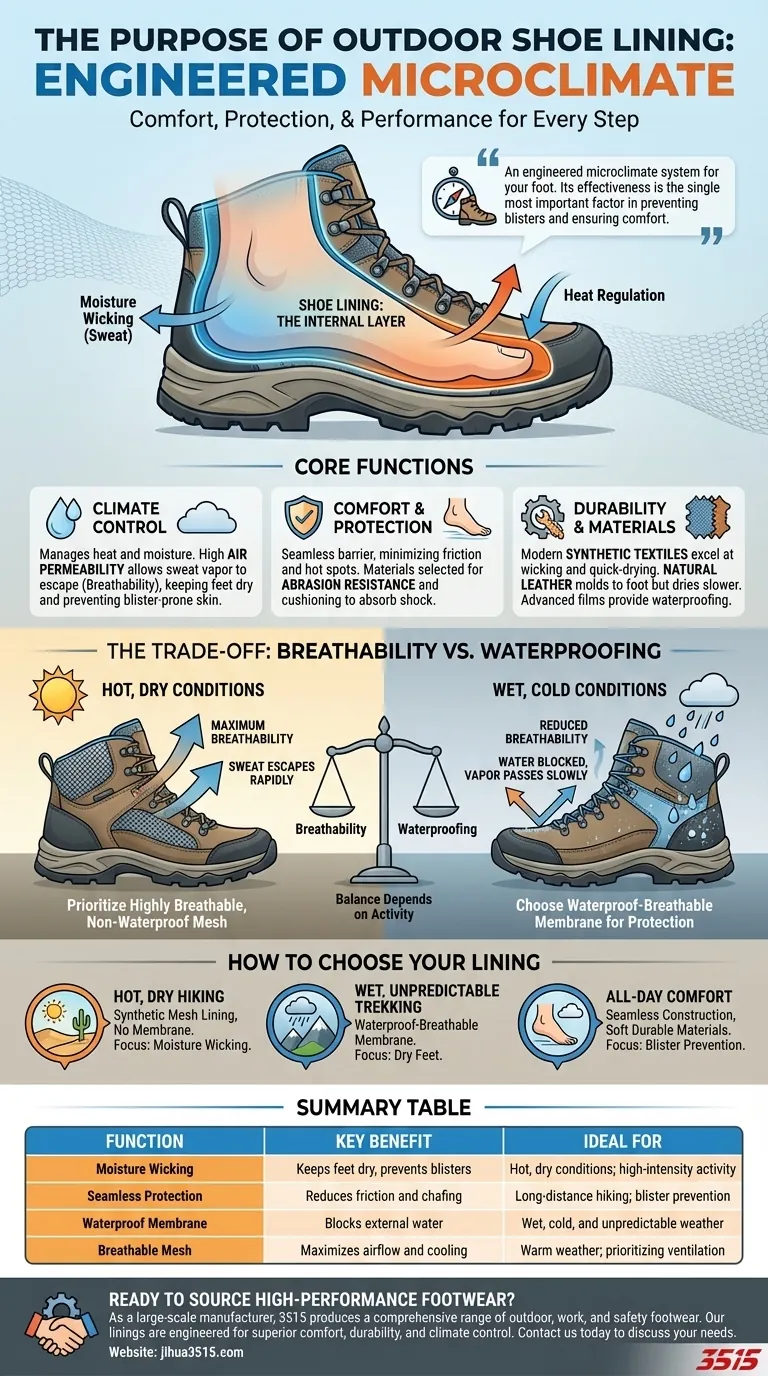
Visual Guide
Related Products
- Durable Rubber Sole Outdoor Shoes Wholesale & Custom Manufacturing
- Wholesale Waterproof Tactical Boots Custom Suede & High-Traction Soles
- Wholesale Durable Camouflage Canvas Shoes with High-Traction Cleated Rubber Sole
- Wholesale Durable Camo Canvas Shoes with High-Traction Rubber Soles
- Lightweight Breathable Sneakers with Wet-Traction Grip for Wholesale & Private Label
People Also Ask
- What is the function of the sole in outdoor shoes? Find the Perfect Grip and Support
- What role do outdoor shoes and sneakers play in navigating external terrains? Engineered Stability for Every Surface
- How is AI utilized in the design of outdoor and safety footwear? Harnessing Big Data for Market-Driven Shoe Innovation
- Why is durability important when selecting outdoor shoes? A Guide to Safety & Long-Term Value
- What are the key components of outdoor shoes that affect comfort and sturdiness? A Guide to Durable, High-Performance Footwear










