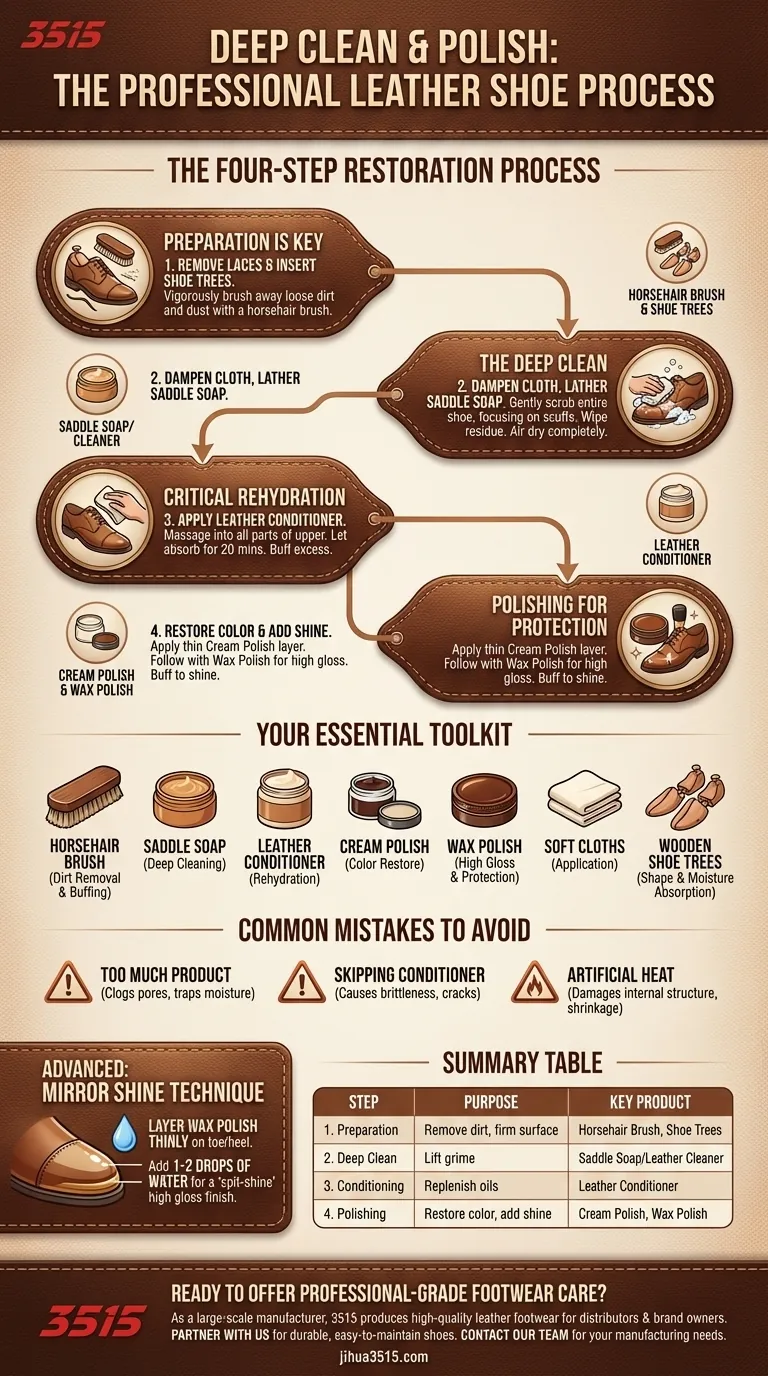
To properly deep clean and polish leather shoes, you must follow a sequential process of cleaning, conditioning, and polishing. Begin by removing surface dirt, then use a dedicated leather cleaner like saddle soap to lift grime from the pores. After the leather is completely dry, replenish its essential oils with a conditioner before applying polish to restore color, add shine, and create a protective barrier.
The goal of a deep clean is not just to make shoes look good, but to restore the health of the leather itself. Skipping the cleaning and conditioning steps and simply applying polish over dirt will trap abrasives and dry out the material, leading to premature cracking and wear.
Assembling Your Toolkit: The Foundation of Proper Care
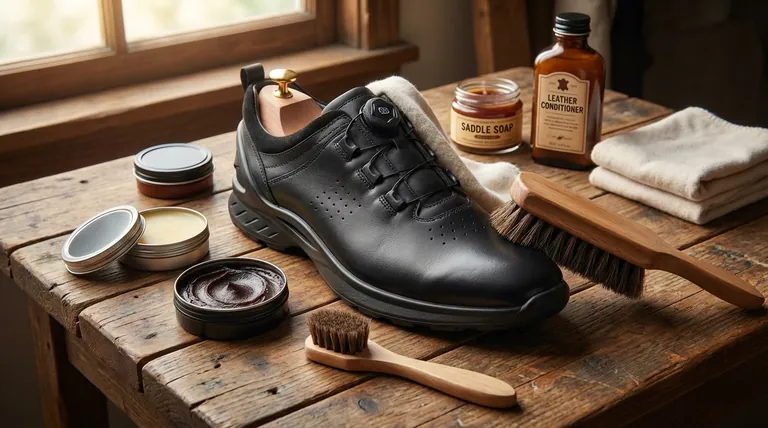
Before you begin, gathering the correct tools is essential for a professional result. Each item serves a distinct and important purpose in the restoration process.
Essential Cleaning & Conditioning Agents
The first steps revolve around removing old polish and dirt and rehydrating the leather.
Saddle soap or a dedicated leather cleaner is a gentle but effective soap designed to lift dirt, old wax, and oils from the leather's pores without over-drying it.
A quality leather conditioner is non-negotiable. It functions like a moisturizer, replenishing the natural oils within the leather to keep it flexible and prevent it from becoming brittle.
Polishes: Cream vs. Wax
Polish serves two functions: restoring color and creating a protective shine.
Cream polish contains a higher concentration of pigment and is primarily used to restore faded color and nourish the leather. It provides a subtle, elegant sheen.
Wax polish has less pigment but provides a superior high-gloss shine and a more robust protective layer against moisture and scuffs.
The Right Brushes and Cloths
Using the correct applicators prevents damage and ensures an even finish.
A horsehair brush is critical. Its bristles are stiff enough to remove surface dirt and buff polish to a shine but soft enough not to scratch the leather.
Soft, lint-free cloths, such as cotton chamois or microfiber towels, are needed for applying cleaners, conditioners, and polishes without leaving behind fibers.
The Unsung Hero: Shoe Trees
Wooden shoe trees, preferably made of cedar, are the most important tool for long-term care. They absorb moisture and odor while holding the shoe's shape, which smooths out creases and makes cleaning and polishing far more effective.
The Four-Step Deep Cleaning & Restoration Process
Follow these steps in order to systematically clean, restore, and protect your leather footwear.
Step 1: Preparation is Key
First, remove the laces to ensure you can access the entire shoe, including the tongue.
Insert your shoe trees to provide a firm surface to work on. Then, use your horsehair brush to vigorously brush away all loose dirt and dust.
Step 2: The Deep Clean
Dampen a clean cloth, work up a light lather with saddle soap, and gently scrub the entire shoe in small, circular motions.
Focus on areas with noticeable scuffs or stains. Once clean, use a separate, clean damp cloth to wipe away all soap residue. Let the shoes air dry completely, away from direct heat.
Step 3: Critical Rehydration with Conditioner
Once the shoes are fully dry, apply a small amount of leather conditioner with a soft cloth, covering every part of the upper.
Use circular motions to work the conditioner into the leather. Let it sit and absorb for at least 20 minutes, then buff off any excess with a dry cloth or horsehair brush.
Step 4: Polishing for Protection and Shine
Apply a thin, even layer of cream polish with a cloth to restore color. For a high-gloss finish, follow up with wax polish, especially on the toe cap and heel.
Apply the wax in small, circular motions until a haze forms. Let it dry for a few minutes, then buff the entire shoe with your horsehair brush to bring out the shine.
Understanding the Trade-offs: Common Mistakes to Avoid
Proper technique is as important as the process itself. Avoiding these common errors will protect your investment.
Using Too Much Product
Applying thick layers of conditioner or polish can clog the leather's pores, preventing it from breathing. This can trap moisture and cause the material to degrade over time. Always use thin, even coats.
Skipping the Conditioning Step
Polishing dry leather is a critical mistake. Without conditioner, the leather becomes brittle. Applying polish on top can seal in the dryness, accelerating the formation of cracks.
Using Artificial Heat to Dry
Never use a hairdryer or place wet shoes near a radiator. Rapid, intense heat will pull moisture out too quickly, permanently damaging the leather's internal structure and causing it to shrink and crack. Always air dry at room temperature.
Advanced Technique: Achieving a Mirror Shine
For a glass-like finish on the toe cap and heel, you can build upon the basic polish.
Layering the Wax
After your initial layer of wax polish is buffed, apply another very thin layer of wax to the toe cap. This process can be repeated 3-5 times, allowing each layer to dry before buffing and applying the next.
The Role of Water
To achieve an even higher gloss, add one or two drops of water to the shoe's surface before buffing a layer of wax. This technique, often called a "spit-shine," helps create a smoother, more reflective wax surface.
Making the Right Choice for Your Goal
Tailor your shoe care routine to your specific objective.
- If your primary focus is routine maintenance: A quick brush-down followed by a single application of cream polish is sufficient to maintain color and condition.
- If your primary focus is deep restoration of neglected shoes: Follow the full four-step process of cleaning, conditioning, and polishing to bring the leather back to health.
- If your primary focus is maximum shine and protection: After the full restoration process, add the advanced mirror shine technique to the toe and heel.
Investing a small amount of time in this process will dramatically extend the life and enhance the appearance of your quality leather shoes.
Summary Table:
| Step | Purpose | Key Product |
|---|---|---|
| 1. Preparation | Remove surface dirt & provide a firm surface | Horsehair Brush, Shoe Trees |
| 2. Deep Clean | Lift grime from leather pores | Saddle Soap / Leather Cleaner |
| 3. Conditioning | Replenish oils to prevent brittleness | Leather Conditioner |
| 4. Polishing | Restore color, add shine, and protect | Cream Polish (color), Wax Polish (shine) |
Ready to Offer Professional-Grade Footwear Care?
As a large-scale manufacturer, 3515 produces a comprehensive range of high-quality leather footwear for distributors, brand owners, and bulk clients. Our production capabilities encompass all types of shoes and boots, designed for durability and ease of maintenance.
Partner with us to provide your customers with footwear that lasts. We can help you build a product line that responds perfectly to professional care routines.
Contact our team today to discuss your manufacturing needs and discover how 3515 can be your trusted partner in footwear.
Visual Guide
Related Products
- Classic Leather Derby Dress Shoes Wholesale & Custom Manufacturing
- Factory Direct Wholesale Leather Comfort Shoes with Dial Closure
- Wholesale Comfort Leather Business Shoes with Dial Lacing System
- Custom Manufactured Air Cushion Leather Business Shoes for Wholesale
- Wholesale Breathable Perforated Leather Derby Shoes with Modern Comfort Sole
People Also Ask
- How often should leather dress shoes be cleaned and polished? A 3-Tier Care Guide for Longevity
- How can you remove salt stains from leather dress shoes? Save Your Shoes with a Simple Vinegar Solution
- What are the basic steps to clean leather dress shoes? A Guide to Preserving Your Investment
- How should you dry wet leather dress shoes? A Step-by-Step Guide to Save Your Investment
- What historical figure is associated with the Derby shoe? The Earl of Derby's Comfort Revolution