
At its core, a walking boot serves a dual purpose: it protects an injured foot or ankle by immobilizing it, while simultaneously allowing you to bear weight and maintain a degree of mobility. This balance is critical for preventing further damage and promoting a safe, effective healing process.
A medical walking boot is an engineered tool designed to offload pressure from an injury. It provides the stability of a cast but with the crucial advantage of permitting controlled, weight-bearing movement to facilitate recovery.
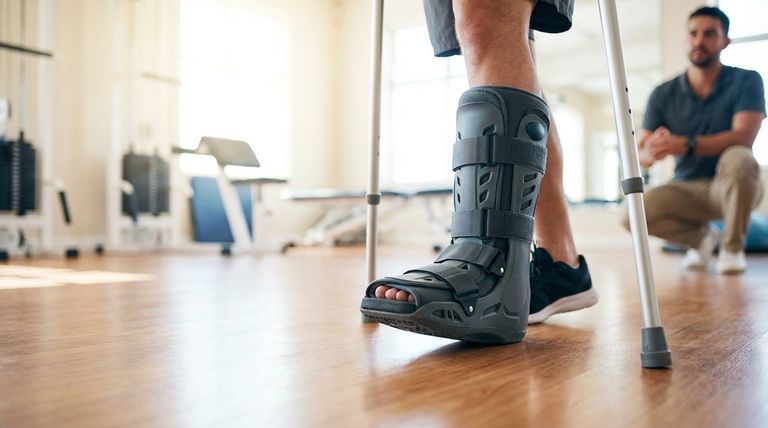
The Core Functions: Protection and Controlled Mobility
A walking boot achieves its purpose through a few key mechanical principles. Understanding them helps clarify why it is prescribed over other options like a traditional cast or simple bandages.
Immobilizing the Injury
The rigid shell of the boot severely restricts motion in your foot and ankle. This stabilization is essential for allowing broken bones, torn tendons, or severe sprains to heal in their correct alignment without being disturbed by movement.
Enabling Safe Weight-Bearing
Unlike a hard cast that often requires crutches and zero weight-bearing, a walking boot is designed to redistribute pressure. Its structure, often featuring a "rocker" sole, helps you walk with a more natural gait, placing force on the boot itself rather than directly on your injured tissues.
Preventing Further Damage
The boot acts as a protective shield for your lower leg, foot, and ankle. It guards the vulnerable area against accidental bumps, twists, or impacts that could otherwise disrupt the healing process or cause a new injury.
When is a Walking Boot Necessary?
A healthcare provider will assess your specific injury to determine if a walking boot is the appropriate course of action. The decision is based on the need to balance stability with function.
Common Injuries and Conditions
Walking boots are commonly prescribed for moderate to severe injuries. These include fractures of the foot or ankle, significant sprains and strains, torn tendons, and severe cases of stress fractures or shin splints.
Post-Surgical Recovery
Following surgery on the foot or ankle, a boot is often used to protect the delicate repair work. It ensures the surgical site remains stable while allowing for the gentle, controlled motion necessary to prevent stiffness and promote blood flow.
Understanding the Practical Implications and Risks
While a walking boot is a powerful recovery tool, wearing one impacts your daily life and body mechanics. Being aware of these factors is crucial for a smooth recovery.
Impact on Other Joints
The immobilization of your ankle forces other parts of your body to compensate. Your hip, back, and especially your knees will bear more movement and strain than usual. It is common to feel fatigue or soreness in these joints as you adapt.
Navigating Your Environment
The sole of a walking boot can be slippery on wet surfaces. You must exercise increased caution when walking on wet floors, outdoors in the rain, or on slick tile to prevent falls that could worsen your injury.
Essential Care and Hygiene
Proper care is vital. Regularly check your foot for excessive redness or swelling, and loosen the straps if needed. The boot's liner should be hand-washed and air-dried, and the plastic components can be wiped clean. Always follow your provider's specific instructions on when, or if, you can remove the boot for bathing.
Making the Right Choice for Your Recovery
Using your walking boot correctly is just as important as wearing it. Your approach should align with the specific goal of your treatment plan.
- If your primary focus is healing a fracture: Your goal is maximum stability, so adhere precisely to your provider's instructions on weight-bearing and when it is safe to remove the boot.
- If your primary focus is recovering from surgery: The boot is protecting a delicate repair, meaning you must strictly follow protocols for cleaning, sleeping, and any prescribed motion exercises.
- If your primary focus is managing a stress injury: Use the boot to reduce daily impact on the affected area, but remain mindful of the compensatory strain on your other leg, hip, and back.
Ultimately, a walking boot is a device that skillfully balances the body's need for protection with the practical necessity of maintaining function during recovery.
Summary Table:
| Function | Key Benefit | Common Use Cases |
|---|---|---|
| Immobilization | Stabilizes injury for proper healing | Fractures, severe sprains, post-surgery |
| Controlled Mobility | Enables weight-bearing with a rocker sole | Stress fractures, tendon tears, moderate injuries |
| Protection | Shields against bumps and impacts | Daily activities, crowded environments |
Need a reliable supplier for medical walking boots? As a large-scale manufacturer, 3515 produces a comprehensive range of high-quality footwear for distributors, brand owners, and bulk clients. Our walking boots are designed with the precise balance of protection and mobility detailed in this article. Let us help you provide effective recovery solutions to your customers. Contact us today to discuss your needs and explore our production capabilities!
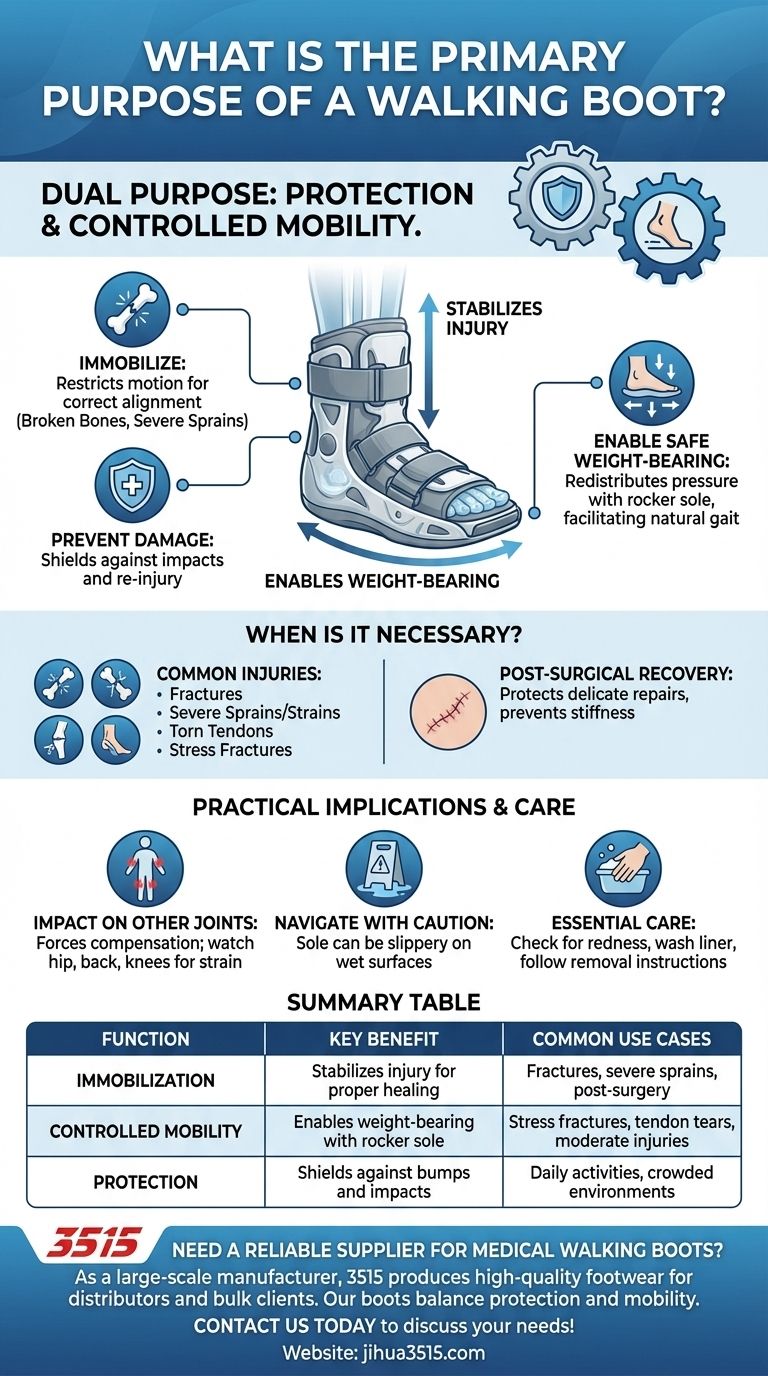
Visual Guide
Related Products
- Wholesale Durable Camouflage Canvas Shoes with High-Traction Cleated Rubber Sole
- Durable Rubber Sole Outdoor Shoes Wholesale & Custom Manufacturing
- Durable Goodyear Welt Leather Work Boots for Wholesale & Private Label
- Wholesale High-Traction Camo Boots - Custom Manufacturer for Brands
- Heavy-Duty Waterproof Nubuck Safety Boots Safety Shoes for Bulk Supply
People Also Ask
- Why is the selection of high-strength fabric materials necessary in the production of canvas shoes and training shoes?
- What are the properties of canvas as a shoe material? A Guide to Lightweight Comfort & Style
- Can canvas shoes be worn in rainy conditions? The Truth About Water Resistance
- What are some examples of vulcanized shoes? Discover the Flexibility and Board Feel of Classic Sneakers
- What are the characteristics of canvas as a shoe material? A Guide to Lightweight, Breathable Footwear



















