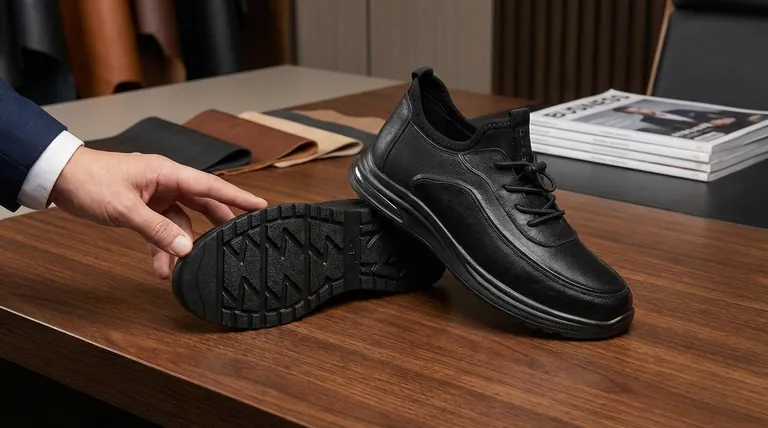
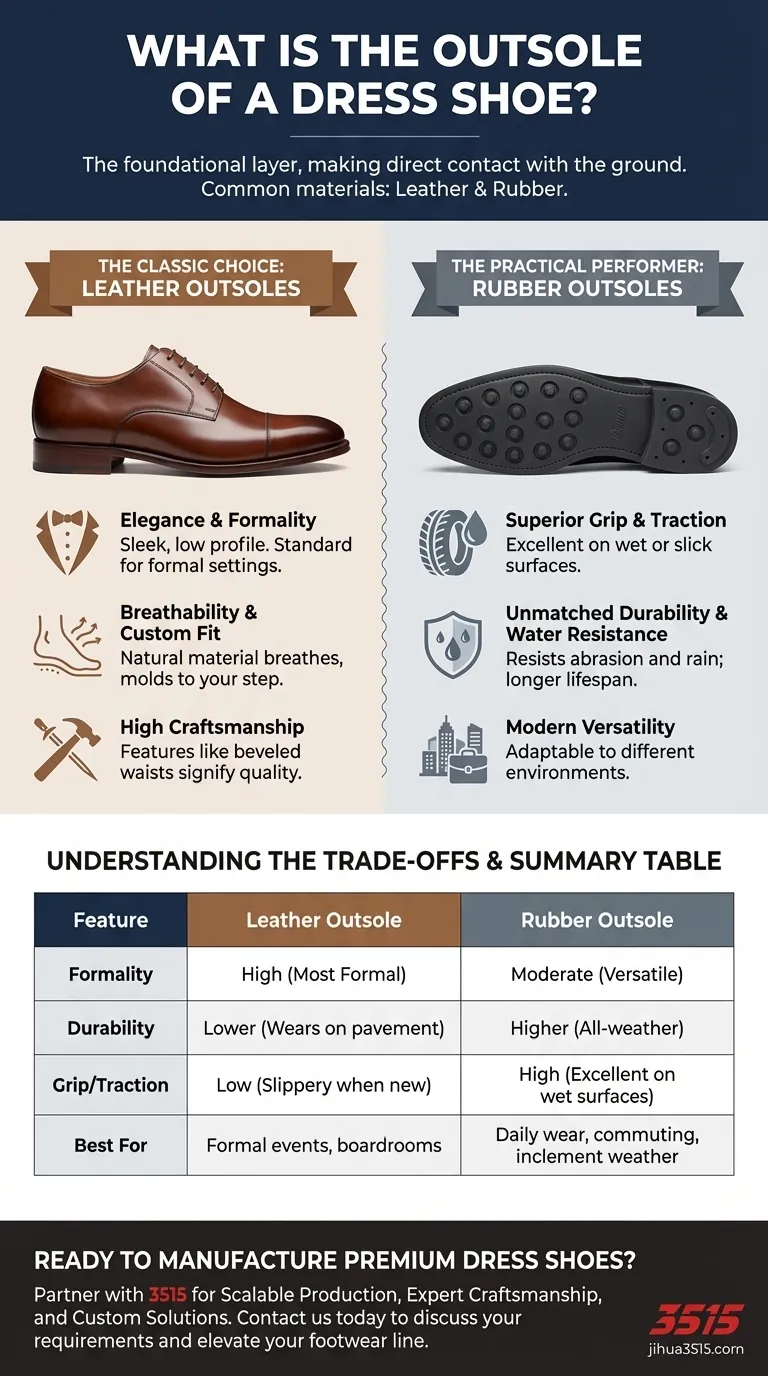
The outsole is the foundational layer of a dress shoe, the part that makes direct contact with the ground. The two most common materials are leather, prized for its classic elegance and breathability, and rubber (such as Dainite), valued for its superior durability and grip.
Choosing between a leather and rubber outsole is not a matter of which is "better," but which is right for your specific needs. The decision hinges on a fundamental trade-off between classic aesthetic and all-weather performance.
The Classic Choice: Leather Outsoles
A leather outsole is the traditional and most formal option for a high-quality dress shoe. Its sleek, low profile is considered the pinnacle of classic shoemaking.
Hallmarks of Elegance and Formality
Leather soles offer a slim, clean silhouette that is unmatched by the often-chunkier profiles of rubber. This makes them the standard for black-tie, business formal, and other highly traditional settings.
Breathability and Custom Fit
As a natural material, leather breathes. This helps regulate temperature and reduce moisture inside the shoe, contributing to greater comfort over a long day. Over time, a leather sole will also mold to your step, creating a more custom-feeling fit.
Indicators of High Craftsmanship
High-end leather outsoles often feature details that signify quality construction. These can include a beveled waist, where the edges of the sole are rounded for a more elegant look, showcasing the shoemaker's skill.
The Practical Performer: Rubber Outsoles
While less traditional, rubber outsoles have become a popular and highly functional choice for modern dress shoes, prized for their resilience and practicality.
Superior Grip and Traction
The single greatest advantage of a rubber outsole is its grip. Brands like Dainite are famous for their studded rubber soles that provide excellent traction on wet or slick surfaces, a significant weakness of leather.
Unmatched Durability and Water Resistance
Rubber is far more resistant to water and abrasion than leather. This makes it an ideal choice for daily commuters or anyone living in a climate with frequent rain or snow, as it will significantly outlast a leather sole under these conditions.
Modern Versatility
A rubber sole lends a slightly more casual, versatile edge to a dress shoe. It makes the shoe more adaptable to different environments, from the office to a city street, without sacrificing a professional appearance.
Understanding the Trade-offs
Choosing the right outsole requires weighing the distinct advantages and disadvantages of each material against your intended use.
Formality vs. Functionality
For the most important formal occasions, a sleek leather sole remains the undisputed champion of elegance. For a daily workhorse shoe that must handle a commute and unpredictable weather, rubber is the more logical, functional choice.
Durability on Different Surfaces
Leather soles wear down relatively quickly on abrasive, wet pavement. If you do a lot of walking on city streets, a rubber sole will offer a much longer lifespan and better value.
Break-in Period and Comfort
A new leather sole can be stiff and slippery. It requires a break-in period to scuff the surface for better grip and for the sole to gain flexibility. Rubber soles are typically comfortable and secure from the very first wear.
Making the Right Choice for Your Needs
Your decision should be guided by how and where you plan to wear your shoes.
- If your primary focus is maximum formality and tradition: Choose a leather outsole for its unparalleled elegance in boardrooms or at formal events.
- If your primary focus is all-weather versatility and daily wear: Choose a high-quality rubber outsole, like Dainite, for its superior durability and grip.
- If your primary focus is a balance of both: Look for hybrid shoes that may feature rubber inserts on a leather sole for added traction in key areas.
Ultimately, understanding the outsole empowers you to choose a shoe that performs as well as it looks.
Summary Table:
| Feature | Leather Outsole | Rubber Outsole |
|---|---|---|
| Formality | High (Most Formal) | Moderate (Versatile) |
| Durability | Lower (Wears on pavement) | Higher (All-weather) |
| Grip/Traction | Low (Slippery when new) | High (Excellent on wet surfaces) |
| Best For | Formal events, boardrooms | Daily wear, commuting, inclement weather |
Ready to Manufacture Premium Dress Shoes?
As a large-scale manufacturer, 3515 produces a comprehensive range of footwear for distributors, brand owners, and bulk clients. Our production capabilities encompass all types of shoes and boots, including high-quality dress shoes with both leather and rubber outsoles tailored to your market's needs.
Partner with us to benefit from:
- Expert Craftsmanship: Leverage our expertise in working with premium materials.
- Scalable Production: Meet any volume demand with consistent quality.
- Custom Solutions: Develop bespoke outsoles and shoe designs for your brand.
Contact our team today to discuss your manufacturing requirements and elevate your footwear line.
Visual Guide
Related Products
- Wholesale Comfort Dress Shoes with Dial Closure for Custom Manufacturing
- Wholesale Patent Oxford Dress Shoes | Custom & Bulk Manufacturing
- Wholesale Perforated Comfort Dress Shoes | Custom Derby Shoe Manufacturer
- Custom Manufactured Air Cushion Leather Business Shoes for Wholesale
- Durable Rubber Sole Outdoor Shoes Wholesale & Custom Manufacturing
People Also Ask
- How do comfort dress shoes differ from traditional dress shoes? Discover the Ergonomic Advantage
- Which dress shoe styles are suitable for wearing with jeans? A Guide to Smart-Casual Style
- What features make dress shoes suitable for standing all day? Achieve All-Day Comfort with Anatomical Design
- What are the benefits of resoling dress shoes? Extend Life & Boost Comfort
- What recent trends have influenced traditional dress shoe designs? The Shift to Modern Comfort