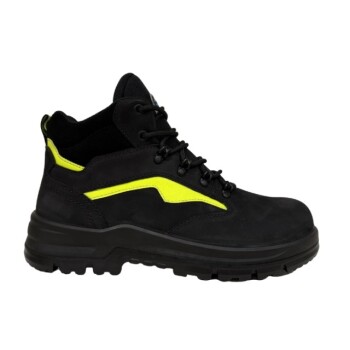
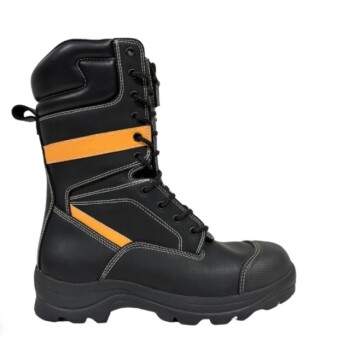
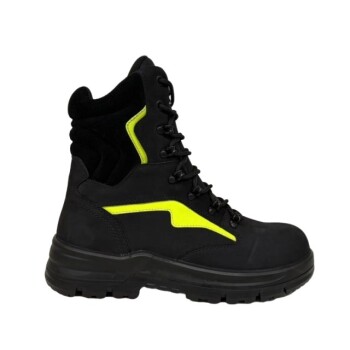
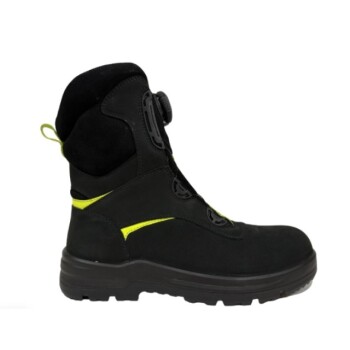
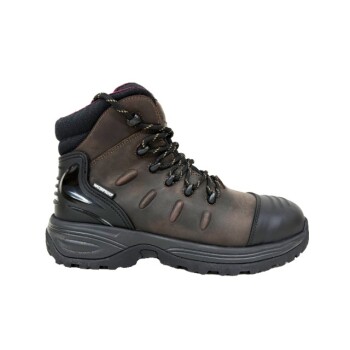
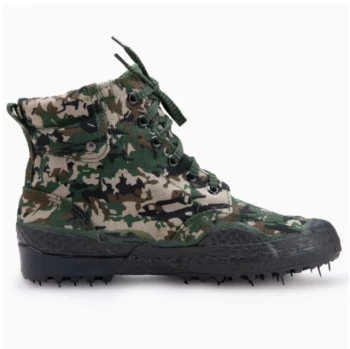
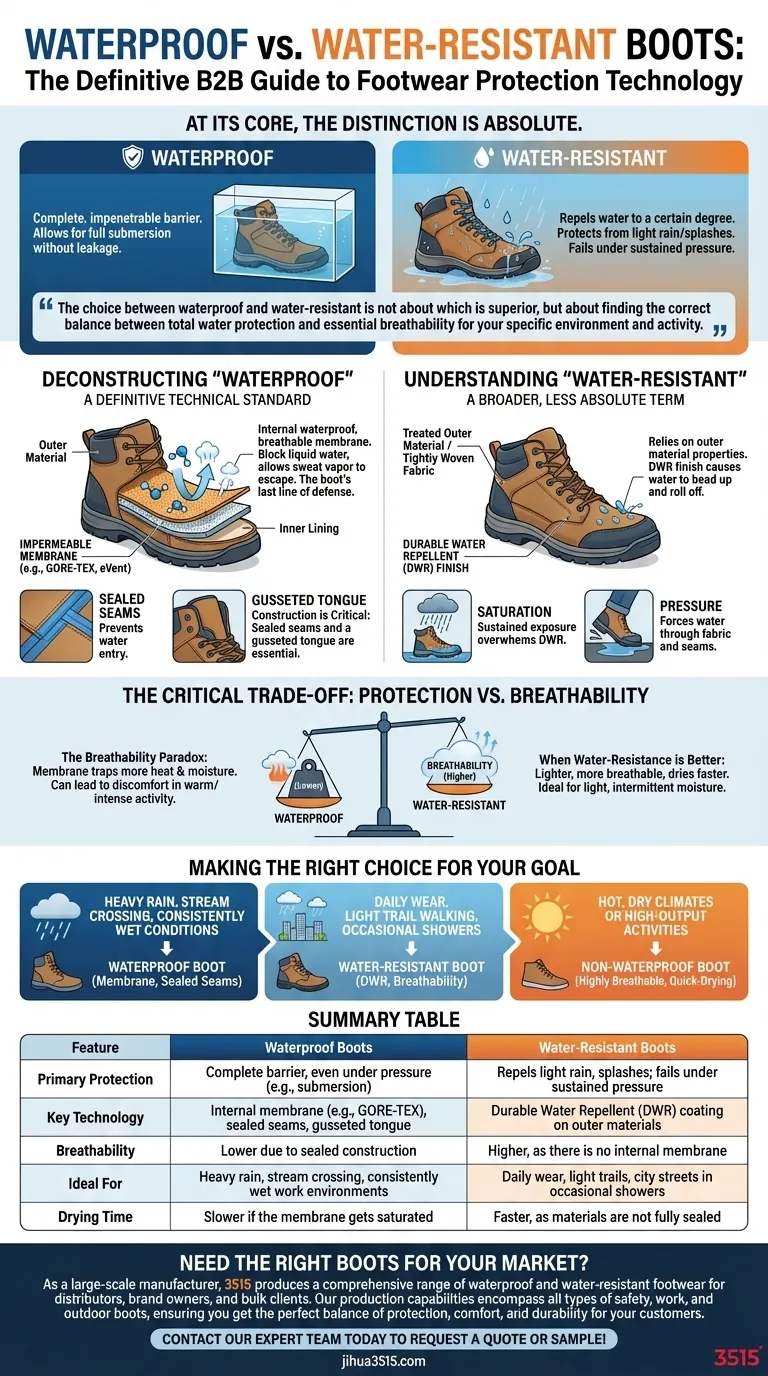
At its core, the distinction is absolute. A waterproof boot is engineered to provide a complete, impenetrable barrier against water, allowing for full submersion without leakage. A water-resistant boot is designed to repel water to a certain degree, protecting you from light rain or splashes, but it will eventually fail under sustained exposure or pressure.
The choice between waterproof and water-resistant is not about which is superior, but about finding the correct balance between total water protection and essential breathability for your specific environment and activity.
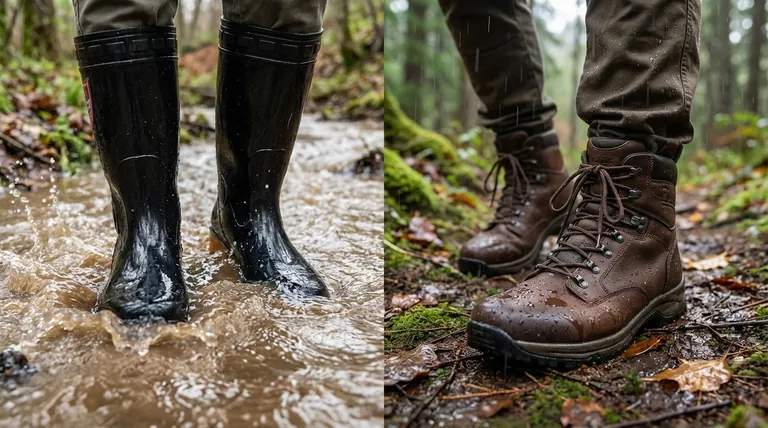
Deconstructing "Waterproof"
A waterproof rating is a definitive technical standard. It signifies that a boot is constructed not just with water-repellent materials, but with a system designed to block all water ingress up to a certain pressure.
The Impermeable Membrane
The key to most modern waterproof footwear is an internal waterproof, breathable membrane. This is a micro-porous layer, with pores small enough to block liquid water molecules from entering but large enough to allow smaller water vapor (sweat) molecules to escape.
Well-known examples include GORE-TEX, eVent, or other proprietary brand technologies. This membrane is the boot's last line of defense.
Construction is Critical
A boot isn't truly waterproof without specific construction techniques. This includes sealed seams to prevent water from entering through stitching holes and a gusseted tongue, which connects the tongue to the upper along the sides to create a complete barrier.
Understanding "Water-Resistant"
Water resistance is a broader, less absolute term. It relies on the properties of the outer material to shed water, rather than on a dedicated internal barrier.
The First Line of Defense
This level of protection is typically achieved in two ways: through the material itself (like treated leather or tightly woven synthetic fabrics) or through a chemical coating.
Many water-resistant boots use a Durable Water Repellent (DWR) finish. This is a treatment applied to the exterior that causes water to bead up and roll off the surface.
The Point of Failure
Water-resistant boots will fail under two conditions: saturation and pressure. Sustained exposure to rain will eventually overwhelm the DWR coating and saturate the outer material. Stepping into a deep puddle creates pressure that forces water through the fabric and seams.
The Critical Trade-off: Protection vs. Breathability
The decision to add a waterproof membrane fundamentally changes how a boot performs, creating a critical trade-off every user must consider.
The Breathability Paradox
No matter how advanced, a waterproof membrane will always be less breathable than a boot without one. Sealing the boot to keep water out inevitably traps more heat and moisture (sweat) inside.
For intense activity in warmer conditions, this can lead to discomfort and blisters just as easily as water getting in from the outside.
When Water-Resistance is Better
Because they lack a full membrane, water-resistant boots are almost always lighter and significantly more breathable. They offer a great balance for conditions where you expect only light, intermittent moisture.
Furthermore, a non-waterproof boot that gets wet will also dry out much faster than a boot with a saturated waterproof membrane.
Making the Right Choice for Your Goal
Select your footwear by matching the technology to your most common environment, not by simply choosing the highest level of protection available.
- If your primary focus is hiking in heavy rain, crossing streams, or working in consistently wet conditions: You need the guaranteed protection of a truly waterproof boot with a membrane and sealed seams.
- If your primary focus is daily wear, light trail walking, or navigating city streets in an occasional shower: A water-resistant boot offers sufficient protection while providing superior breathability and comfort.
- If your primary focus is performance in hot, dry climates or high-output activities: You are often best served by forgoing water protection entirely in favor of a highly breathable, quick-drying, non-waterproof boot.
Ultimately, choosing the right boot is about understanding that every design feature is a deliberate compromise.
Summary Table:
| Feature | Waterproof Boots | Water-Resistant Boots |
|---|---|---|
| Primary Protection | Complete barrier, even under pressure (e.g., submersion) | Repels light rain, splashes; fails under sustained pressure |
| Key Technology | Internal membrane (e.g., GORE-TEX), sealed seams, gusseted tongue | Durable Water Repellent (DWR) coating on outer materials |
| Breathability | Lower due to sealed construction | Higher, as there is no internal membrane |
| Ideal For | Heavy rain, stream crossing, consistently wet work environments | Daily wear, light trails, city streets in occasional showers |
| Drying Time | Slower if the membrane gets saturated | Faster, as materials are not fully sealed |
Need the Right Boots for Your Market?
As a large-scale manufacturer, 3515 produces a comprehensive range of waterproof and water-resistant footwear for distributors, brand owners, and bulk clients. Our production capabilities encompass all types of safety, work, and outdoor boots, ensuring you get the perfect balance of protection, comfort, and durability for your customers.
Let's discuss your specific needs and how we can support your business.
Contact our expert team today to request a quote or sample!
Visual Guide
Related Products
- Premium Wholesale Waterproof Safety Boots High Performance Protection for Industrial Markets
- High Performance Fire-Retardant Waterproof Safety Boots
- Wholesale Premium Waterproof Nubuck Safety Shoes Boots
- Premium Flame-Retardant Waterproof Safety Boots and Shoes
- Durable Waterproof Rain Boots | Custom Manufacturer for Wholesale & Brands
People Also Ask
- What weather and chemical protections do premium boots offer? Your Complete Guide to Safety & Performance
- Why are waterproof safety boots recommended for certain work environments? Essential Protection for Wet & Hazardous Jobs
- What are the primary protective functions of industrial safety boots in oil palm plantations? Master Rough Terrain Safety
- Why are oil-resistant and anti-slip properties critical for industrial safety boots? Expert Outsole Engineering Guide
- What are the best types of shoes for different gardening conditions? Find Your Perfect Match.