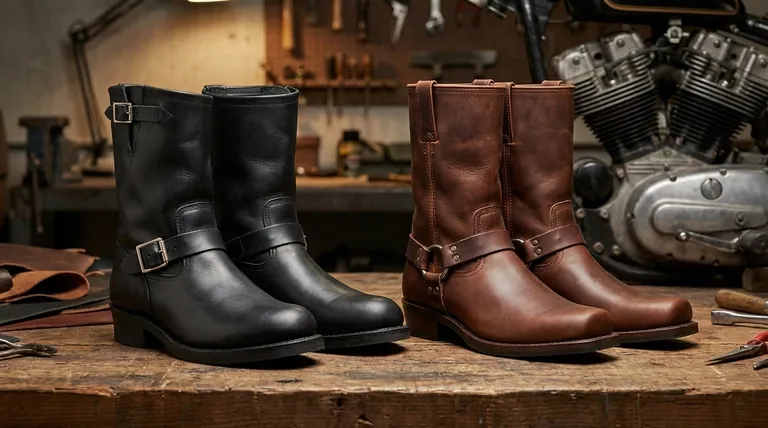
In short, the primary differences between engineer and harness boots are their toe shape and ankle strap design. Engineer boots feature a rounded toe and adjustable buckles for a secure fit, while harness boots are defined by a square toe and a fixed, non-adjustable O-ring harness strap system.
While both are rugged, laceless pull-on boots rooted in protection, the core distinction lies in their philosophy. The engineer boot is a functional work design prioritizing an adjustable fit, whereas the harness boot is a stylistic evolution defined by its iconic, fixed ankle hardware.
Deconstructing the Engineer Boot
The engineer boot is a classic piece of American workwear, born from the need for durable, safe, and laceless footwear for men working on steam locomotives. Every element of its design serves a purpose.
The Focus on Adjustability
Engineer boots feature two key adjustable buckles. One is located at the top of the boot shaft to cinch it closed, and a second is placed across the instep to tighten the boot around the foot for a secure fit.
This design was critical for preventing the boot from slipping off while eliminating laces, which could easily get caught in machinery.
The Rounded Toe
The classic silhouette of an engineer boot includes a simple, unstructured rounded toe. This provides a comfortable fit for long hours of work without the aggressive profile of other boot styles.
A Heritage of Protection
Originally designed for railroad firemen (or "engineers"), these boots were built to protect against hot embers, sharp objects, and the general hazards of an industrial environment. Their tall shaft and heavy leather construction provided essential safety.
Deconstructing the Harness Boot
The harness boot evolved from the engineer boot, adopting its pull-on style and rugged nature but developing its own distinct visual identity, closely associated with motorcycle culture.
The Signature Ankle Harness
The most defining feature of a harness boot is the system of four leather straps that meet at a metal O-ring on either side of the ankle. This "harness" is not adjustable and serves primarily as a stylistic element.
While largely aesthetic, the harness adds a degree of ankle rigidity and is a nod to the need to protect riders' ankles and shins from the heat of engine blocks and exhaust pipes.
The Square Toe
In direct contrast to the engineer boot, the harness boot almost universally features a squared-off toe. This distinctive shape is a key visual identifier and one of the easiest ways to tell the two styles apart.
Understanding the Trade-offs
Choosing between these two iconic boots comes down to understanding the functional and aesthetic differences that define them.
Adjustability vs. Simplicity
The engineer boot's buckles offer a more customized and secure fit, allowing you to tighten the boot around your instep and calf. The harness boot is simpler to pull on and off but offers no fit adjustment at the ankle.
Workwear vs. Rider Aesthetic
The engineer boot retains its classic, industrial workwear heritage. Its design is functional and slightly more understated. The harness boot, with its prominent hardware and square toe, carries a bolder, more rugged aesthetic directly linked to motorcycling and rock-and-roll.
Comfort and Fit
The choice between a rounded and square toe often comes down to personal preference and foot shape. Neither is inherently superior, but the different toe boxes will feel distinct, with the rounded toe often being more accommodating for a wider variety of feet.
Making the Right Choice for Your Needs
Your decision should be guided by the fit you require and the style you want to project.
- If your primary focus is an adjustable fit: The engineer boot is the superior choice, as its instep buckle allows you to lock your heel in place for a more secure feel.
- If your primary focus is a bold, motorcycling-inspired style: The harness boot’s iconic O-ring hardware and square toe provide a distinctive and unmistakable look.
- If your primary focus is historical authenticity: The engineer boot has a longer and more direct lineage as a piece of purpose-built American workwear from the railroad era.
Ultimately, your choice depends on whether you prioritize the adaptable function of the engineer boot or the iconic aesthetic of the harness boot.
Summary Table:
| Feature | Engineer Boots | Harness Boots |
|---|---|---|
| Toe Shape | Rounded Toe | Square Toe |
| Ankle Strap | Adjustable Buckles | Fixed O-Ring Harness |
| Primary Focus | Adjustable Fit & Function | Bold, Motorcycle-Inspired Style |
| Heritage | Railroad Workwear | Motorcycle Culture |
Ready to Stock Iconic Footwear?
As a large-scale manufacturer, 3515 produces a comprehensive range of durable footwear for distributors, brand owners, and bulk clients. Whether you need the classic functionality of engineer boots or the bold aesthetic of harness boots, our production capabilities encompass all types of shoes and boots to meet your market demands.
Contact us today to discuss your production needs and elevate your product line with quality-crafted boots.
Visual Guide

Related Products
- Durable Leather Work Boots Wholesale Manufacturer & Custom Factory
- Durable Leather Work Boots for Wholesale & Custom OEM Manufacturing
- Durable Leather Work Boots for Wholesale & Custom Manufacturing
- Premium Waterproof High-Cut Industrial Safety Boots for Wholesale and Bulk Orders
- Wholesale Customizable Safety Boots Durable & Protective Footwear Manufacturing
People Also Ask
- What are the common workplace hazards that can be mitigated with the right work boots? Protect Your Workforce
- How do PVC, neoprene, and rubber work boots compare in weight? Choose the Right Boot for All-Day Comfort
- Which brands are known for high-quality work boots? A Guide to Durable, Safe Footwear
- How do subjective norms influence the marketing of work boots and tactical footwear? Leverage Social Identity for Sales
- What options are available for restoring worn-out work boots? Expert Strategies for Longevity