
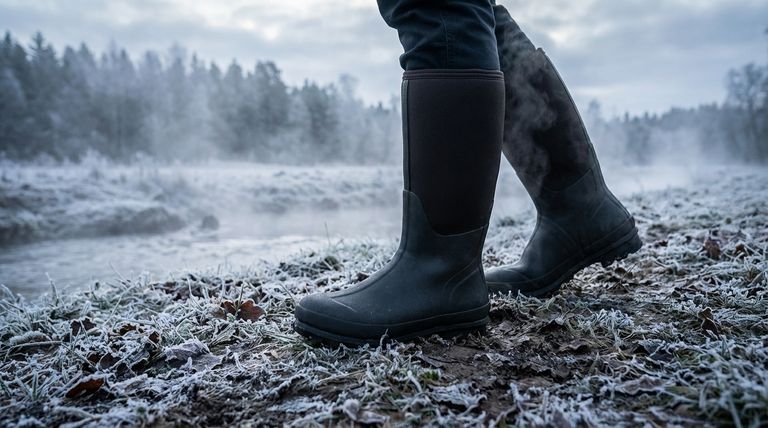
The primary benefit of wellies with a neoprene lining is a significant upgrade in warmth, comfort, and fit. Unlike standard rubber boots, a neoprene-lined wellie traps body heat effectively, provides a cushioned feel with every step, and molds to your foot for a snug, supportive fit that prevents slipping.
Neoprene transforms a standard wellington from simple waterproof footwear into an insulated, comfortable boot designed for cold conditions. This specialization, however, introduces important trade-offs in breathability and weight that you must consider for your specific needs.
How Neoprene Enhances a Wellington Boot
A neoprene lining is fundamentally different from the thin cotton or nylon found in basic wellies. It’s the same closed-cell foam material used in wetsuits, valued for its exceptional insulating and flexible properties.
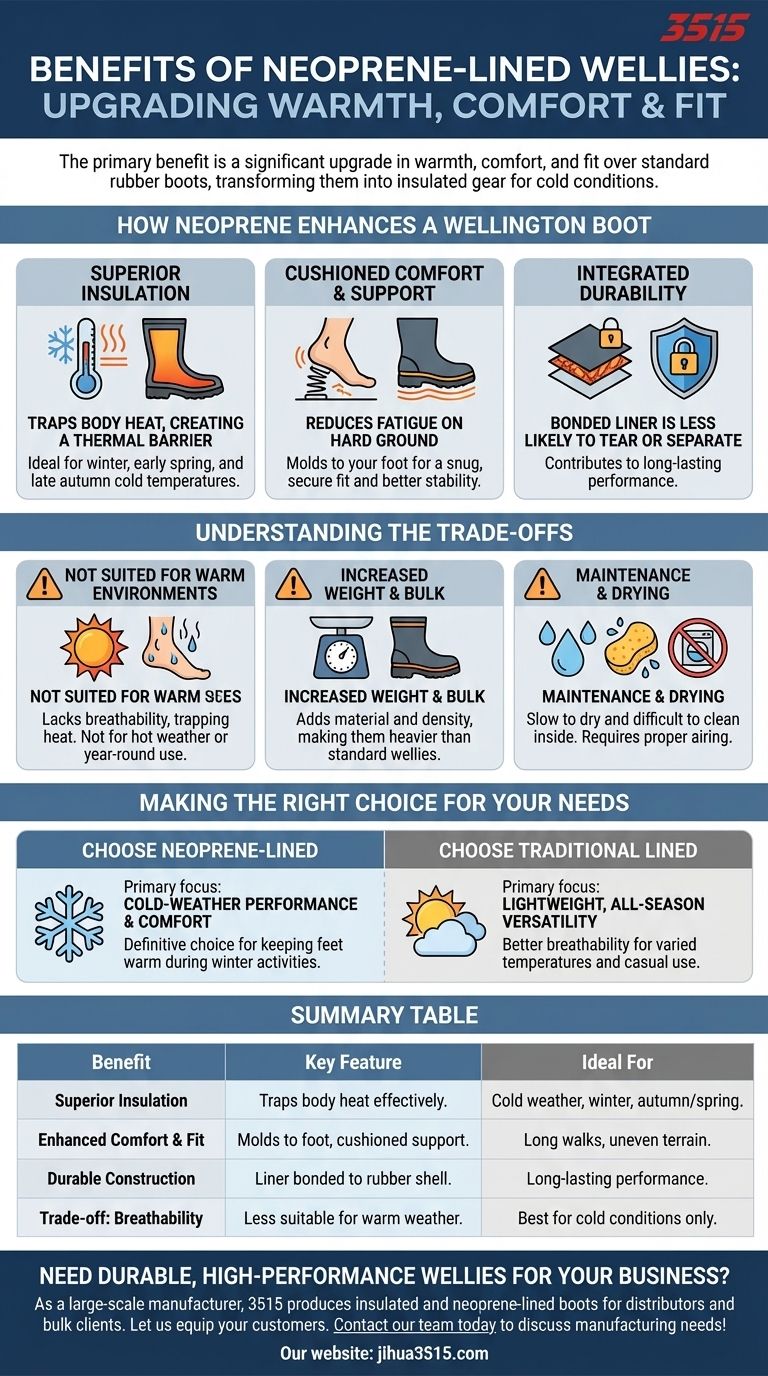
Superior Insulation for Cold Weather
The key function of neoprene is to trap a thin layer of air and body heat. This creates a thermal barrier against the cold ground and air.
This makes neoprene-lined boots the ideal choice for winter, early spring, and late autumn when temperatures are low.
Cushioned Comfort and Support
The material's natural sponginess provides significant underfoot cushioning. This reduces fatigue when walking on hard or uneven ground for extended periods.
Furthermore, neoprene molds around the contours of your foot and calf. This creates a secure, custom-like fit that eliminates the loose, sloppy feeling common with unlined wellies, providing better support and stability.
Integrated Durability
In well-constructed boots, the neoprene liner is bonded directly to the inner surface of the waterproof rubber shell.
This integrated design means the lining is less likely to tear, bunch up, or separate from the outer boot over time, contributing to the footwear's overall longevity.
Understanding the Trade-offs
While neoprene offers clear advantages, its specialized nature creates limitations. An objective assessment means acknowledging its drawbacks.
Not Suited for Warm Environments
The same insulation that makes neoprene boots excellent for the cold makes them poorly suited for warm weather.
In hotter conditions, the lack of breathability will trap heat and moisture, leading to sweaty, uncomfortable feet. They are a tool for cold, not for year-round use.
Increased Weight and Bulk
The neoprene layer adds material and density to the boot's construction. Consequently, these wellies are typically heavier and bulkier than their cotton-lined or unlined counterparts.
Maintenance and Drying
Because of its dense, absorbent nature, neoprene can be difficult to clean and slow to dry if it gets wet on the inside. It cannot be machine-washed and can retain odors if not aired out properly.
Making the Right Choice for Your Needs
Selecting the right lining comes down to matching the boot's features to its intended environment.
- If your primary focus is cold-weather performance and comfort: A neoprene-lined wellie is the definitive choice for keeping your feet warm and supported during winter activities.
- If your primary focus is lightweight, all-season versatility: A traditional cotton-lined or unlined wellie provides better breathability and is more suitable for varied temperatures and casual use.
Ultimately, choosing the right lining transforms the wellington boot from a generic tool into specialized gear for your specific environment.
Summary Table:
| Benefit | Key Feature | Ideal For |
|---|---|---|
| Superior Insulation | Traps body heat effectively | Cold weather, winter, autumn/spring |
| Enhanced Comfort & Fit | Molds to foot, cushioned support | Long walks, uneven terrain |
| Durable Construction | Liner bonded to rubber shell | Long-lasting performance |
| Trade-off: Breathability | Less suitable for warm weather | Best for cold conditions only |
Need durable, high-performance wellies for your business? As a large-scale manufacturer, 3515 produces a comprehensive range of footwear for distributors, brand owners, and bulk clients. Our production capabilities encompass all types of insulated and non-insulated boots, including neoprene-lined wellies designed for superior cold-weather performance. Let us help you equip your customers with the right footwear for any condition. Contact our team today to discuss your manufacturing needs!
Visual Guide
Related Products
- Lightweight Breathable Training Shoes for Wholesale & Custom OEM Manufacturing
- Wholesale Durable & Breathable Training Shoes for Custom Brands
- Wholesale Breathable Training Shoes Custom Athletic Footwear Manufacturer
- Custom OEM Training Shoes Wholesale Manufacturer Durable & Breathable
People Also Ask
- Why are lightweight training shoes often preferred over professional hiking boots in urban walking? Maximize City Comfort
- What is the primary role of specialized training or orthopedic shoes? Enhance Safety in Elderly Balance Training
- Why are professional-grade training shoes essential for physical therapy? Ensure Patient Safety and Gait Stability
- Why are the slip-resistance and stability performance of training shoes critical in gait analysis? Ensure Data Accuracy
- Why is the use of flat-soled or professional training shoes essential for WBV? Maximize Vibration Energy Transfer



