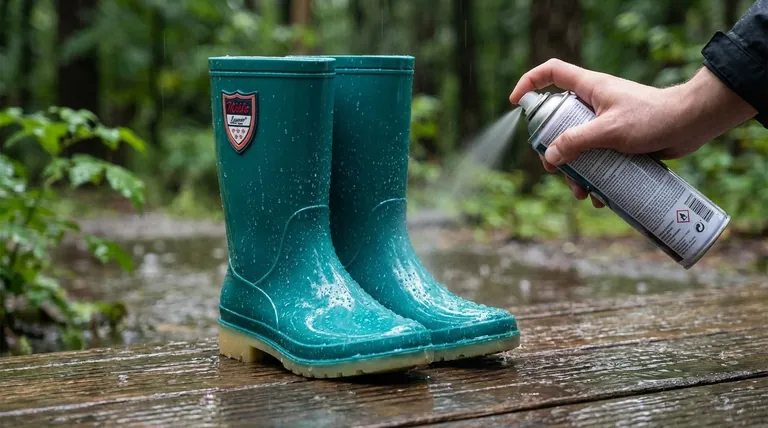
For a quick alternative to waterproof wax, your best option is an aerosol waterproofing spray. These sprays create a protective barrier over the leather surface in a fraction of the time it takes to apply traditional wax, requiring little more than a simple spray-and-dry process.
The core decision between wax and spray is a trade-off: sprays provide unmatched speed and convenience, while traditional waxes offer superior durability and deep leather conditioning.
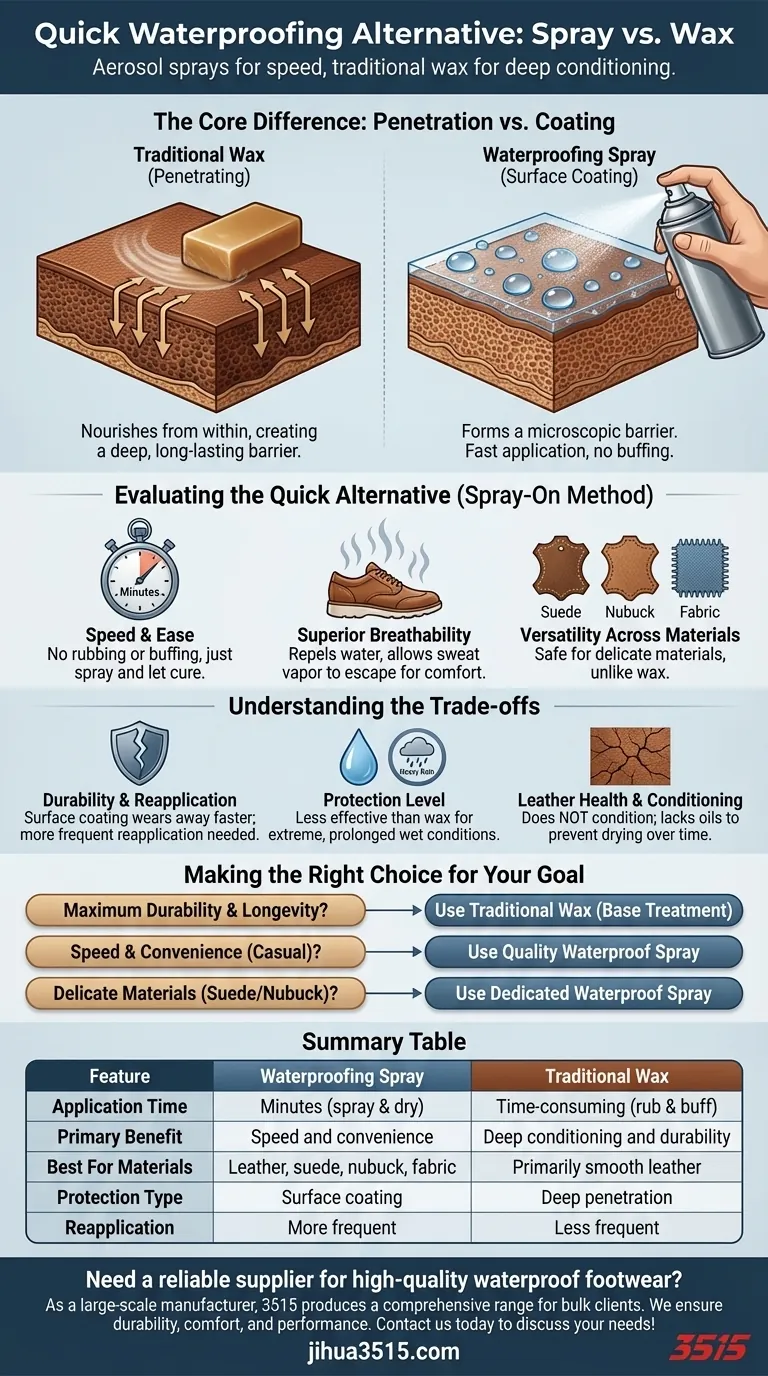
The Core Difference: Penetration vs. Coating
To understand the right application, you must first understand how each method works. They are fundamentally different approaches to achieving the same goal.
How Traditional Wax Works
Traditional waterproof wax is a penetrating treatment. When you work the wax into leather, it soaks into the material's pores.
This process nourishes and conditions the leather from within, keeping it supple while creating a deep, robust, and long-lasting water barrier.
How Waterproofing Sprays Work
A modern waterproofing spray is a surface coating. It forms a microscopic, chemical barrier over the top of the material.
This barrier causes water to bead up and roll off without soaking in. Because it doesn't need to be worked into the pores, the application is exceptionally fast.
Evaluating the Quick Alternative: The Spray-On Method
Moving from a time-intensive wax to a quick spray involves more than just saving time. It changes the nature of the protection itself.
The Key Advantage: Speed and Ease
This is the primary reason to choose a spray. A thorough application can be done in minutes, with no rubbing, buffing, or mess. It’s a simple "spray and let cure" process.
Superior Breathability
Many modern sprays are engineered to create a barrier that repels water molecules but still allows smaller vapor molecules (sweat) to escape. This maintains the material's breathability, which is a critical feature for footwear comfort.
Versatility Across Materials
Sprays are far more versatile than wax. They can be safely applied to materials that wax would ruin, such as suede, nubuck, and fabric panels commonly found on hiking boots and modern shoes.
Understanding the Trade-offs
Convenience rarely comes without a cost. Being aware of the limitations of a spray-on treatment is essential for proper gear maintenance.
Durability and Reapplication
A spray's surface coating is less durable than a deeply penetrated wax treatment. It wears away more quickly with abrasion and flexing.
This means you will need to reapply the spray more frequently to maintain an effective waterproof barrier, especially on high-wear items like boots.
Protection Level
For extreme, prolonged wet conditions, a heavy wax application provides a more formidable barrier. Because it's integrated into the leather, it is less likely to fail under sustained pressure.
Leather Health and Conditioning
This is the most critical trade-off. Waterproofing sprays protect but do not condition.
Traditional waxes are rich in oils and conditioners that nourish leather, preventing it from drying out and cracking over time. Relying solely on sprays without periodic conditioning can shorten the lifespan of your leather goods.
Making the Right Choice for Your Goal
Select your method based on your specific needs for the gear in question.
- If your primary focus is maximum durability and leather longevity: Use a traditional wax as your base treatment for heavy-duty boots, and use a spray for quick touch-ups between deeper conditioning.
- If your primary focus is speed and convenience for casual use: A quality waterproof spray is the perfect solution for daily footwear or items that see only light to moderate rain.
- If you need to treat delicate materials like suede or nubuck: A dedicated waterproofing spray is the only correct and safe choice.
By understanding the distinct roles of each method, you can effectively protect your gear without compromising on convenience or long-term care.
Summary Table:
| Feature | Waterproofing Spray | Traditional Wax |
|---|---|---|
| Application Time | Minutes (spray & dry) | Time-consuming (rub & buff) |
| Primary Benefit | Speed and convenience | Deep conditioning and durability |
| Best For Materials | Leather, suede, nubuck, fabric | Primarily smooth leather |
| Protection Type | Surface coating | Deep penetration |
| Reapplication Frequency | More frequent | Less frequent |
Need a reliable supplier for high-quality waterproof footwear?
As a large-scale manufacturer, 3515 produces a comprehensive range of footwear for distributors, brand owners, and bulk clients. Our production capabilities encompass all types of shoes and boots, including those treated with advanced waterproofing technologies. We ensure durability, comfort, and performance in every pair.
Contact us today to discuss your specific needs and discover how we can add value to your product line!
Visual Guide
Related Products
- Lightweight Breathable Sneakers with Wet-Traction Grip for Wholesale & Private Label
- Wholesale Breathable Athletic Sneakers - Custom Lightweight Cushioned Footwear Manufacturer
- Durable Waterproof Rain Boots | Custom Manufacturer for Wholesale & Brands
- Wholesale Lightweight Cushioned Athletic Sneakers for Custom Bulk Production
- Wholesale Waterproof Tactical Boots Custom Suede & High-Traction Soles
People Also Ask
- Why are breathable sneakers necessary for tropical commuting? Stay Cool and Dry in High Humidity
- What role do lightweight training shoes play in urban traffic? Boost Agility and Reaction for Safer City Navigation
- How do lightweight shoes provide support? The Science of Efficient Cushioning & Stability
- What are the style advantages of lightweight shoes? Sleek, Versatile & Modern Comfort
- How do lightweight shoes improve breathability? Discover the Science of Cool, Dry Feet