
A perfect skate shoe fit is defined by a snug, yet comfortable feel that completely locks your heel in place without causing any pain or cutting off circulation. Your foot should feel secure and integrated with the shoe, with no internal sliding during movement.
The goal of a skate shoe fit isn't just to match your foot size; it's to create a responsive interface between your body and your board. The ideal fit strikes a precise balance between locked-in control for technical tricks and all-day comfort for longer sessions.
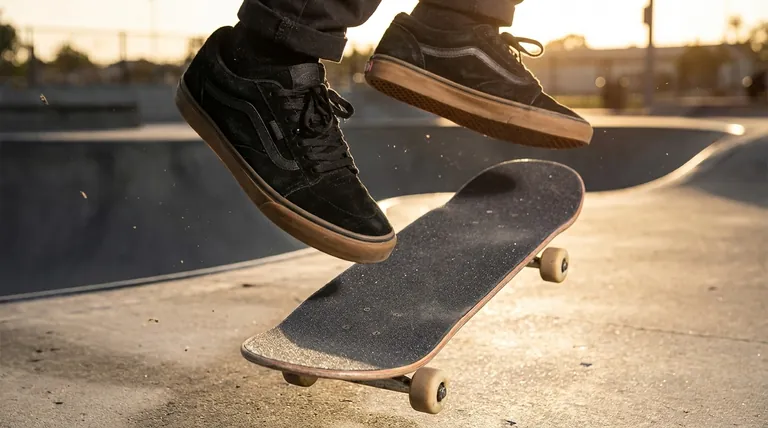
The Anatomy of a Proper Skate Shoe Fit
To find the right fit, you need to assess several key areas. Each contributes to performance, comfort, and the longevity of both the shoe and your session.
The Snugness Test: Comfort vs. Control
A skate shoe should feel like a firm handshake around your foot—not a crushing grip. It needs to be snug enough that your foot doesn't move or slide inside the shoe when you walk or pivot.
A common and effective check is the finger test. While wearing the shoe, you should just be able to squeeze one index finger between your heel and the back of the shoe.
Heel Lock: The Non-Negotiable Foundation
This is the single most critical aspect of a skate shoe's fit. Your heel must be completely stable and should not lift up or slide when you walk, jump, or mimic skating motions.
Heel slip leads to a dangerous loss of board control, especially during ollies and flip tricks. It also causes painful blisters and premature wear on the shoe's interior lining.
The Toe Box: Room to Maneuver
Your toes should not be pressed against the front of the shoe. There should be a small amount of space (about a thumb's width) to allow your toes to splay naturally for balance.
However, too much space is also a problem. If your foot can slide forward into the toe box, you lose the essential heel lock and overall control.
Circulation and Pain Points
A properly fitting shoe will have no "hot spots" or areas of sharp pressure. Pay close attention to the width of the shoe and the area over the top of your foot.
Any feeling of pinching, numbness, or tingling is an immediate red flag. This indicates the fit is too tight and will cut a skate session short due to discomfort.
Understanding the Common Pitfalls
Navigating the nuances of shoe materials and brand inconsistencies is crucial for avoiding a bad purchase.
The Myth of "Breaking In" Severe Discomfort
While it's true that most skate shoes—especially those made of suede or leather—will stretch and mold to your foot, this only applies to mild snugness.
A shoe that causes genuine pain or significant pressure points out of the box is the wrong size or shape for your foot. No amount of "breaking in" will fix a fundamentally incorrect fit.
Sizing Varies Dramatically Between Brands
Never assume your size in one brand will translate directly to another. Skate shoe companies use different lasts (the foot-shaped molds shoes are built on), leading to significant variations in length and width.
Always try on a new model of shoe before buying, even if it's from a brand you've worn for years.
Forgetting Your Equipment
The fit of a shoe can change based on what you wear with it. The thickness of your socks and the presence of a custom insole can dramatically alter how a shoe feels.
Always try on shoes with the same type of socks you typically skate in to get a true assessment of the fit.
How to Apply This to Your Purchase
Use this simple, practical process to ensure you walk away with the right pair.
- If your primary focus is technical control and board feel: Opt for a slightly snugger fit, knowing that materials like suede will stretch to create a custom, glove-like feel.
- If your primary focus is impact protection and comfort: Prioritize a fit that has zero pressure points and ample room for a supportive insole, even if it feels slightly less locked-in.
- If you are buying your first pair of skate shoes: Err on the side of comfort. Focus on achieving a perfect heel lock without any painful pinching to build good habits and confidence.
Ultimately, the right fit transforms your shoe from simple footwear into a reliable piece of performance equipment.
Summary Table:
| Key Area | Sign of a Perfect Fit | Red Flag to Avoid |
|---|---|---|
| Overall Snugness | Firm handshake feel; one finger fits behind heel | Foot slides or feels crushed |
| Heel Lock | Heel is completely stable, no lift or slip | Heel moves up and down when walking |
| Toe Box | Thumb's width of space; toes can splay naturally | Toes jammed against front or too much sliding room |
| Comfort | No pinching, numbness, or hot spots | Any pain, pressure points, or tingling |
Ready to equip your team or brand with high-performance skate footwear?
As a large-scale manufacturer, 3515 produces a comprehensive range of durable and responsive skate shoes for distributors, brand owners, and bulk clients. Our production capabilities ensure consistent sizing, premium materials like suede and leather, and the precise fit that skaters demand.
Contact us today to discuss your footwear needs and leverage our manufacturing expertise to deliver superior products to your market.
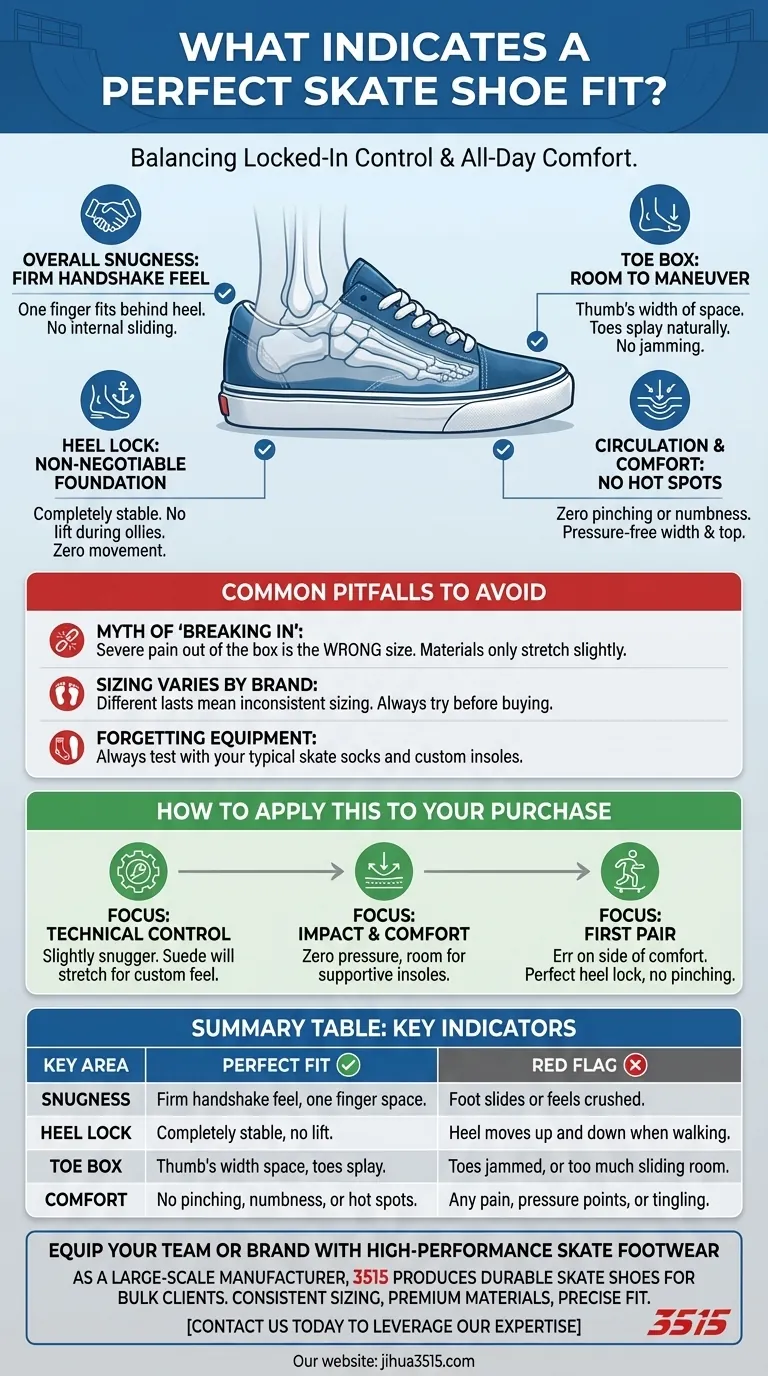
Visual Guide
Related Products
- Advanced KPU Athletic Safety Shoe with Steel Toe Cap Anti-Slip Rotary Lacing System
- Wholesale Durable Camouflage Canvas Shoes with High-Traction Cleated Rubber Sole
- Premium Suede Sport Safety Shoes for Wholesale & Bulk Orders
- Wholesale Durable & Breathable Training Shoes for Custom Brands
- Wholesale Breathable Training Shoes Custom Athletic Footwear Manufacturer
People Also Ask
- What are the key differences between steel toe and composite toe caps? Choose the Right Safety for Your Job
- What impact do steel toe caps have on toe skin health? Prevent Friction and Pressure in Your Safety Shoes
- What are the primary protective functions of safety shoes with steel toes in the automotive repair industry?
- What type of safety shoe is recommended for workers exposed to heavy machinery? Steel Toe Boots for Ultimate Protection
- How does defining specific friction interface models in FEA assist in predicting safety shoe toe cap failure modes?



















