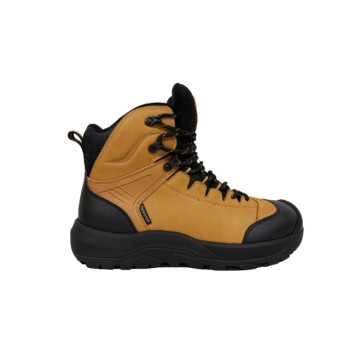
When it comes to winter, wearing unsupportive footwear can directly lead to a range of painful and debilitating conditions. These include acute injuries like ankle sprains and fractures, as well as chronic strain-related issues such as plantar fasciitis, Achilles tendonitis, arch spasms, and the development of heel spurs.
The core issue with poor winter footwear is that it fails to provide the necessary structure to support your foot's mechanics. This forces the small muscles, ligaments, and tendons in your feet and ankles to overwork, leading to inflammation, strain, and a higher risk of injury on hazardous surfaces.
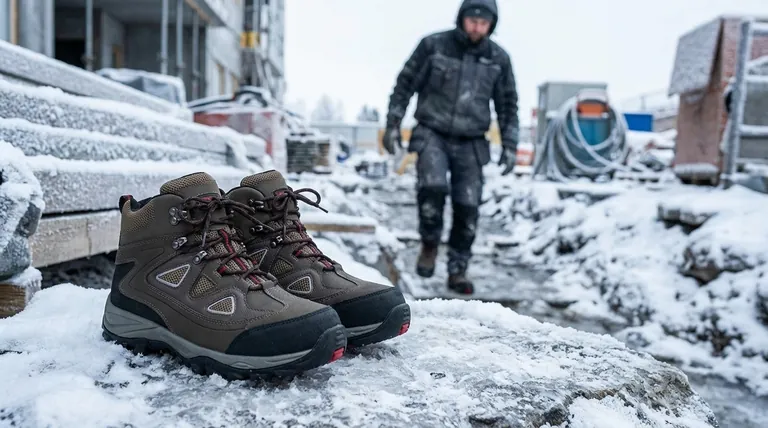
Why Winter Footwear Poses a Unique Risk
Winter conditions introduce specific challenges that standard footwear isn't equipped to handle. The combination of cold temperatures and slippery terrain places unique stress on your lower extremities.
The Impact of Cold and Ice
Cold weather can make muscles and ligaments less pliable and more susceptible to strain.
Icy or uneven surfaces force the stabilizing muscles in your feet and ankles to work constantly to maintain balance, increasing fatigue and the likelihood of a misstep.
The Problem with Poor Boot Design
Many popular winter boots prioritize warmth and water resistance over crucial biomechanical support.
They often feature flat, flexible soles with no defined arch support, and soft, unstructured uppers that offer little to no ankle stability. This combination is a primary driver of foot-related problems.
A Breakdown of Common Conditions
When your footwear lacks proper support, the stress is transferred directly to your body. This manifests in several distinct types of injuries.
Strain-Related Injuries: The Overworking Foot
These conditions arise from repetitive stress and a lack of support for the foot's natural arch.
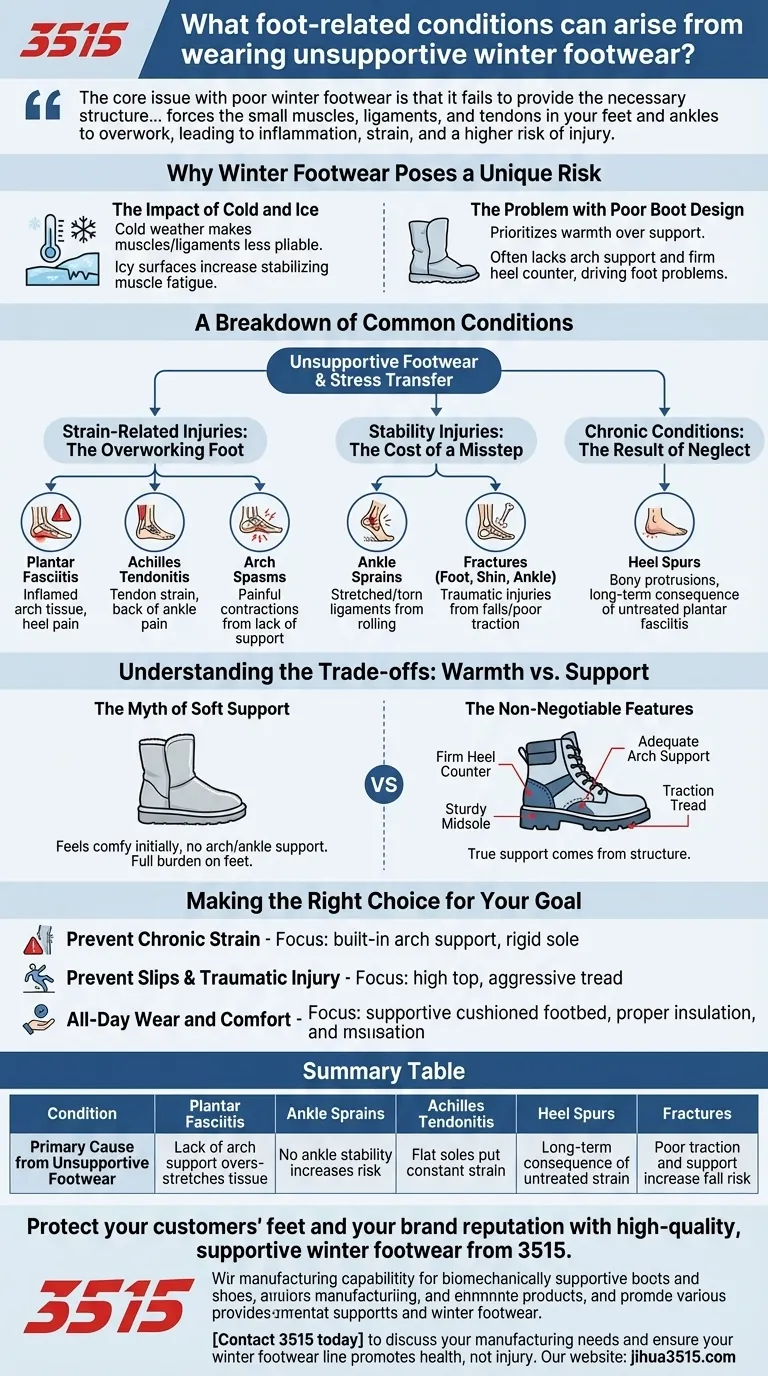
Plantar fasciitis is an inflammation of the thick band of tissue connecting your heel to your toes, often causing sharp heel pain. Unsupportive boots allow your arch to collapse, overstretching this tissue with every step.
Achilles tendonitis involves irritation of the large tendon at the back of your ankle. Boots without a slight heel lift can put constant strain on this tendon, leading to pain and stiffness.
Arch spasms are painful, involuntary contractions of the muscles in your foot's arch as they struggle to provide the support your shoe is lacking.
Stability Injuries: The Cost of a Misstep
These injuries are typically acute, caused by a sudden slip, twist, or fall, which is made much more likely by unsupportive footwear.
Ankle sprains occur when the ligaments supporting the ankle are stretched or torn. Boots without a firm structure around the ankle offer no protection against rolling your foot on uneven ground.
Foot, shin, or ankle fractures are severe traumatic injuries that can result from a fall. A lack of proper traction and ankle support dramatically increases this risk on icy surfaces.
Chronic Conditions: The Result of Neglect
Ignoring initial pain can lead to more persistent and complicated issues over time.
Heel spurs are bony protrusions that can form on the heel bone. They are often a long-term consequence of untreated plantar fasciitis, where the body tries to repair the strained tissue.
Understanding the Trade-offs: Warmth vs. Support
A common pitfall is choosing a boot solely for its warmth or style, assuming that a soft, cozy lining equates to comfort and support. This is a critical mistake.
The Myth of Soft Support
Soft, unstructured boots (like many shearling-lined styles) feel comfortable initially but provide virtually no arch or ankle support. This places the full burden of shock absorption and stability on your feet, leading directly to the conditions mentioned above.
The Non-Negotiable Features
True support comes from structure. A supportive winter boot must have a firm heel counter (the part that cups your heel), a sturdy, non-flexible midsole, and adequate arch support, either built-in or from an added insert. It must also have a tread designed for traction on wet or icy ground.
Making the Right Choice for Your Goal
Selecting the right winter footwear means matching the boot's features to your primary needs to prevent injury and ensure comfort.
- If your primary focus is preventing chronic strain (like plantar fasciitis): Prioritize a boot with excellent, built-in arch support and a rigid sole that doesn't bend easily in the middle.
- If your primary focus is preventing slips and traumatic injury: Choose a boot with a high top for ankle support and an aggressive, deep-lugged tread for maximum traction.
- If your primary focus is all-day wear and comfort: Look for a boot that combines a supportive, cushioned footbed with proper insulation, ensuring your feet are both warm and mechanically sound.
Investing in properly structured winter footwear is a direct investment in your health, mobility, and overall quality of life.
Summary Table:
| Condition | Primary Cause from Unsupportive Footwear |
|---|---|
| Plantar Fasciitis | Lack of arch support overstretches tissue. |
| Ankle Sprains | No ankle stability increases risk of rolling. |
| Achilles Tendonitis | Flat soles put constant strain on the tendon. |
| Heel Spurs | Long-term consequence of untreated strain. |
| Fractures | Poor traction and support increase fall risk. |
Protect your customers' feet and your brand reputation with high-quality, supportive winter footwear from 3515. As a large-scale manufacturer, we produce a comprehensive range of winter boots and shoes designed with the biomechanical support, sturdy soles, and superior traction needed to prevent the painful conditions detailed above. Whether you are a distributor, brand owner, or bulk client, we can deliver the durable, safe, and comfortable footwear your market demands.
Contact 3515 today to discuss your manufacturing needs and ensure your winter footwear line promotes health, not injury.
Visual Guide
Related Products
- Premium Insulated Safety Boots and Shoes for Wholesale & Bulk Orders
- Durable Waterproof Rain Boots | Custom Manufacturer for Wholesale & Brands
- Factory Direct Wholesale Rain Boots Durable Waterproof & Fully Customizable
- Durable Leather High-Ankle Tactical Boots for Wholesale & Custom Manufacturing
- Durable High-Ankle Tactical Boots Wholesale Manufacturer for Custom & Bulk Orders
People Also Ask
- What are the recommended insulation ratings for mild winter conditions? A Guide for Active & Stationary Workers
- How does insulation thickness correlate with temperature ranges? A Guide to Choosing the Right Warmth
- What insulation level is needed for severe cold and stationary work? 1200g or Higher is Essential
- What safety advantages do insulated boots offer beyond warmth? Dielectric Protection & Superior Grip
- How does fleece lining contribute to the warmth of insulated boots? Trapping Air for Superior Cold Protection