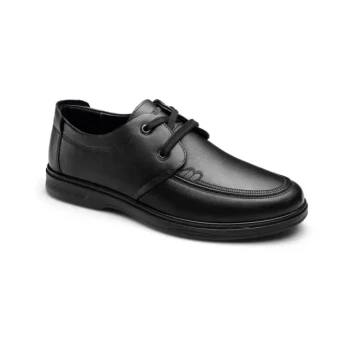
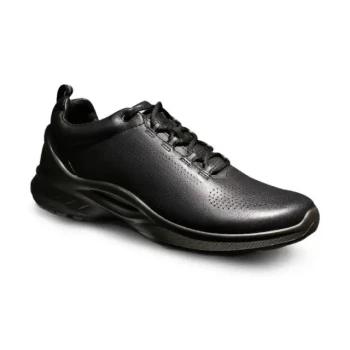
For delivery and postal workers, the right shoes are professional equipment, not just apparel. The most critical features are certified slip-resistance for safety, durable construction to withstand daily mileage, and superior cushioning and support to prevent fatigue and injury over long shifts. These elements work together to protect you from job-specific hazards while keeping you comfortable.
Your footwear isn't just about surviving the day; it's about investing in your long-term health and on-the-job performance. The ideal shoe is a carefully chosen balance of certified safety features, environmental protection, and ergonomic comfort tailored to the specific demands of your route.
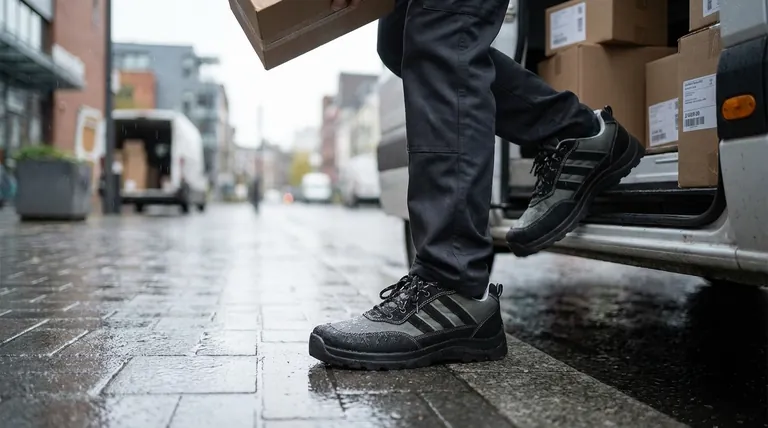
The Foundation: Safety and Compliance
Before considering comfort or style, your footwear must meet fundamental safety standards. These features are non-negotiable for protecting you from common workplace hazards.
Certified Slip Resistance
Traction is your first line of defense against slips and falls. Look for outsoles made of high-traction rubber with deep, multi-directional grooves designed to channel away water.
Critically, you should seek out shoes that meet the ASTM F489 standard for slip resistance, a key requirement for postal-certified footwear.
Essential Toe Protection
If your route involves handling heavy packages or working near vehicles, a protective toe cap is crucial.
Steel toes offer maximum protection, while composite toes provide a lighter-weight, metal-free alternative that doesn't conduct cold or heat.
Sole Durability and Hazard Resistance
The sole needs to be more than just slip-resistant. A high-quality sole should be puncture-resistant to protect against nails or sharp debris on your path.
For certain environments, you may also need protection from electrical hazards (EH or ESD markings) to dissipate static electricity safely.
Understanding Postal Certifications
For United States Postal Service employees, this is simple. Look for shoes that are explicitly labeled as meeting USPS 89D or 89E standards.
This certification guarantees the shoe meets specific requirements for slip resistance, domestic manufacturing (Berry Compliant), and overall durability.
The Core of All-Day Comfort
With safety covered, the next priority is comfort. The wrong shoe can cause significant pain and fatigue over a 10-hour shift.
Superior Support and Cushioning
Look for shoes with a substantial midsole and a replaceable, cushioned footbed. The ability to swap out insoles allows you to customize the support or refresh the shoe's comfort over time.
A sole that gradually molds to your foot provides personalized support that can make a significant difference by the end of the week.
Accommodating Foot Swelling
Your feet naturally swell during a long day of walking. A shoe with a roomy toe box prevents painful pinching and pressure, which can lead to blisters and other foot problems.
Lightweight and Flexible Construction
Every ounce on your feet matters when you take thousands of steps a day. A lightweight shoe reduces fatigue, allowing you to move more efficiently and with less strain on your legs and back.
Built for Environmental Realities
Your route is not an indoor environment. Your shoes must be equipped to handle whatever the weather throws at you.
Weather and Water Resistance
Look for shoes with a WR (Water Resistant) or WRU (Water Resistant Upper) rating. This ensures your feet stay dry during rain or walks through wet grass, preventing discomfort and blisters.
Temperature Insulation
For those working in extreme climates, temperature resistance is key. Look for a CI marking for cold insulation or an HI marking for heat insulation to keep your feet comfortable year-round.
Understanding the Trade-offs
No single shoe is perfect for every condition. Choosing the right one means understanding the inherent compromises.
Waterproofing vs. Breathability
A fully waterproof shoe with a membrane is excellent for rain and snow, but it will be far less breathable than a non-waterproof shoe. In hot, dry climates, this can lead to excessive sweating and discomfort.
Maximum Protection vs. Weight
A steel-toed, puncture-resistant, heavily insulated boot offers incredible protection. However, it will also be significantly heavier than a shoe with a composite toe or no safety toe, which can increase fatigue.
Initial Cost vs. Long-Term Value
It can be tempting to buy cheaper footwear, but durable, well-made shoes are an investment. A quality pair may cost more upfront but will last much longer and provide better support, saving you money and pain in the long run.
Making the Right Choice for Your Route
Select your footwear based on the most common challenges you face every day.
- If your primary focus is working in a wet or snowy climate: Prioritize a certified WR (Water Resistant) rating and CI (Cold Insulation) to ensure your feet stay warm and dry.
- If your primary focus is safety around heavy items or machinery: A certified steel or composite safety toe is non-negotiable for impact protection.
- If your primary focus is covering long distances on hard surfaces: Emphasize lightweight construction and a high-quality, replaceable cushioned insole to minimize fatigue.
- If your primary focus is meeting USPS regulations: Look exclusively for shoes that carry the official USPS 89D or 89E certification tag.
Investing in the right footwear is a direct investment in your daily safety, comfort, and performance on the job.
Summary Table:
| Feature Category | Key Considerations |
|---|---|
| Safety & Compliance | ASTM F489 slip resistance, steel/composite toe, puncture-resistant sole, USPS 89D/89E standards |
| All-Day Comfort | Replaceable cushioned footbed, roomy toe box, lightweight & flexible construction |
| Weather Protection | WR/WRU rating for water resistance, CI/HI markings for temperature insulation |
| Route-Specific Needs | Prioritize based on climate, safety hazards, distance, or regulatory requirements |
As a large-scale manufacturer, 3515 produces a comprehensive range of certified safety footwear tailored for distributors, brand owners, and bulk clients. Our production capabilities encompass all types of durable, comfortable, and compliant shoes and boots designed specifically for delivery and postal workers.
We can help you:
- Source or customize footwear meeting exact USPS 89D/89E standards
- Develop shoes with certified slip resistance and protective features
- Provide durable, weather-ready options built for long shifts and high mileage
Invest in footwear that protects your team and enhances their performance. Contact us today to discuss your specific requirements and explore our manufacturing solutions.
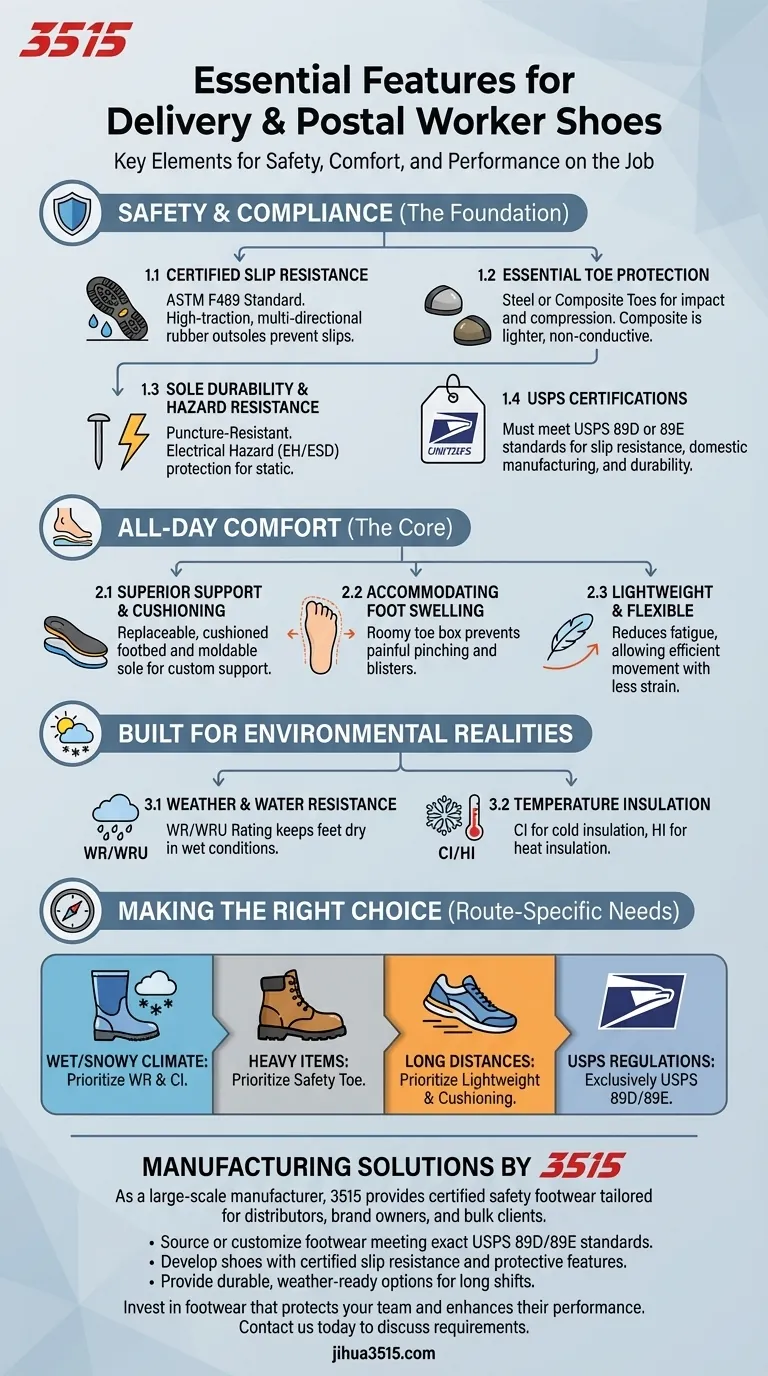
Visual Guide
Related Products
- Wholesale Comfortable Business Casual Shoes Custom Manufacturing
- Dial Closure Leather Business Casual Shoes for Wholesale & Private Label
- Custom Manufactured Air Cushion Leather Business Shoes for Wholesale
- Wholesale Comfort Leather Business Shoes with Dial Lacing System
- Wholesale Modern Business Shoes with Dial Closure System for Bulk Orders
People Also Ask
- What are the key characteristics of business casual shoes? Achieve Polished Versatility for Your Wardrobe
- What should be considered when selecting shoes for a casual business setting? Achieve the Perfect Balance of Style and Comfort
- Which types of shoes should be avoided with business casual attire? Maintain a Polished Professional Image
- What is the recommended approach to trying on business casual shoes? Ensure a Perfect Fit for Your Workday
- What are some types of business casual shoes? Build a Versatile & Professional Footwear Wardrobe