
When choosing wellies for a toddler or baby, the most critical features are a lightweight design and a thick, yet flexible, sole that provides excellent grip. Beyond these basics, look for features that ensure comfort and dryness, such as a soft fleece lining and an elasticated or drawstring top to prevent water from splashing inside the boot.
The goal is not merely to keep your child's feet dry. The right wellies must also support healthy foot development, ensure stability on slippery surfaces, and be comfortable enough for active, unrestricted play.
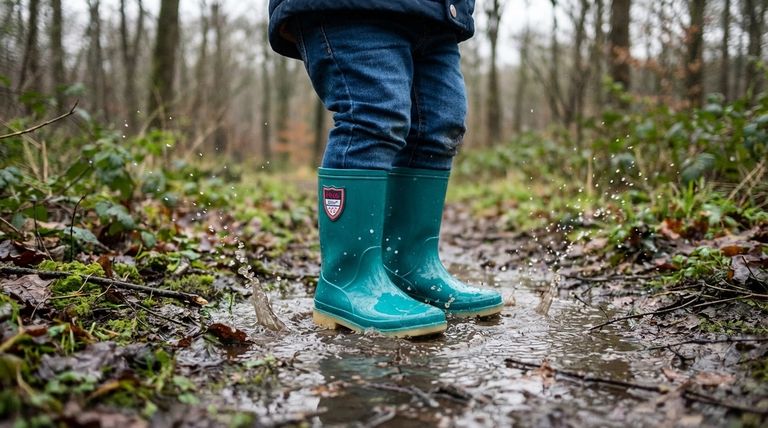
Core Features for Safety and Comfort
A well-designed welly is an essential tool for outdoor exploration. Prioritizing the right structural features ensures your child is safe, comfortable, and properly supported as they navigate new terrain.
The Importance of a Flexible, Grippy Sole
A toddler's stability is still developing. A thick sole protects their feet from rocks and uneven ground, while flexibility is crucial for allowing the natural movement required for balance.
Most importantly, the sole must have a deep tread for good grip. This is a non-negotiable safety feature to prevent slips and falls on wet, muddy, or slick surfaces.
Why Lightweight Construction Matters
Heavy, clunky boots can alter a child's natural gait and cause them to tire quickly. A lightweight design is essential for supporting energetic play without causing fatigue or frustration.
Lighter boots allow for more natural movement, making it easier for toddlers to run, jump, and explore with confidence.
Ensuring a Warm and Dry Fit
Waterproof material is standard, but keeping feet truly dry and warm requires more. A fleece lining provides insulation for comfort on colder days.
Look for an elasticated cuff or a drawstring toggle at the top of the boot. This simple feature is highly effective at preventing rain and puddle splashes from entering from above.
Fostering Independence
Certain design details can help your child develop fine motor skills and a sense of independence.
Features like pull-on handles or a small "easy-removal" heel tab make it easier for toddlers to put on and take off their own boots, turning a daily task into a moment of achievement.
Understanding the Trade-offs: The Fit is Everything
Many parents worry if wellies are bad for developing feet. The boots themselves are not the problem; an improper fit is the real danger to foot health, regardless of the shoe type.
The Risk of Ill-Fitting Footwear
Wellies that do not fit properly can fail to provide adequate support and security. If a boot is too loose, the foot can slide around, causing instability and blisters.
A well-fitting welly should feel comfortable and secure, allowing the foot to move naturally without excessive slipping at the heel.
The Problem with "Buying to Grow Into"
While tempting, purchasing wellies that are several sizes too big is a common mistake. An overly large boot is a tripping hazard and forces the child's foot to work harder to keep the shoe on.
It is better to have a correctly sized boot for one season than an ill-fitting one that lasts for two.
Making the Right Choice for Your Child
Selecting the right pair of wellies comes down to matching the features to your child's primary needs for outdoor play.
- If your primary focus is safety during active play: Prioritize a lightweight design with a thick, flexible sole that offers excellent grip on slippery surfaces.
- If your primary focus is warmth and comfort: Look for models with integrated fleece lining and an elasticated or drawstring top to keep out cold and moisture.
- If your primary focus is supporting your child's development: Choose wellies with features like easy-on handles or removal tabs that encourage their growing independence.
Ultimately, a well-chosen pair of wellies empowers your child to explore their world safely and comfortably, no matter the weather.
Summary Table:
| Key Feature | Why It Matters for Your Child |
|---|---|
| Flexible, Grippy Sole | Supports natural foot movement and prevents slips on wet surfaces. |
| Lightweight Construction | Prevents fatigue and allows for energetic, unrestricted play. |
| Fleece Lining & Elasticated Cuff | Keeps feet warm, dry, and prevents water from splashing inside. |
| Pull-On Handles/Removal Tabs | Encourages independence and makes it easy for toddlers to manage. |
| Proper Fit (Not Too Big) | Avoids tripping hazards and supports healthy foot development. |
Ready to equip your little explorer with the perfect pair of wellies?
As a large-scale manufacturer, 3515 produces a comprehensive range of high-quality, safe, and comfortable footwear for distributors, brand owners, and bulk clients. Our production capabilities encompass all types of children's shoes and boots, designed with the precise features detailed above to support healthy development and joyful play.
Let us help you bring the best in children's outdoor footwear to your customers. Contact our team today to discuss your manufacturing needs!
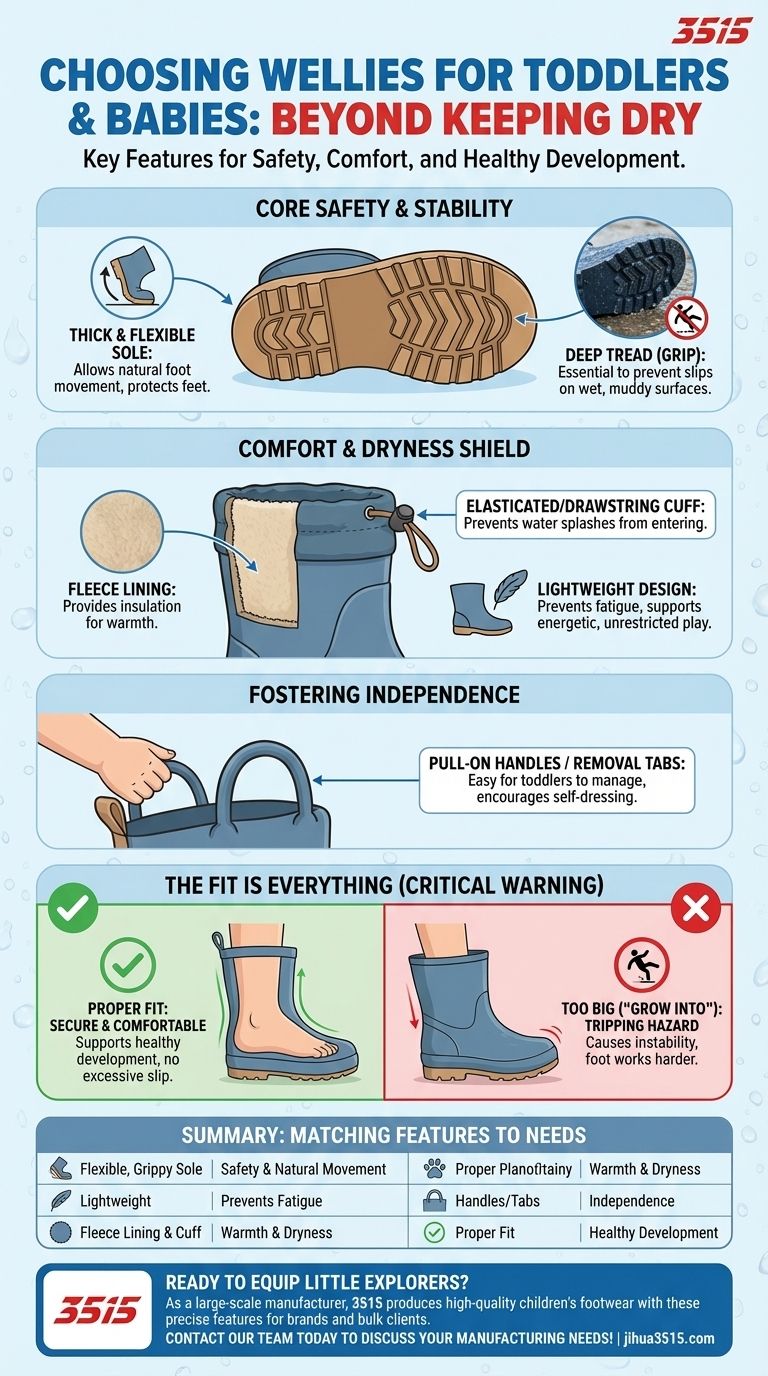
Visual Guide
Related Products
People Also Ask
- What are the main materials for waterproof rain boots? Choose the Right Material for Durability & Comfort
- What is the overall recommendation for choosing rain boot materials? A Guide to Rubber vs. PVC
- How does boot height affect waterproofing? Choose the Right Height for Ultimate Protection
- Why are rain boots more flexible and comfortable than snow boots? The Key Differences Explained
- What are the best types of shoes for different gardening conditions? Find Your Perfect Match.
