
At their core, the slip-prevention features of wellington boots are engineered into their outsoles. It is the combination of a deep, textured tread pattern and the specific material compound of the sole that work together to provide reliable grip in damp or slippery conditions.
The effectiveness of a wellington boot's grip is not accidental; it is a direct result of the sole's design, which focuses on channeling water away and maximizing surface contact to prevent slips.
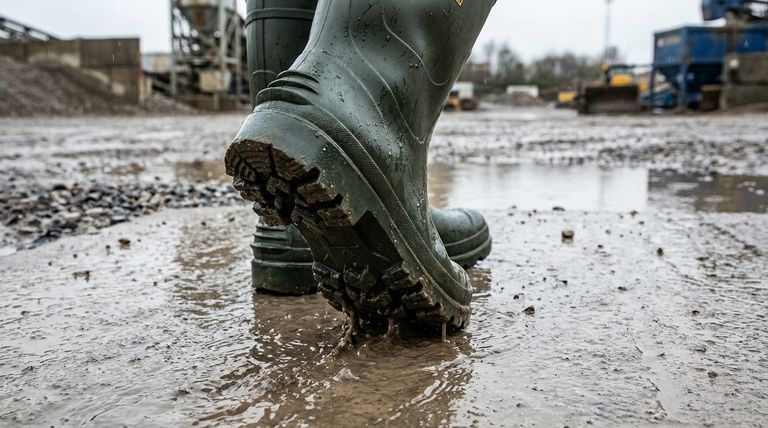
The Anatomy of a High-Traction Outsole
Understanding how a wellington boot prevents slips requires looking closely at the engineering of its sole. The design goes far beyond simply having a thick piece of rubber at the bottom.
Deep Treads and Lugs
The most visible feature is the tread pattern. These deep grooves and channels are critical for traction.
Much like the tires on a vehicle, the protrusions on the sole, often called lugs, are designed to bite into soft or uneven surfaces like mud, snow, or gravel, providing a mechanical grip.
Strategic Channeling for Water Dispersal
On hard, wet surfaces like concrete or tile, the primary function of the tread changes. Here, the channels work to quickly move water away from the point of contact between the sole and the ground.
This action prevents a layer of water from forming, which could cause the boot to hydroplane and lose all traction. A well-designed sole actively clears a path for the rubber to make direct contact with the surface.
The Role of the Sole Compound
The specific material used for the outsole—typically a type of rubber or PVC—plays a crucial role. The softness and composition of the material determine its coefficient of friction.
A slightly softer, more pliable compound can conform better to microscopic imperfections in a surface, increasing grip, especially in cold or wet conditions.
Understanding the Trade-offs
No single boot is perfect for every situation. Choosing the right wellington requires understanding the inherent compromises in its design.
Grip vs. Durability
There is often a trade-off between maximum grip and long-term durability. Softer rubber compounds that offer excellent traction on smooth, wet surfaces may wear down more quickly than harder, more resilient compounds.
Specialized Treads for Different Terrains
A boot designed for deep mud will feature very deep, widely spaced lugs to dig in and prevent mud from clogging the tread.
However, this same design may offer less surface area contact on a smooth, flat floor, making a tread with finer, more numerous grooves a better choice for that environment.
Protection vs. Comfort
While not directly a slip-prevention feature, overall comfort and support are vital for safety. A heavy, ill-fitting boot can cause fatigue, which significantly increases the risk of stumbles and falls, regardless of the sole's quality.
Making the Right Choice for Your Environment
To ensure safety, match the boot's features to the specific conditions you will face most often.
- If your primary focus is wet, smooth surfaces (e.g., concrete floors, boat decks): Look for a softer sole with a dense pattern of fine grooves and channels to maximize water dispersal.
- If your primary focus is mud, snow, or loose soil: Prioritize a boot with deep, aggressive, and widely-spaced lugs that can dig into the terrain for a firm hold.
- If you need an all-purpose boot for varied conditions: Seek a hybrid tread pattern that combines moderate lug depth with sufficient channeling for both solid and soft ground.
Ultimately, the right wellington boot provides confidence by connecting you securely to the ground, no matter the conditions.
Summary Table:
| Feature | Function | Best For |
|---|---|---|
| Deep Treads & Lugs | Bite into soft, uneven surfaces for mechanical grip | Mud, snow, loose soil |
| Water-Channeling Grooves | Disperse water to prevent hydroplaning on hard surfaces | Wet concrete, tile, boat decks |
| Soft Rubber Compound | Conforms to surface imperfections for higher friction | Cold, wet, and smooth environments |
Need reliable, high-traction wellington boots for your team or brand?
As a large-scale manufacturer, 3515 produces a comprehensive range of safety footwear for distributors, brand owners, and bulk clients. Our production capabilities encompass all types of slip-resistant boots, engineered with advanced sole compounds and tread patterns tailored to your specific environment—whether it's mud, snow, or wet floors.
Let us help you equip your workforce with confidence. Contact us today for competitive pricing and custom solutions.
Visual Guide

Related Products
- Durable Waterproof Rain Boots | Custom Manufacturer for Wholesale & Brands
- Durable Goodyear Welt Leather Work Boots for Wholesale & Private Label
- Wholesale Durable Leather Work Boots | 8-Inch Goodyear Welt Manufacturer
- Premium Wholesale Tactical Style Safety Shoes Boots with Quick Lacing
- Durable Leather Tactical Boots Wholesale & Custom Manufacturing for Brands
People Also Ask
- What are the main materials for waterproof rain boots? Choose the Right Material for Durability & Comfort
- What is the overall recommendation for choosing rain boot materials? A Guide to Rubber vs. PVC
- How does boot height affect waterproofing? Choose the Right Height for Ultimate Protection
- Why are rain boots more flexible and comfortable than snow boots? The Key Differences Explained
- What are the best types of shoes for different gardening conditions? Find Your Perfect Match.



















