
At its core, a suitable horseback riding boot is a piece of safety equipment. The essential features are a distinct heel of around 1.5 to 2 inches, a smooth or lightly-treaded sole, and a toe that can easily fit into a stirrup. These elements are not for style; they are designed to prevent the rider's foot from dangerously slipping through the stirrup while allowing for a quick release in an emergency.
The primary function of a riding boot is not fashion, but safety and communication. Its design is a purpose-built system to keep the rider secure in the saddle, prevent life-threatening accidents, and enable clear signals to be sent to the horse.
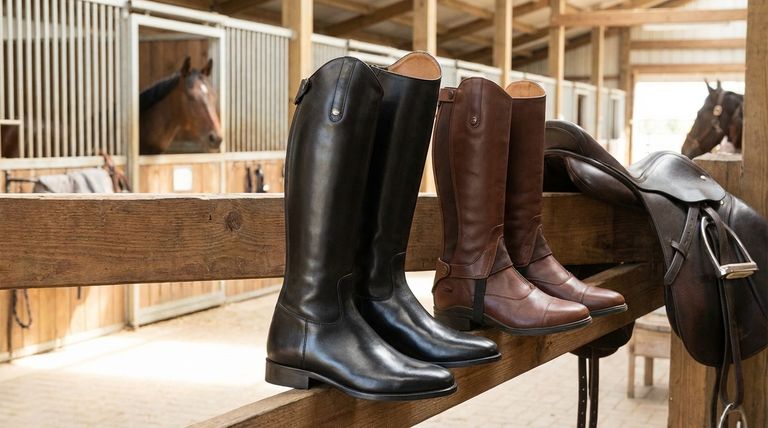
The Anatomy of a Safe Riding Boot
A proper riding boot is engineered with specific components that work together to protect the rider. Understanding these features clarifies why footwear like sneakers or hiking boots is unsafe for riding.
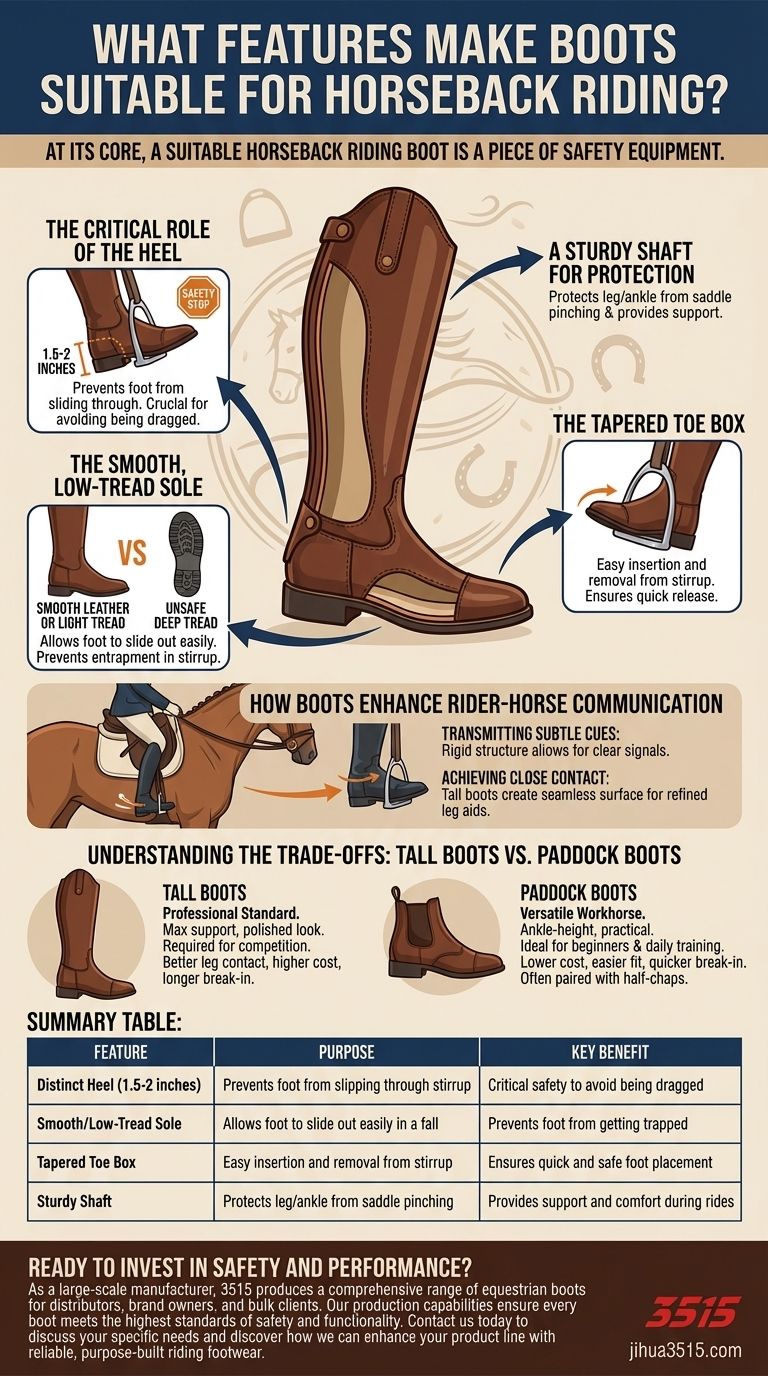
The Critical Role of the Heel
The single most important safety feature of a riding boot is its distinct heel. Typically measuring between 1.5 and 2 inches, this heel acts as a stopper.
Its purpose is to catch on the bar of the stirrup, preventing the rider's foot from sliding all the way through. This is crucial for preventing a rider from being caught and dragged in the event of a fall.
The Smooth, Low-Tread Sole
Riding boots have smooth leather or lightly textured soles. This design is intentional.
If a rider falls, their foot needs to slide out of the stirrup easily. Boots with deep treads, like hiking boots, can get caught on the stirrup, trapping the foot and creating a highly dangerous situation.
The Tapered Toe Box
The toe of a riding boot is tapered or narrowed to allow for easy insertion and removal from the stirrup.
This ensures the rider can quickly place their foot correctly and, more importantly, free it without a struggle when necessary. For riders with wider feet, a "cutter toe" style offers more room while maintaining the core safety profile.
A Sturdy Shaft for Protection
The shaft of the boot protects the rider's leg and ankle. It provides support and prevents the leather of the saddle from painfully pinching the rider's calf.
How Boots Enhance Rider-Horse Communication
Beyond safety, riding boots are a key tool for effective communication. The rider's legs and heels are the primary aids used to guide the horse.
Transmitting Subtle Cues
The rigid structure of the boot allows the rider to deliver subtle but clear cues through heel pressure and leg movements.
These signals are vital for guiding the horse, signaling for speed transitions, and establishing a quiet, harmonious connection between the rider and the animal.
Achieving Close Contact
Tall boots, in particular, create a seamless surface along the rider's calf. This provides very close contact with the horse's side, allowing for more refined and precise leg aids, which is a standard for upper-level and competitive riding.
Understanding the Trade-offs: Tall Boots vs. Paddock Boots
Riders have two primary boot styles to choose from, each with distinct advantages.
Tall Boots: The Professional Standard
Tall boots extend up to the knee, providing maximum support and a polished, traditional appearance. They are the required standard for most competitions.
They eliminate the need for separate half-chaps and offer the best leg contact. However, they are more expensive and can require a longer, more difficult break-in period.
Paddock Boots: The Versatile Workhorse
Paddock boots are ankle-height and are a popular, practical choice for beginners, children, and daily training. They are less expensive, easier to fit, and much quicker to break in.
For schooling and lessons, they provide the necessary safety features and are often paired with half-chaps (leather or suede leggings) to offer the leg protection of a tall boot.
Making the Right Choice for Your Goal
Selecting the right boot depends entirely on your specific riding activities and goals.
- If your primary focus is competitive showing or advanced training: Tall boots are the standard for their professional appearance and superior leg contact.
- If your primary focus is casual riding, lessons, or starting out: Paddock boots offer the best combination of safety, comfort, and affordability.
- If your primary focus is safety above all: Ensure any boot you choose has the non-negotiable features—a distinct heel and a smooth sole—regardless of its style.
Ultimately, choosing the right boot is an investment in your safety, comfort, and effectiveness as a rider.
Summary Table:
| Feature | Purpose | Key Benefit |
|---|---|---|
| Distinct Heel (1.5-2 inches) | Prevents foot from slipping through stirrup | Critical safety to avoid being dragged |
| Smooth/Low-Tread Sole | Allows foot to slide out easily in a fall | Prevents foot from getting trapped |
| Tapered Toe Box | Easy insertion and removal from stirrup | Ensures quick and safe foot placement |
| Sturdy Shaft | Protects leg and ankle from saddle pinching | Provides support and comfort during rides |
Ready to invest in safety and performance? As a large-scale manufacturer, 3515 produces a comprehensive range of equestrian boots for distributors, brand owners, and bulk clients. Our production capabilities ensure every boot meets the highest standards of safety and functionality. Contact us today to discuss your specific needs and discover how we can enhance your product line with reliable, purpose-built riding footwear.
Visual Guide
Related Products
- Wholesale High-Traction Camo Boots - Custom Manufacturer for Brands
- Wholesale Tactical Boots High-Traction & Reflective for Bulk & Brand Orders
- Wholesale Lightweight Tactical Boots Custom Manufacturer for Desert & Combat Use
- Durable Goodyear Welt Leather Work Boots for Wholesale & Private Label
- Durable Leather High-Ankle Tactical Boots for Wholesale & Custom Manufacturing
People Also Ask
- What are the key features of the new line of camo boots? Built for Extreme Cold & Rugged Terrain
- Are camo boots necessary for hunting success? Prioritize Performance Over Pattern
- How does the Rank Score Test identify the primary causes of premature failure in tactical and work boots? Key Insights
- What is the technical logic behind using closed-eye testing for tactical boots? Unlocking Peak Footwear Stability
- What shoes to wear for a security job? Durable, Protective Footwear for Long Shifts



















