
To choose the right wellies for dog walking, you must look beyond basic waterproofing and focus on features that support daily, repetitive use across varied terrain. The most critical factors are a comfortable, supportive fit to prevent fatigue, a slip-resistant sole for safety on wet or muddy surfaces, and an appropriate level of insulation for the climate you walk in.
The best dog walking wellies are not just a barrier against water; they are a piece of essential equipment. The goal is to find a boot that combines the rugged protection you need with the consistent comfort and stability required for countless miles of walking.
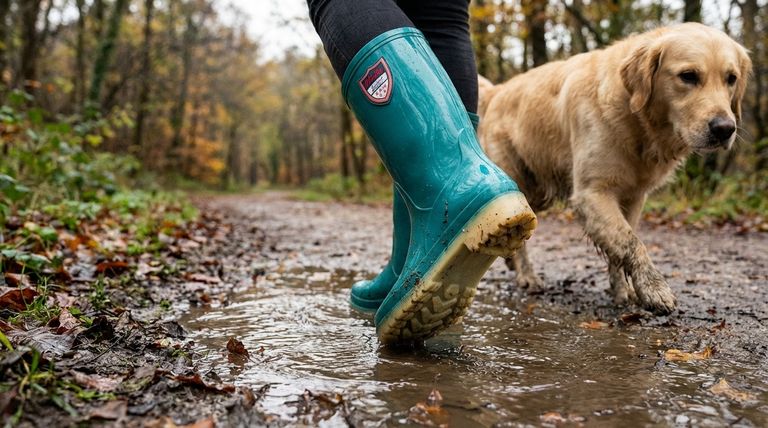
The Core Principles: Beyond Just Waterproofing
A standard welly keeps you dry, but a great dog walking welly keeps you comfortable and safe. This requires a focus on the boot's construction from the inside out.
Uncompromising Comfort and Fit
Cheap, oversized wellies can cause blisters and foot fatigue on anything more than a short walk. Look for boots with a shaped, supportive footbed and good cushioning. An ideal fit is snug around the heel and midfoot to prevent your foot from sliding, with enough room to wiggle your toes.
All-Terrain Grip and Stability
Dog walks often cross multiple surfaces, from wet pavement to slick mud and slippery grass. A deep, multi-directional tread on the sole is non-negotiable for providing reliable traction. This slip-resistant grip is your primary defense against falls in challenging conditions.
Season-Appropriate Insulation
A standard rubber welly offers very little protection from the cold. For winter walks, consider boots lined with neoprene or another insulating material to keep your feet warm. For warmer climates or summer use, a non-insulated boot will be more breathable and comfortable.
Practical Considerations for Daily Use
The repetitive nature of dog walking introduces unique demands that influence the ideal design of your boot.
Choosing the Right Height
Welly height is a balance between protection and convenience.
- Tall boots offer maximum protection from deep puddles, mud, and wet foliage, making them ideal for rural or trail walks.
- Short or mid-height boots are lighter, less restrictive, and easier to slip on and off, making them a practical choice for simpler walks in parks or the city.
Durability for Daily Wear
Dog walking puts significant mileage on footwear. Look for wellies made from high-quality, durable rubber that can withstand frequent use, flexing, and exposure to mud and water without cracking or splitting.
Ease of Cleaning
Your wellies will get dirty. A boot with a relatively smooth outer surface and a sole designed to shed mud will be significantly easier and quicker to rinse off after each walk, which is a major practical advantage.
Understanding the Trade-offs
Choosing the perfect welly involves balancing competing features. Understanding these compromises is key to finding the right boot for your specific needs.
Insulation vs. Year-Round Versatility
A heavily insulated boot is excellent for freezing temperatures but can become uncomfortably hot and sweaty during milder spring or autumn weather. A non-insulated boot with room for a thick sock offers more versatility across seasons.
Protection vs. Flexibility
Tall, robust boots provide the best protection but can feel cumbersome and restrictive, especially when getting in and out of a car. Lighter, shorter boots offer greater flexibility and ease of use at the cost of less coverage.
Weight vs. Robustness
Heavier, more ruggedly constructed boots typically offer better durability and support for difficult terrain. However, their weight can lead to fatigue on longer walks compared to a lighter-weight alternative.
Making the Right Choice for Your Walks
Select your wellies based on the type of walking you do most often.
- If your primary focus is short walks on pavement and park paths: A comfortable, mid-height welly with good cushioning and a flexible sole is your best choice.
- If your primary focus is long, rural walks through muddy fields: Prioritize a durable, tall welly with an aggressive, slip-resistant tread and a snug fit.
- If your primary focus is all-season comfort in a cold climate: Invest in a neoprene-lined boot that provides essential warmth for winter conditions.
Choosing the right footwear transforms dog walking from a chore into a more comfortable and enjoyable daily ritual.
Summary Table:
| Factor | Why It Matters | Key Feature to Look For |
|---|---|---|
| Comfort & Fit | Prevents blisters and fatigue on long walks | Snug heel, supportive footbed, cushioned insole |
| Grip & Stability | Essential for safety on wet grass, mud, and pavement | Deep, multi-directional tread on the sole |
| Insulation | Keeps feet warm in winter; breathable in summer | Neoprene lining for cold climates |
| Height | Balances protection from deep mud with ease of use | Tall for trails; short/mid for city parks |
| Durability | Withstands daily wear and tear from varied terrain | High-quality, flexible rubber construction |
Ready to equip yourself with the perfect dog walking wellies? As a large-scale manufacturer, 3515 produces a comprehensive range of durable, comfortable, and safety-focused footwear for distributors, brand owners, and bulk clients. Our production capabilities encompass all types of boots, ensuring you get the right product for your market. Contact us today to discuss your needs and discover how we can support your business with high-quality footwear solutions.
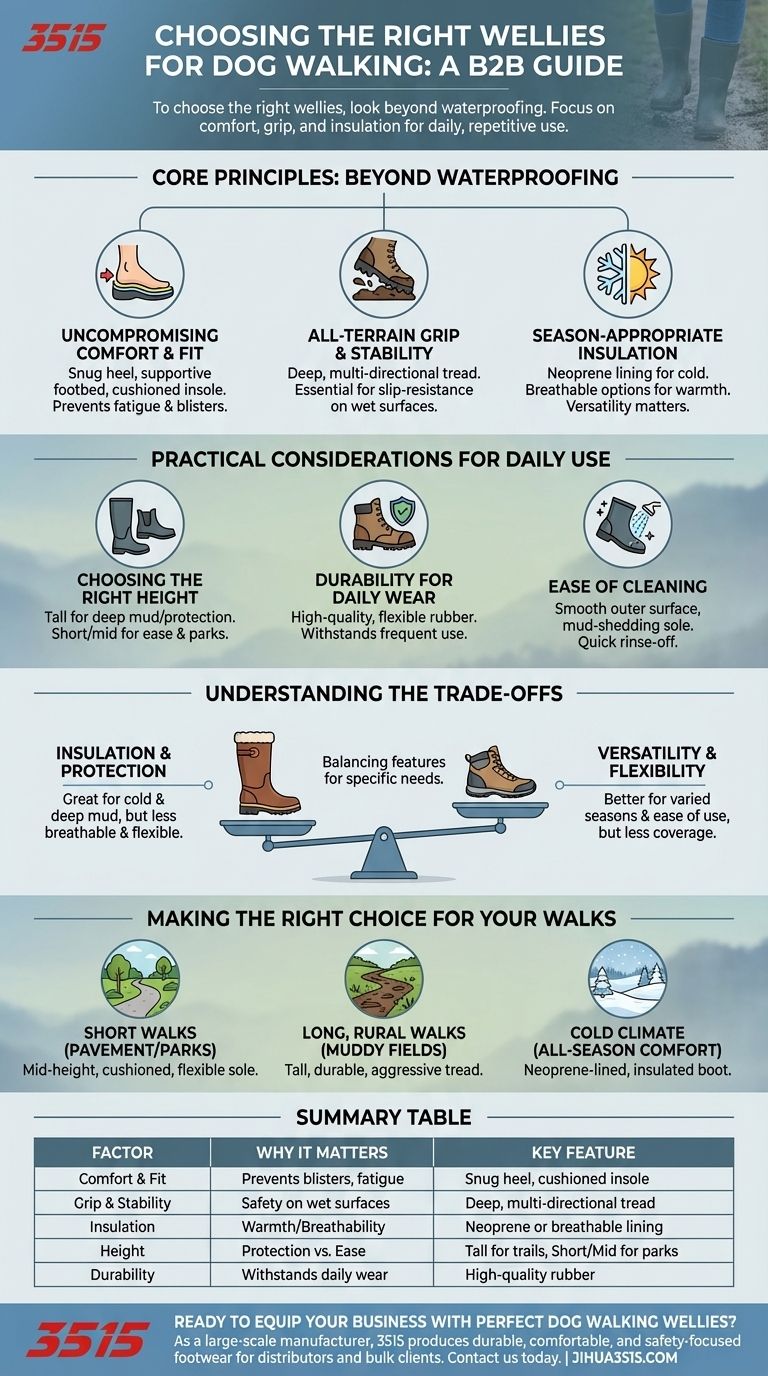
Visual Guide
Related Products
People Also Ask
- What are the main materials for waterproof rain boots? Choose the Right Material for Durability & Comfort
- What is the overall recommendation for choosing rain boot materials? A Guide to Rubber vs. PVC
- How does boot height affect waterproofing? Choose the Right Height for Ultimate Protection
- Why are rain boots more flexible and comfortable than snow boots? The Key Differences Explained
- What are the best types of shoes for different gardening conditions? Find Your Perfect Match.
