Proper upkeep for lace-up boots centers on three distinct areas: cleaning the boot exterior, separately washing the laces, and using specific storage methods to maintain their structural shape. Because their design offers less ventilation, they trap more moisture, requiring a more diligent maintenance routine than other types of footwear.
The core challenge with lace-up boots is managing the moisture and odor that builds up from reduced airflow. Your maintenance strategy, therefore, must focus equally on hygiene for the interior and laces, and structural support for the boot itself.
Why Lace-Up Boots Demand Specific Care
Understanding the design of lace-up boots is key to understanding their maintenance needs. The very features that provide a secure, personalized fit also create unique upkeep challenges.
The Ventilation Challenge
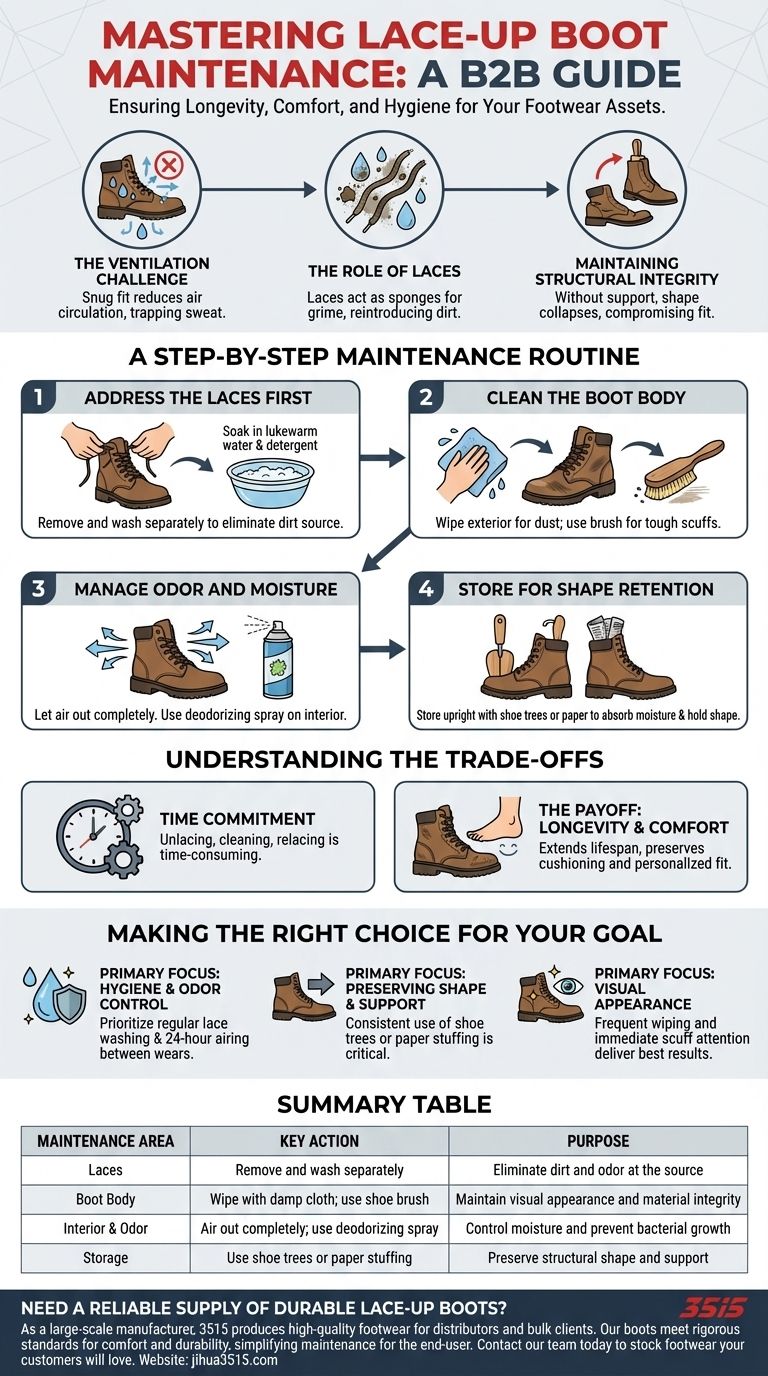
The snug fit achieved by lacing a boot tightly up the ankle significantly reduces air circulation. This environment traps sweat and moisture, which can lead to odor-causing bacteria if not managed properly.
The Role of the Laces
Laces are not just functional; they are also sponges for dirt, grime, and moisture. Cleaning the boot while ignoring the laces means reintroducing dirt the moment you tie them up again.
Maintaining Structural Integrity
The personalized fit of a quality lace-up boot is one of its greatest assets. However, without proper support during storage, the boot's shape can collapse, compromising both comfort and appearance over time.
A Step-by-Step Maintenance Routine
A consistent routine is the most effective way to protect your investment and keep your boots in optimal condition.
Step 1: Address the Laces First
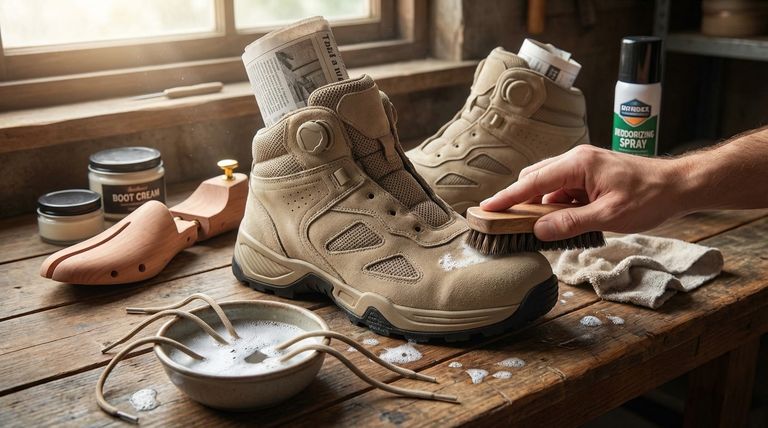
Always remove the laces from the boots before cleaning. Soak them in a small container of lukewarm water mixed with a small amount of laundry detergent.
Step 2: Clean the Boot Body
Use a damp cloth to wipe down the entire exterior of the boot to remove surface-level dust and dirt. For tougher scuffs or marks, use a dedicated shoe brush to gently scrub the affected area.
Step 3: Manage Odor and Moisture
After cleaning, it is critical to let the boots air out completely. You can also use a deodorizing shoe spray on the interior to combat any lingering odors from sweat.
Step 4: Store for Shape Retention
Proper storage is non-negotiable. Store your boots upright and stuff them with newspaper or, ideally, insert shoe trees. This practice absorbs residual moisture and ensures the boots hold their intended shape.
Understanding the Trade-offs
While effective, this level of care requires a more significant commitment than with other footwear.
The Time Commitment
The process of unlacing, cleaning two separate components (boots and laces), and relacing is inherently more time-consuming than caring for slip-on or zip-up styles.
The Payoff: Longevity and Comfort
The upside to this diligence is significant. Well-maintained lace-up boots will last far longer, and preserving their structure ensures they continue to provide the soft cushioning and personalized fit they were designed for.
Making the Right Choice for Your Goal
Tailor your upkeep focus based on what matters most to you.
- If your primary focus is hygiene and odor control: Make regular lace washing and allowing the boots to air out for 24 hours between wears your top priority.
- If your primary focus is preserving the boot's shape and support: The consistent use of shoe trees or paper stuffing during storage is the most critical step.
- If your primary focus is visual appearance: Frequent wiping of the boot body and immediate attention to scuff marks will deliver the best results.
Consistent care ensures your lace-up boots remain a reliable, comfortable, and long-lasting asset.
Summary Table:
| Maintenance Area | Key Action | Purpose |
|---|---|---|
| Laces | Remove and wash separately | Eliminate dirt and odor at the source |
| Boot Body | Wipe with damp cloth; use shoe brush for scuffs | Maintain visual appearance and material integrity |
| Interior & Odor | Air out completely; use deodorizing spray | Control moisture and prevent bacterial growth |
| Storage | Use shoe trees or paper stuffing | Preserve structural shape and support |
Need a reliable supply of durable lace-up boots that are built to last? As a large-scale manufacturer, 3515 produces a comprehensive range of high-quality footwear designed for distributors, brand owners, and bulk clients. Our production capabilities ensure that every pair meets rigorous standards for comfort and durability, making maintenance easier for the end-user. Let us help you stock footwear that your customers will love. Contact our team today to discuss your needs!
Visual Guide
Related Products
- Wholesale Classic Leather Lace-Up Ankle Boots for Brand Manufacturing
- Durable Goodyear Welt Leather Work Boots for Wholesale & Private Label
- Premium Wholesale Tactical Style Safety Shoes Boots with Quick Lacing
- Wholesale Lightweight Tactical Boots with Dial Closure OEM & Bulk Orders
- Wholesale Training Shoes with Dial Lacing System Custom OEM Manufacturing
People Also Ask
- How are oils used to waterproof leather boots? A Guide to Deep Conditioning & Protection
- Why is regular maintenance necessary for the performance of leather boots? Boost Durability & Brand Reputation
- Why might it be beneficial to pre-heat the boots before applying wax? Achieve Deeper, Longer-Lasting Protection
- How can leather boots maintain their water resistance? A Guide to Lasting Protection
- What is the biggest enemy of leather boots? Protect Your Investment from Water Damage