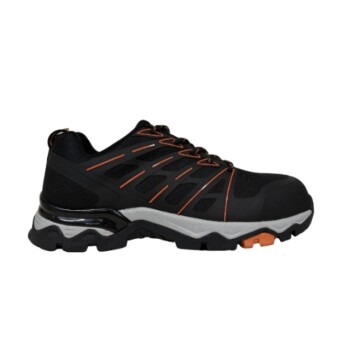
Ultrasonic sensors provide real-time obstacle detection and hazard prevention. These sensors function by emitting high-frequency sound waves and calculating the "time-of-flight" of the reflected echoes to determine the exact distance of objects in a wearer's path. Their primary safety role is to identify low-lying or hanging hazards and trigger immediate haptic or auditory alerts, significantly reducing the risk of collisions and falls.
Ultrasonic sensors act as a critical perception layer for smart footwear, utilizing non-contact distance measurement to detect physical hazards that traditional walking aids often miss.
The Mechanism of Spatial Awareness
High-Frequency Sound Emission
The sensor operates as an environmental perception tool by constantly pulsing high-frequency sound waves into the surrounding area. These waves are inaudible to the human ear but are highly sensitive to physical objects in the environment.
Time-of-Flight (ToF) Calculations
Safety is maintained through the precise calculation of the time it takes for a sound wave to bounce off an object and return to the sensor. This real-time distance measurement allows the shoe's internal logic to understand how close the wearer is to a potential impact.
Non-Contact Detection
Unlike traditional canes or physical feelers, ultrasonic sensors provide a non-contact detection mechanism. This allows the system to monitor the path ahead without requiring physical interaction with the obstacle, providing a proactive safety buffer.
Hazard Identification and Alerting
Detecting Low-Lying and Hanging Obstacles
A primary safety function is the identification of low-lying or hanging hazards that might be outside the wearer's immediate line of sight or reach. This is particularly vital for detecting objects like low curbs, protruding signage, or equipment in industrial settings.
Real-Time Path Monitoring
The sensors perform continuous path monitoring to ensure the walking environment remains clear as the wearer moves. By integrating this data, the footwear provides safety guidance that adapts to the wearer's pace and direction.
Multi-Sensory Alert Triggering
When an obstacle is detected within a dangerous threshold, the sensor triggers an integrated alert system. This typically manifests as a buzzer (auditory) or a vibrator (haptic), ensuring the wearer receives immediate feedback to stop or change direction.
Understanding the Trade-offs
Material Interference and Absorption
Ultrasonic sensors rely on sound reflection, which means soft materials like thick curtains or foam can absorb the waves rather than reflecting them. This can occasionally lead to "blind spots" where the sensor fails to see a soft-surfaced object.
Environmental Noise and Interference
In extremely loud industrial environments, high-frequency ambient noise can sometimes interfere with the sensor’s accuracy. While most modern modules are filtered, users must be aware that signal "noise" can impact distance precision in specific settings.
Field of View Limitations
While effective, these sensors have a specific conical field of view. Hazards located at extreme peripheral angles may not be detected unless multiple sensors are used to create a "wrap-around" safety zone.
How to Apply This to Your Project
Selecting Sensors Based on Use Case
When integrating ultrasonic technology into smart footwear, the specific safety goal determines the sensor configuration and sensitivity requirements.
- If your primary focus is assistive navigation for the visually impaired: Prioritize high-sensitivity modules that can detect small changes in outdoor terrain and provide distinct haptic feedback patterns.
- If your primary focus is industrial workplace safety: Focus on sensors with ruggedized housing and filtering capabilities to handle environmental noise and heavy-duty physical hazards.
- If your primary focus is fall prevention for the elderly: Calibrate the sensors to prioritize low-lying obstacles and stairs, using gentle but clear alerts to avoid startling the wearer.
By leveraging the precision of ultrasonic distance measurement, smart footwear transforms from a passive garment into an active safety device capable of preventing accidents before they occur.
Summary Table:
| Safety Function | Mechanism | Key Benefit |
|---|---|---|
| Obstacle Detection | Emits high-frequency sound waves; ToF calculation | Identifies low-lying & hanging hazards proactively |
| Path Monitoring | Continuous scanning of the immediate environment | Adapts safety guidance to wearer's movement |
| Multi-Sensory Alerts | Triggers haptic (vibration) or auditory (buzzer) | Provides immediate wearer feedback to prevent collisions/falls |
Elevate your footwear line with cutting-edge safety features. As a large-scale manufacturer serving distributors and brand owners, 3515 offers comprehensive production capabilities for all footwear types, anchored by our flagship Safety Shoes series. Our extensive portfolio covers work and tactical boots, outdoor shoes, training shoes, and sneakers, as well as Dress & Formal shoes to meet diverse bulk requirements. Partner with us to integrate advanced safety technology into your products and delight your customers. Contact us today to discuss your project!
References
- E.N. Vijaya Kumari, Pinki Kumari. LIFI Based Smart shoes Indoor Navigation for Visually Impaired Using Visible Light Communication. DOI: 10.55041/ijsrem25125
This article is also based on technical information from 3515 Knowledge Base .
Related Products
- Premium Safety Shoes with Rotating Buckle Safety Sneakers
- Premium Lightweight Safety Shoes for Wholesale & Bulk Orders
- Premium KPU Injection Athletic Style Safety Shoes
- Premium KPU Athletic Safety Shoes for Wholesale
- Premium Suede Sport Safety Shoes for Wholesale & Bulk Orders
People Also Ask
- How do gait analysis algorithms ensure accuracy in footwear? Master Step Length Precision for Boots & Sneakers
- How do the 3R principles influence green footwear design? Master Sustainable Safety Shoe Manufacturing
- What are the primary functions of professional safety shoes? Maximize Safety in Water Supply Confined Spaces
- How Specialized Footwear Impacts Side-Cutting Performance and Injury Risk Assessment
- What happens during the cutting stage of safety shoes manufacturing? Precision, Process & Quality