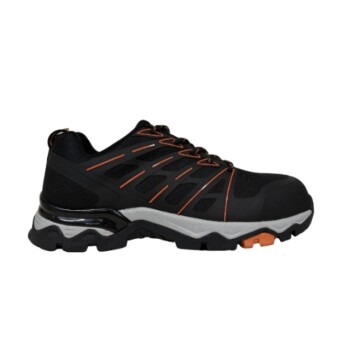
Polyurethane (PU) serves as a premier manufacturing solution for high-performance footwear because it creates a product that is simultaneously lightweight, highly durable, and cost-competitive. Formed by the reaction between hydroxyl compounds and isocyanates, PU provides outsoles with exceptional long-term mechanical stability, making it the material of choice for industrial-grade boots and safety footwear that demand reliability without heavy bulk.
Core Takeaway The definitive advantage of Polyurethane lies in its tunable versatility, particularly the ability to create dual-density components in a single manufacturing process. This allows manufacturers to fuse a soft, shock-absorbing core with a rugged, abrasion-resistant shell, optimizing both comfort and durability without complex assembly.
The Dual-Density Manufacturing Advantage
Single-Process Efficiency
A critical manufacturing benefit of PU is the capability for dual-density injection molding. This industrial technique allows manufacturers to mold the midsole and outsole in a single, continuous process.
Optimized Material Placement
By manipulating density, manufacturers can create a composite structure using the same base chemistry. A lower-density PU is used for the midsole to provide superior shock absorption and comfort for the wearer.
Rugged Exterior Integration
Simultaneously, a higher-density PU forms the outsole. This outer layer delivers the abrasion resistance and anti-slip properties required for safety standards, ensuring the shoe withstands harsh industrial environments.
Mechanical Performance and Durability
High-Load Resilience
PU demonstrates excellent mechanical strength, allowing it to withstand repeated high-load compression. This makes it ideal for industrial boots that must support the wearer's weight and heavy loads over long shifts without collapsing or deforming permanently.
Chemical and Wear Resistance
Beyond physical impact, PU offers significant resistance to environmental hazards. It provides superior protection against chemicals and general wear, extending the service life of the footwear even in aggressive usage scenarios.
Lightweight Construction
Despite its strength, PU remains a lightweight material. This reduction in weight is critical for reducing wearer fatigue, particularly in heavy-duty boots where traditional materials might inhibit mobility.
Design Freedom and Prototyping
Precision Molding and Machining
PU offers high design freedom, easily flowing into complex molds to create specific stud positions, lengths, and distributions. It is also suitable for CNC machining, allowing researchers to create precise test outsoles for performance evaluation.
Synthetic Versatility
As a synthetic material, PU can be engineered to mimic the appearance and feel of genuine leather while retaining consistent quality. It offers beneficial properties such as breathability, water resistance, and elasticity that are difficult to standardize in natural materials.
Understanding the Trade-offs
Energy Return Limitations
While standard PU is excellent for stability, it may lack the high-energy "bounce" required for elite athletic performance. Expanded Thermoplastic Polyurethane (eTPU) is often preferred for running shoes because it offers superior resilience and energy feedback compared to traditional PU.
Environmental Considerations
Standard PU is a synthetic, petroleum-based product. While it is durable, the industry is increasingly facing pressure to move toward biodegradable materials to reduce long-term land occupation and facilitate a circular economy, a standard that traditional PU does not inherently meet.
Making the Right Choice for Your Goal
When selecting footwear materials, align the material properties with the end-user's primary activity:
- If your primary focus is Industrial Safety: precise use Dual-Density PU to achieve the optimal balance of all-day comfort and heavy-duty abrasion resistance in a cost-effective package.
- If your primary focus is High-Performance Running: Prioritize eTPU (Expanded TPU) to maximize energy return and reduce muscle fatigue in the lower legs during the gait cycle.
- If your primary focus is R&D and Prototyping: Utilize CNC-machined PU to rapidly test different stud configurations and load responses before committing to mass production molds.
Ultimately, Polyurethane remains the industry standard for workwear because it solves the difficult engineering paradox of making a boot tough enough to survive the job site yet light enough to wear all day.
Summary Table:
| Feature | Manufacturing Advantage | Performance Benefit |
|---|---|---|
| Dual-Density Injection | Single-process midsole/outsole molding | Reduced assembly cost & superior bonding |
| Material Density | Tunable chemistry for soft vs. hard zones | Optimized shock absorption & abrasion resistance |
| Mechanical Strength | Resilient under high-load compression | Long-term structural stability in work boots |
| Design Freedom | High mold flow & CNC compatibility | Precise stud placement & rapid prototyping |
| Weight Profile | Low-density synthetic structure | Reduced wearer fatigue for industrial use |
Elevate Your Footwear Line with 3515’s PU Expertise
As a large-scale manufacturer serving global distributors and brand owners, 3515 leverages advanced Polyurethane injection technology to deliver high-performance footwear that meets rigorous industrial standards. Our flagship Safety Shoes series utilizes dual-density PU to provide your customers with the perfect balance of lightweight comfort and extreme durability.
From tactical boots and training sneakers to dress and formal shoes, our comprehensive production capabilities are designed to scale with your business. Partner with 3515 to access premium manufacturing quality and reliable bulk supply.
Contact Our Engineering Team Today
References
- S. Jaiganesh, K. Elayaraja. Investigating Grip Study of Different Types of Footwear Soiling Materials in SATRA Std. DOI: 10.5281/zenodo.6827368
This article is also based on technical information from 3515 Knowledge Base .
Related Products
- Premium KPU Athletic Safety Shoes for Wholesale
- Premium KPU Injection Athletic Style Safety Shoes
- Advanced KPU Athletic Safety Shoe with Steel Toe Cap Anti-Slip Rotary Lacing System
- Premium Lightweight Safety Shoes for Wholesale & Bulk Orders
- Premium Wholesale Tactical Style Safety Shoes Boots with Quick Lacing
People Also Ask
- How is the absence of PPE (safety shoes & helmets) categorized in construction motion data labeling? Unlock Real-Time Safety Insights!
- What is a recommended alternative to using hairspray for slip resistance? Ditch Unreliable Hacks for Real Safety
- What role does blockchain play in footwear supply chain transparency? Enhance Safety Shoe Traceability and Verification
- What workplace hazards indicate the need for safety shoes? Identify risks to protect your workforce.
- What role do specialized safety shoes play in preventing falls? Engineering Stability in Industrial Environments