
At its core, safety footwear is an engineered system of protective components divided into two main sections: the upper and the sole assembly. The upper protects the top of the foot and includes the safety toe cap, upper material, and lining, while the sole assembly provides foundational support, traction, and protection from hazards underfoot.
The true value of safety footwear lies not in any single component, but in how these parts work together as an integrated system to protect against specific workplace hazards, from impact and puncture to electrical shock.
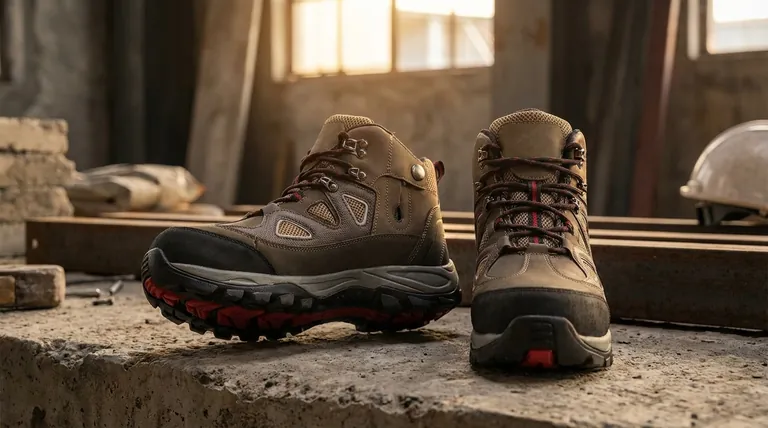
Deconstructing Safety Footwear: The Core Components
Understanding a safety shoe begins with breaking it down into its primary structural elements. Each part is designed with a specific protective or supportive function in mind.
The Protective Upper
The upper encompasses everything above the sole. Its primary job is to secure the foot and shield it from splashes, sparks, and impacts from above.
- Safety Toe Cap: This is the most recognized feature. It's a reinforced cap at the front of the shoe designed to protect the toes from impact and compression. It can be made of steel, aluminum, or non-metallic composite materials.
- Upper Material: This forms the main body of the shoe. Materials like leather provide durability and resistance to chemicals, while synthetic fabrics can offer enhanced breathability and flexibility.
- Lining and Tongue: The inner lining manages moisture and improves comfort. High-performance linings, like GORE-TEX, can provide waterproofing while maintaining breathability. The tongue and padding add cushioning and prevent debris from entering the shoe.
- Heel Counter: This is a firm insert that reinforces the heel cup of the shoe. It provides stability, supports the ankle, and helps lock the foot in place to prevent sprains.
The Foundation: The Sole Assembly
The sole is the critical interface between you and the ground. It is typically a multi-layered construction designed for traction, support, and underfoot protection.
- Outsole: The outermost layer that contacts the ground. Its material and tread pattern are engineered to provide slip resistance and traction. It may also offer resistance to heat, oil, or chemicals.
- Midsole: Located between the outsole and the insole, the midsole provides shock absorption and cushioning. Critically, it is also where a puncture-resistant plate is often placed to protect against sharp objects like nails.
- Insole: Sometimes called a footbed, this is the layer your foot rests on directly. It provides arch support and cushioning for comfort during long hours of wear. Many are removable to allow for custom orthotics.
Beyond the Basics: Critical Protective Functions
While the components provide the structure, their materials and design deliver specific, certified safety functions. These functions are what truly define a safety shoe.
Impact & Puncture Resistance
The safety toe cap is the primary defense against falling objects or crushing forces from heavy machinery. A puncture-resistant plate, typically made of steel or a flexible composite fabric, is embedded in the midsole to prevent sharp objects from penetrating the sole.
Slip Resistance
The outsole's material composition and tread design are crucial for preventing slips, trips, and falls. Different patterns and compounds are optimized for various surfaces, such as wet floors, oily ground, or uneven terrain.
Electrical Hazard Protection
Specialized footwear can offer protection from electrical hazards. Antistatic shoes dissipate the body's static electricity to prevent sparks, while Electrical Hazard (EH) rated shoes are built with non-conductive materials to insulate you from the ground, protecting against accidental contact with live circuits.
Understanding the Trade-offs
Selecting the right safety footwear involves balancing competing needs. A feature that excels in one area may present a drawback in another.
Protection vs. Weight & Flexibility
The highest levels of protection often come at the cost of weight. A steel toe cap and steel puncture plate offer robust protection but add significant weight and rigidity compared to their lighter, more flexible composite counterparts.
Durability vs. Breathability
Thick, full-grain leather uppers are exceptionally durable and resistant to abrasion and chemicals. However, they are less breathable than shoes made from synthetic mesh or textiles, which may be more comfortable in hot environments but offer less ruggedness.
Cost vs. Specialized Features
A basic safety shoe meeting minimum standards (like EN ISO 20345 S1) is affordable but only suitable for dry, low-risk environments. Adding specialized features like waterproofing, advanced puncture resistance, or EH ratings significantly increases the complexity and cost of the footwear.
Making the Right Choice for Your Goal
To select the correct footwear, you must match its components and certified features to the specific hazards of your workplace.
- If your primary focus is protection from falling objects: Prioritize a certified safety toe cap (steel or composite) that meets the required impact and compression standards for your region (e.g., ASTM F2413 or EN ISO 20345).
- If your primary focus is working on slippery or uneven surfaces: Ensure the outsole is explicitly rated for slip resistance and has a tread pattern appropriate for your specific floor conditions.
- If your primary focus is exposure to sharp objects (nails, scrap metal): The critical component is a puncture-resistant plate embedded in the midsole.
- If your primary focus is working around live electrical circuits or in static-sensitive areas: Look for footwear with an explicit Electrical Hazard (EH) or Antistatic (ESD) rating.
Understanding how these components work together empowers you to move beyond the label and choose footwear that provides genuine protection for your specific role.
Summary Table:
| Component | Function | Key Features |
|---|---|---|
| Upper | Protects the top of the foot | Safety toe cap, durable upper material, heel counter |
| Sole Assembly | Provides traction & underfoot protection | Outsole (slip resistance), Midsole (puncture plate), Insole (comfort) |
| Protective Functions | Defends against specific hazards | Impact/compression resistance, Puncture resistance, Electrical hazard (EH) rating |
Need the right safety footwear for your team?
As a large-scale manufacturer, 3515 produces a comprehensive range of certified safety footwear for distributors, brand owners, and bulk clients. We offer everything from basic steel-toe boots to advanced models with puncture-resistant plates, EH ratings, and specialized outsoles—all designed to meet your specific workplace hazards and comfort requirements.
Contact us today for a consultation and let us help you equip your workforce with reliable, high-performance safety footwear.
Visual Guide

Related Products
- Safety Footwear Wholesale Manufacturer for Custom OEM/ODM Production
- Premium Suede Sport Safety Shoes for Wholesale & Bulk Orders
- Wholesale Safety Footwear Manufacturer for Bulk & Custom OEM Orders
- Wholesale Anti-Smash & Puncture-Proof Safety Shoes Custom Manufacturing for Brands
- Premium Safety Shoes with Rotating Buckle Safety Sneakers
People Also Ask
- What are the key OSHA regulations for safety footwear? Ensure Compliance & Protect Your Workforce
- Why is high-load mechanical testing equipment necessary for safety footwear? Ensure Life-Saving Compression Resistance
- What does a red rectangle with a white C letter on safety footwear mean? Essential Guide to Conductive Footwear
- What is the difference between oil resistance and slip resistance in footwear? Protect Your Boots and Your Safety
- What are the basic requirements of the ASTM F2413-05 standard? Mandatory Impact & Compression Protection


















