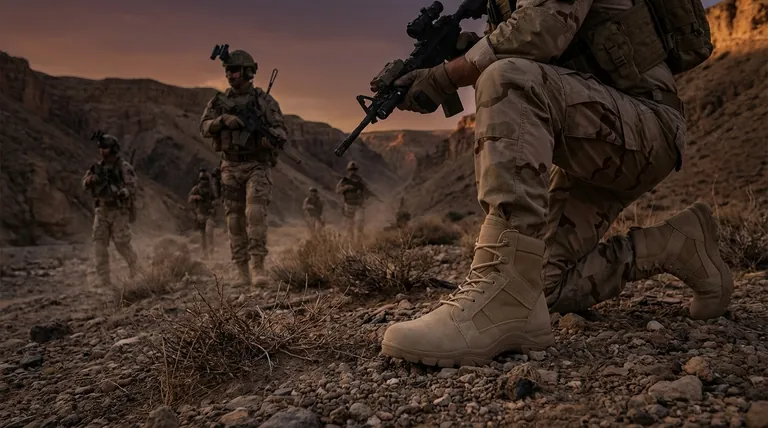
At their core, fabrics designed for military use are engineered systems prioritizing soldier survivability and operational effectiveness. They are defined by extreme durability, low weight, rapid moisture management, and advanced tactical properties like inherent Infrared (IR) signature management, UV resistance, and fade-resistant color-locking technology.
The central takeaway is that military textiles are not merely clothing; they are a critical component of a soldier's equipment. Each feature is a deliberate solution to a specific environmental, physical, or tactical threat faced in the field.
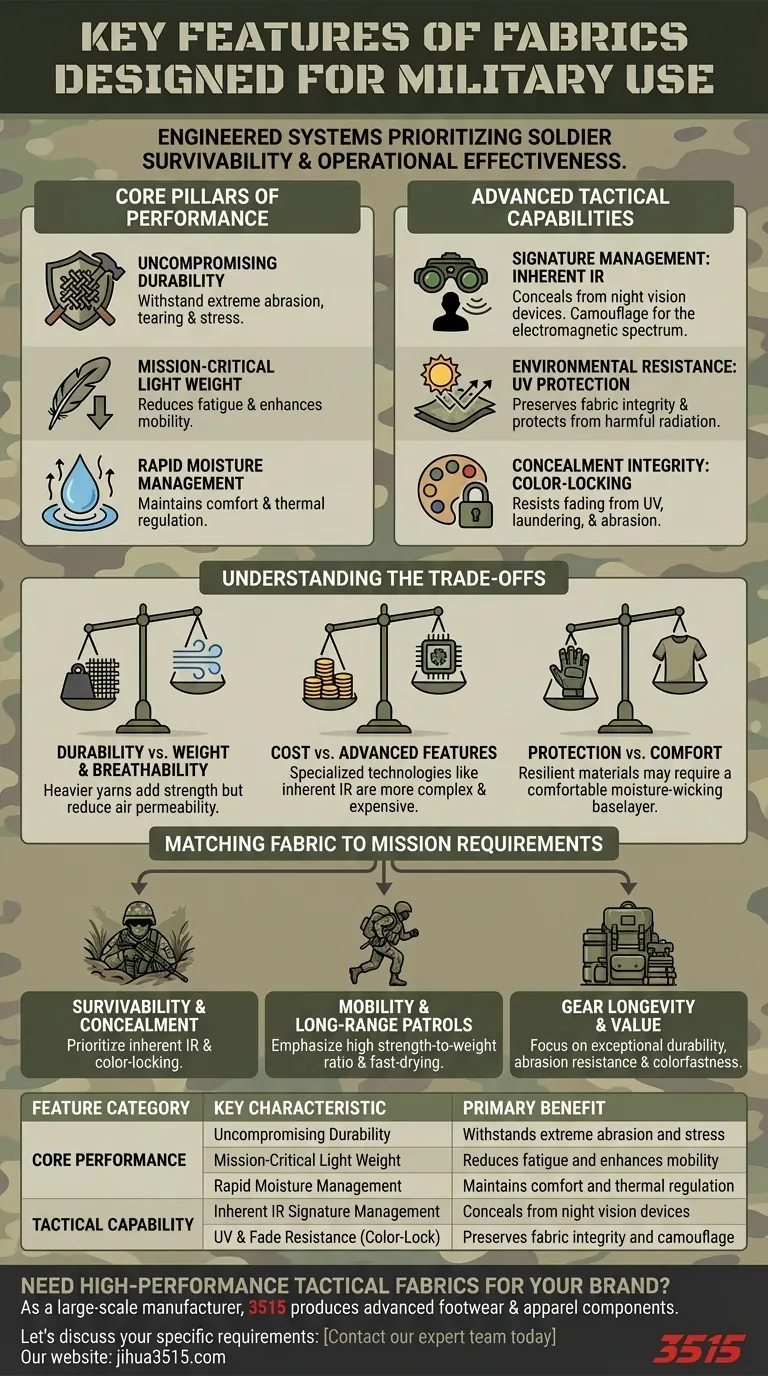
Core Pillars of Performance
The foundational characteristics of any military fabric are tied to the physical demands of combat and deployment in harsh environments.
Uncompromising Durability
Military gear must withstand extreme abrasion, tearing, and stress without failure. This ensures the integrity of uniforms and load-bearing equipment like packs and vests, protecting the soldier and their mission-critical gear.
Mission-Critical Light Weight
Every ounce a soldier carries contributes to fatigue and reduces mobility. Engineering fabrics to be as lightweight as possible without sacrificing durability is a primary objective, directly impacting endurance and combat effectiveness.
Rapid Moisture Management (Fast-Drying)
Fabrics that retain moisture become heavy, lose their insulating properties, and can contribute to hypothermia in cold conditions or chafing in the heat. Fast-drying capabilities ensure the soldier remains as comfortable and thermally regulated as possible.
Advanced Tactical Capabilities
Beyond physical toughness, modern military fabrics incorporate features that provide a distinct tactical advantage.
Signature Management: Inherent IR Capability
This is one of the most critical and least understood features. Inherent IR capability means the fabric's dyes and materials are designed to reflect near-infrared light at a similar level to the surrounding natural environment (like foliage or soil).
This prevents the soldier from appearing as a bright, unnatural silhouette when viewed through enemy night vision devices, which detect IR light. It is a form of camouflage for the electromagnetic spectrum.
Environmental Resistance: UV Protection
Prolonged exposure to intense sunlight can degrade fabric strength and fade colors, compromising both durability and concealment. UV resistance is built into the fibers to protect the material's integrity and the soldier from harmful radiation.
Concealment Integrity: Color-Locking Technology
Effective camouflage relies on precise colors and patterns. Color-locking technology ensures that fabrics resist fading from UV exposure, laundering, and abrasion, maintaining the effectiveness of the camouflage pattern throughout the life of the garment.
Understanding the Trade-offs
No single fabric solution is perfect. The engineering of military textiles always involves balancing competing priorities.
Durability vs. Weight and Breathability
Increasing a fabric's tear strength and abrasion resistance, often by using heavier yarns or tighter weaves, typically adds weight and reduces air permeability (breathability). This can make the gear less comfortable in hot climates.
Cost vs. Advanced Features
Incorporating specialized technologies like inherent, fiber-level IR signature management is significantly more complex and expensive than applying a simple topical treatment. This cost must be weighed against the critical survivability advantage it provides.
Protection vs. Comfort
The most resilient materials are not always the most comfortable against the skin. A combat uniform is a system, often requiring a comfortable, moisture-wicking baselayer to be worn under a tough, protective outer shell.
Matching Fabric to Mission Requirements
The ideal fabric is always a function of its intended use.
- If your primary focus is survivability and concealment: Prioritize inherent IR capability and proven color-locking technology above all else.
- If your primary focus is mobility and long-range patrols: Emphasize the highest possible strength-to-weight ratio and superior fast-drying properties.
- If your primary focus is gear longevity and value: Focus on exceptional durability, abrasion resistance, and colorfastness to ensure a long service life.
Ultimately, selecting the right military fabric is about understanding the mission and choosing the technology that best equips the soldier to succeed.
Summary Table:
| Feature Category | Key Characteristic | Primary Benefit |
|---|---|---|
| Core Performance | Uncompromising Durability | Withstands extreme abrasion and stress |
| Core Performance | Mission-Critical Light Weight | Reduces fatigue and enhances mobility |
| Core Performance | Rapid Moisture Management | Maintains comfort and thermal regulation |
| Tactical Capability | Inherent IR Signature Management | Conceals from night vision devices |
| Tactical Capability | UV & Fade Resistance (Color-Lock) | Preserves fabric integrity and camouflage |
Need High-Performance Tactical Fabrics for Your Brand?
As a large-scale manufacturer, 3515 produces a comprehensive range of advanced footwear and apparel components for distributors, brand owners, and bulk clients. Our production capabilities are tailored to meet the rigorous demands of military and tactical gear.
We can help you integrate these critical features—like durable constructions, moisture-wicking liners, and specialized material treatments—into your product line to ensure superior performance and a competitive edge.
Let's discuss your specific requirements: Contact our expert team today to explore manufacturing solutions that enhance soldier survivability and operational effectiveness.
Visual Guide
Related Products
- High-Traction Suede Tactical Boots Wholesale & Custom Manufacturing
- Wholesale Waterproof Tactical Boots Custom Suede & High-Traction Soles
- Durable Leather Tactical Boots Wholesale & Custom Manufacturing for Brands
- Durable Military Combat Boots with Water Drainage for Wholesale & OEM
- Durable High-Ankle Tactical Boots for Wholesale & Custom Manufacturing
People Also Ask
- Why is sequential analysis utilized to evaluate tactical boots? Master Dynamic Boot Development and Ergonomic Performance
- How does the material of tactical boots affect their performance? Choose the Right Material for Your Mission
- How do tactical boots differ from regular boots? Performance, Durability & Design Explained
- How do military uniforms and tactical boots impact the prediction of thermal risk? Essential Safety Insights
- What are the benefits of integrating FES and sEMG into tactical boots? Safety, Reliability & Field-Ready Performance