The defining characteristic of a dressage boot is its extreme stiffness. Unlike other riding boots, a dressage boot is engineered with a reinforced spine to create a long, elegant, and almost completely still leg position. This rigidity directly supports the unique requirements of the dressage discipline, where quiet communication with the horse is paramount.
The core purpose of a dressage boot's design is not comfort or flexibility, but postural enforcement. Its rigid structure is a tool that helps the rider maintain the specific, elongated leg position required for high-level dressage.
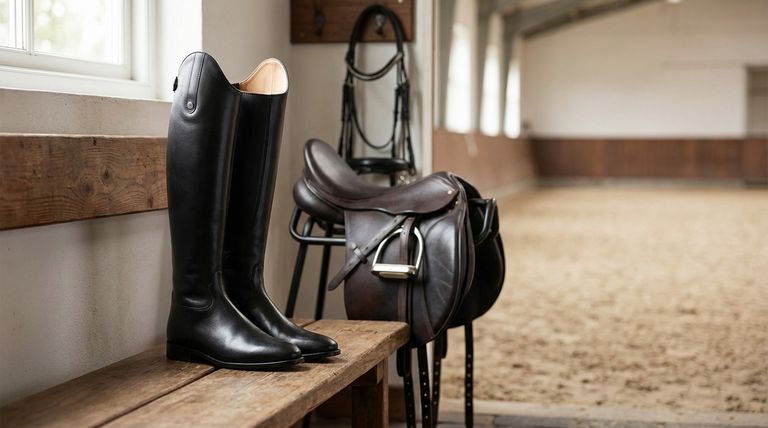
The Anatomy of a Purpose-Built Boot
The unique features of a dressage boot are all directly related to its function in the saddle. It is a highly specialized piece of equipment designed for a single task.
Uncompromising Stiffness
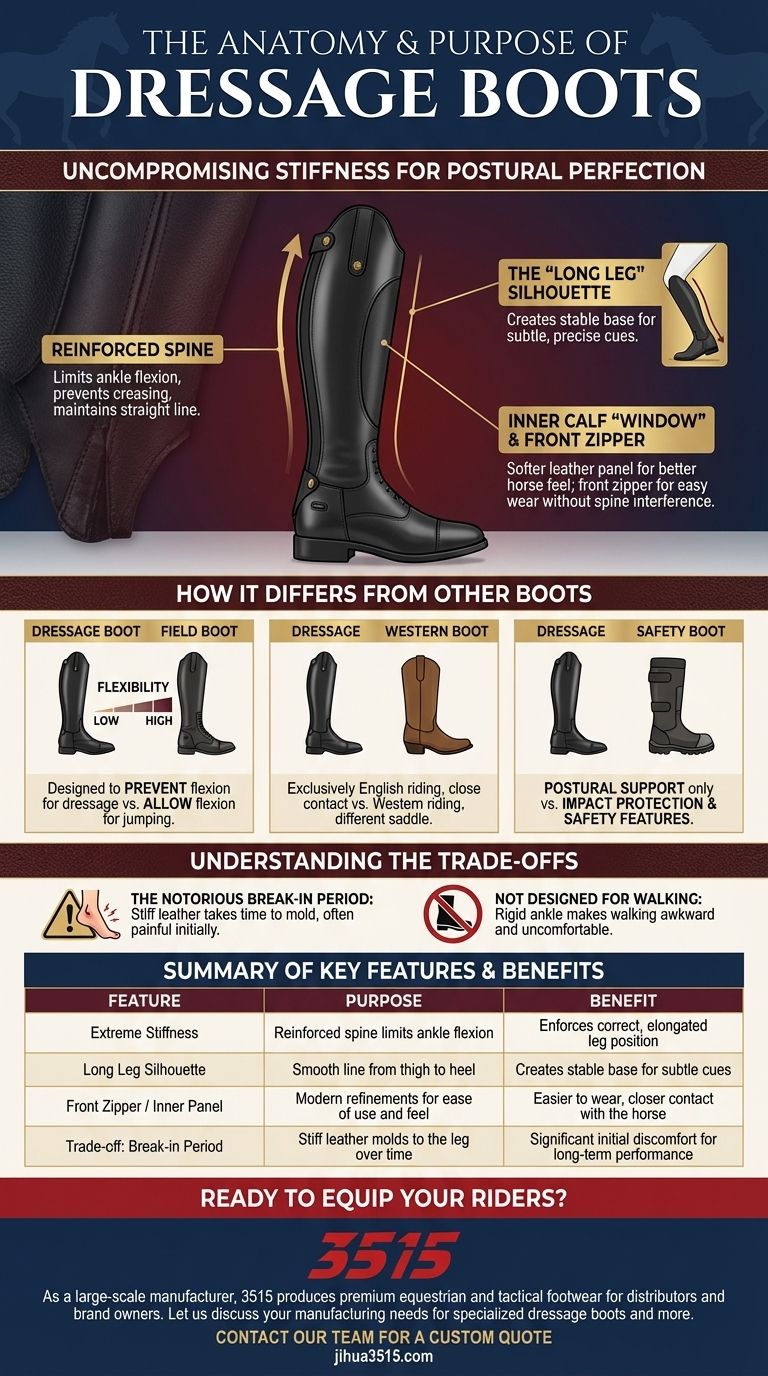
The most notable feature is the boot's rigid construction, often achieved with a reinforced leather or synthetic stiffener running up the back of the calf. This design intentionally limits the flexion of the rider's ankle.
The result is a boot that shows very little creasing or dropping at the ankle over time, maintaining a smooth, straight line from the thigh to the heel.
The "Long Leg" Silhouette
This rigidity is crucial for achieving the long and elegant leg position that is a hallmark of dressage. The boot supports the calf and encourages the heel to stay down, creating a stable base of support for the rider.
This stable, elongated leg allows for subtle, precise cues to be given to the horse, which is essential for the intricate movements of dressage.
Modern Design and Refinements
While traditional dressage boots were pull-on, most modern versions feature a full-length zipper for easier use. This zipper is often placed toward the front of the inner calf, rather than the back, to avoid interfering with the reinforced spine.
To counteract some of the rigidity, some high-end boots feature a "window" of softer leather on the inner calf. This provides the rider with a closer feel of the horse's side, enhancing communication without sacrificing the boot's supportive structure.
How Dressage Boots Differ from Other Boots
Understanding what a dressage boot is becomes clearer when you see what it is not. Its specialization stands in stark contrast to other types of equestrian and utility footwear.
Dressage vs. Other English Riding Boots
The primary difference is flexibility. Field boots, used for jumping, have laces at the ankle to allow for the flexion needed to shorten stirrups and get into a two-point position. Dressage boots are the opposite, designed to prevent this very movement.
Dressage vs. Western Boots
Cowboy boots are built for the Western riding discipline, featuring a different heel angle and overall construction suited for long hours in a different type of saddle. The dressage boot is exclusively for English-style riding that requires close, quiet leg contact.
Support vs. Safety
Unlike safety or public order boots, the rigidity in a dressage boot is for postural support, not protection. Dressage boots lack steel toes, puncture-resistant midsoles, or the heavy-duty impact resistance found in true work or tactical boots.
Understanding the Trade-offs
The specialized nature of dressage boots comes with clear compromises that every rider should understand.
The Notorious Break-In Period
Because of their stiffness, new dressage boots are famously difficult and often painful to break in. It can take a significant amount of time before the leather molds to the rider's leg and becomes comfortable in the saddle.
Not Designed for Walking
These boots are exclusively for riding. Their rigid ankle construction makes walking for any significant distance awkward and uncomfortable. They are put on shortly before riding and typically taken off soon after dismounting.
The Balance of Feel and Rigidity
The fundamental trade-off is feel versus support. While the stiff outer leg provides stability, it can dull the rider's sense of the horse. The softer inner panel found on some boots is a direct attempt to mitigate this compromise.
Making the Right Choice for Your Discipline
Ultimately, your choice of boot must be dictated by your riding goals.
- If your primary focus is dressage: A stiff, formal dressage boot is essential for developing the correct leg position and achieving the polished look required in the show ring.
- If your primary focus is show jumping or eventing: A more flexible field boot with ankle lacing is the correct choice to allow for the necessary movement and flexion.
- If your primary focus is casual or trail riding: A less specialized and more comfortable boot, such as a paddock boot and half-chaps, is a more practical option.
Choosing equipment that aligns with your specific goals is the first step toward effective and correct riding.
Summary Table:
| Feature | Purpose | Key Benefit |
|---|---|---|
| Extreme Stiffness | Reinforced spine limits ankle flexion | Enforces correct, elongated leg position |
| Long Leg Silhouette | Smooth line from thigh to heel | Creates a stable base for subtle cues |
| Front Zipper / Inner Panel | Modern refinements for ease of use and feel | Easier to wear, closer contact with the horse |
| Trade-off: Break-in Period | Stiff leather molds to the leg over time | Significant initial discomfort for long-term performance |
Ready to Equip Your Riders with Premium Footwear?
As a large-scale manufacturer, 3515 produces a comprehensive range of equestrian and tactical footwear for distributors, brand owners, and bulk clients. Our production capabilities encompass all types of boots, including specialized dressage boots built for performance and durability.
Let us help you provide your customers with the superior quality and precise design they demand. Contact our team today to discuss your manufacturing needs and receive a custom quote.
Visual Guide
Related Products
- Wholesale Perforated Comfort Dress Shoes | Custom Derby Shoe Manufacturer
- Wholesale Comfort Dress Shoes with Dial Closure for Custom Manufacturing
- Wholesale Breathable Perforated Leather Derby Dress Shoes for Custom Brands
- Wholesale Leather Derby Shoes Manufacturer | Customizable Business & Dress Footwear
- Wholesale Women's Leather Derby Shoes Custom Factory Production
People Also Ask
- How do comfort dress shoes differ from traditional dress shoes? Discover the Ergonomic Advantage
- What are the recommended construction methods for quality dress shoes? Goodyear Welt vs. Blake Stitch Explained
- What are some quick tips for achieving a mirror shine on dress shoes? Speed Up Your Shine with Pro Hacks
- What is aniline leather and why is it considered high quality for dress shoes? Discover the Pinnacle of Luxury
- What role do socks play in improving the comfort of dress shoes? Essential Tips for All-Day Wear