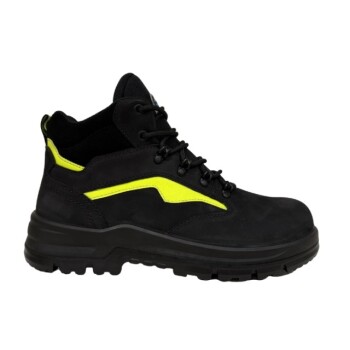
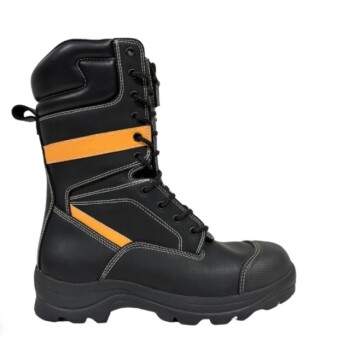
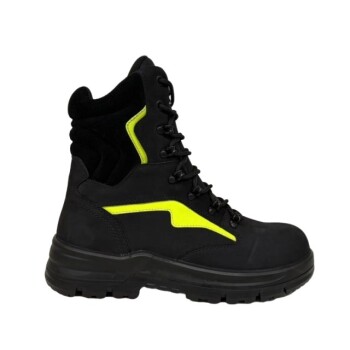
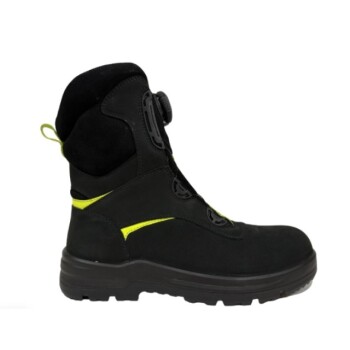
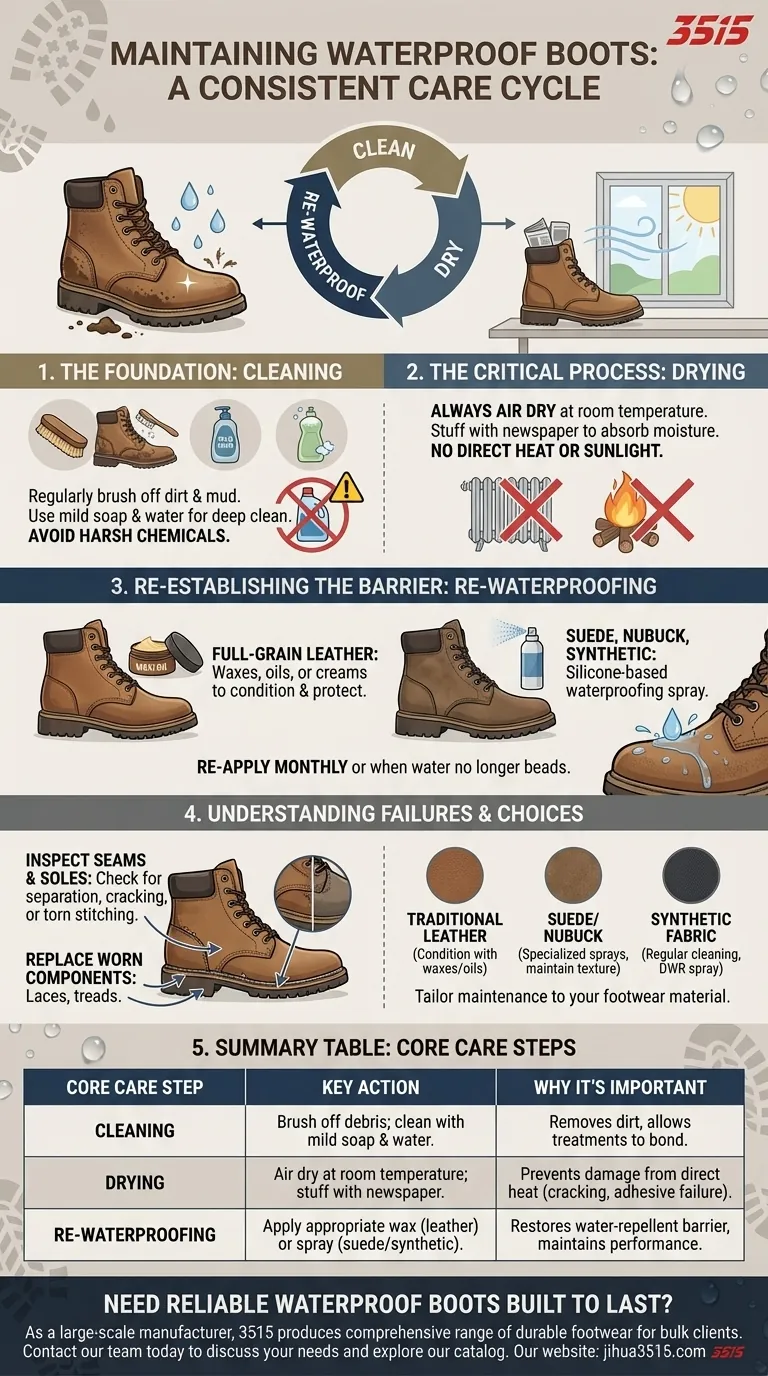
To properly maintain waterproof boots, you must follow a consistent cycle of care. This involves regularly cleaning off dirt and mud, allowing the boots to air dry completely away from direct heat, and periodically reapplying a waterproofing treatment like a wax or spray appropriate for the boot's material.
The key to long-term performance is understanding that "waterproof" is a condition you maintain, not a permanent feature you buy. A consistent routine of cleaning, drying, and re-treating the outer material is what preserves the boot's integrity and keeps your feet dry.
The Foundation: A Consistent Cleaning Routine
Proper care begins with cleaning. A clean boot not only looks better but also allows waterproofing treatments to bond effectively with the material.
Clean After Every Use
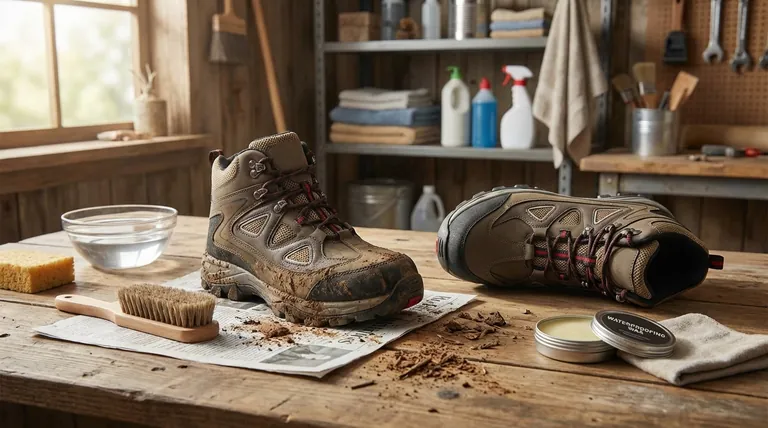
After each wear, take a moment to knock off dried mud and brush away loose debris. This simple step prevents dirt from working its way into the boot's material and seams, which can cause abrasion and wear over time.
Perform a Deeper Clean
For more significant dirt, use a gentle cleaner or a simple solution of mild soap and water. Use a soft brush to gently scrub the entire boot, paying attention to seams and crevices.
Avoid Harsh Chemicals
Never use harsh detergents or chemicals on your boots. These can strip away the natural oils in leather or degrade the factory-applied water-repellent coatings on synthetic materials, causing irreversible damage.
The Critical Drying Process
How you dry your boots is just as important as how you clean them. Improper drying is one of the fastest ways to ruin a quality pair of boots.
Always Air Dry
After cleaning or getting wet, let your boots air dry naturally at room temperature. You can stuff them with newspaper to help absorb internal moisture and maintain their shape.
Avoid Direct Heat and Sunlight
Never place your boots near a radiator, campfire, or in direct sunlight to speed up drying. Intense, direct heat will crack and weaken leather and can cause the adhesives used in sole construction to fail.
Re-establishing the Waterproof Barrier
The exterior waterproofing on your boots will wear off over time. You must re-apply a protective treatment to maintain their performance.
Choose the Right Product
The type of treatment depends on your boot's material.
- Full-grain leather boots benefit from waxes, oils, or creams that condition the leather while adding a robust water-resistant layer.
- Suede, nubuck, or synthetic fabric boots require a silicone-based waterproofing spray that won't damage the texture or clog the material's pores.
How Often to Re-apply
A good rule of thumb is to re-apply a waterproofing treatment monthly if the boots are used regularly, or whenever you notice water is soaking into the material rather than beading up and rolling off.
Understanding the Trade-offs and Points of Failure
Even the best boots have potential weaknesses. Knowing where to look helps you stay ahead of problems.
Material vs. Liner
Many modern boots feature an internal waterproof membrane or liner. While this is an excellent last line of defense, it's not a substitute for a well-maintained exterior. If the outer material becomes saturated with water, the boot will feel heavy, cold, and lose its breathability.
Inspect Seams and Soles
The points where materials are stitched together and where the upper is attached to the sole are common failure points. Regularly inspect these areas for any signs of separation, cracking, or torn stitching.
Replace Worn Components
Don't neglect the small things. Worn-out laces can snap when you need them most, and worn-down treads compromise your traction and safety. Replace them as needed to keep the entire boot system functional.
Making the Right Choice for Your Goal
Your maintenance strategy should be tailored to the specific materials of your footwear.
- If your primary focus is on traditional leather boots: Prioritize conditioning with waxes or oils to keep the leather supple and prevent it from drying out and cracking.
- If your primary focus is on suede or nubuck boots: Use specialized sprays to maintain the water-repellent finish without matting the material's delicate surface.
- If your primary focus is on synthetic fabric boots: Rely on regular cleaning and re-application of a DWR (Durable Water Repellent) spray to maintain surface-level water resistance and breathability.
Consistent care doesn't just maintain your boots; it ensures they are ready to perform when you need them most.
Summary Table:
| Core Care Step | Key Action | Why It's Important |
|---|---|---|
| Cleaning | Brush off debris; clean with mild soap & water. | Removes dirt that can degrade materials and allows treatments to bond effectively. |
| Drying | Air dry at room temperature; stuff with newspaper. | Prevents damage from direct heat, which can crack leather and melt adhesives. |
| Re-Waterproofing | Apply appropriate wax (leather) or spray (suede/synthetic). | Restores the water-repellent barrier, which wears off with use and time. |
Need reliable waterproof boots that are built to last?
As a large-scale manufacturer, 3515 produces a comprehensive range of durable footwear for distributors, brand owners, and bulk clients. Our production capabilities encompass all types of high-performance shoes and boots, designed to meet the demands of any environment.
Let us provide you with quality footwear that simplifies your maintenance routine and delivers outstanding value. Contact our team today to discuss your needs and explore our catalog.
Visual Guide
Related Products
- Premium Wholesale Waterproof Safety Boots High Performance Protection for Industrial Markets
- High Performance Fire-Retardant Waterproof Safety Boots
- Wholesale Premium Waterproof Nubuck Safety Shoes Boots
- Premium Flame-Retardant Waterproof Safety Boots and Shoes
- Durable Waterproof Rain Boots | Custom Manufacturer for Wholesale & Brands
People Also Ask
- What weather and chemical protections do premium boots offer? Your Complete Guide to Safety & Performance
- Why are waterproof safety boots recommended for certain work environments? Essential Protection for Wet & Hazardous Jobs
- What are the primary protective functions of industrial safety boots in oil palm plantations? Master Rough Terrain Safety
- Why are oil-resistant and anti-slip properties critical for industrial safety boots? Expert Outsole Engineering Guide
- What are the best types of shoes for different gardening conditions? Find Your Perfect Match.