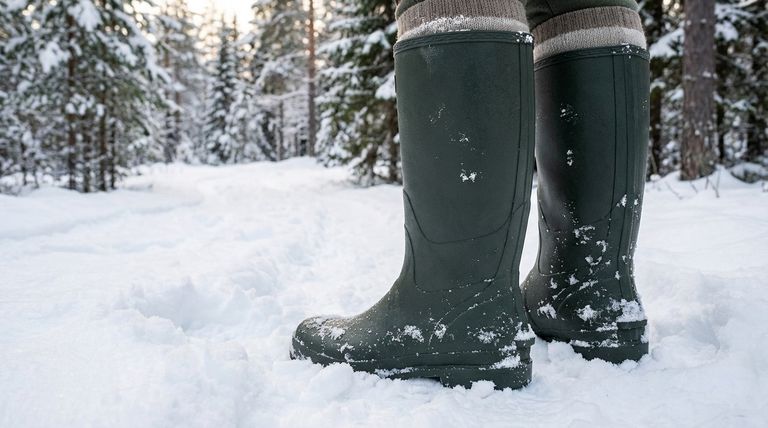
Yes, wellies offer significant benefits in the snow, primarily because their construction is 100% waterproof and often includes insulating materials. This design ensures your feet remain completely dry from melting snow and slush while providing warmth against cold temperatures.
While wellies are an excellent choice for wet, slushy snow due to their unparalleled waterproofing, they are not a universal solution. Their true effectiveness depends on the specific temperature, snow conditions, and your level of activity.
The Core Advantages of Wellies in Snow
The unique construction of wellington boots provides a set of clear advantages when navigating snowy environments. These benefits are centered around protection from the elements.
Unmatched Waterproofing
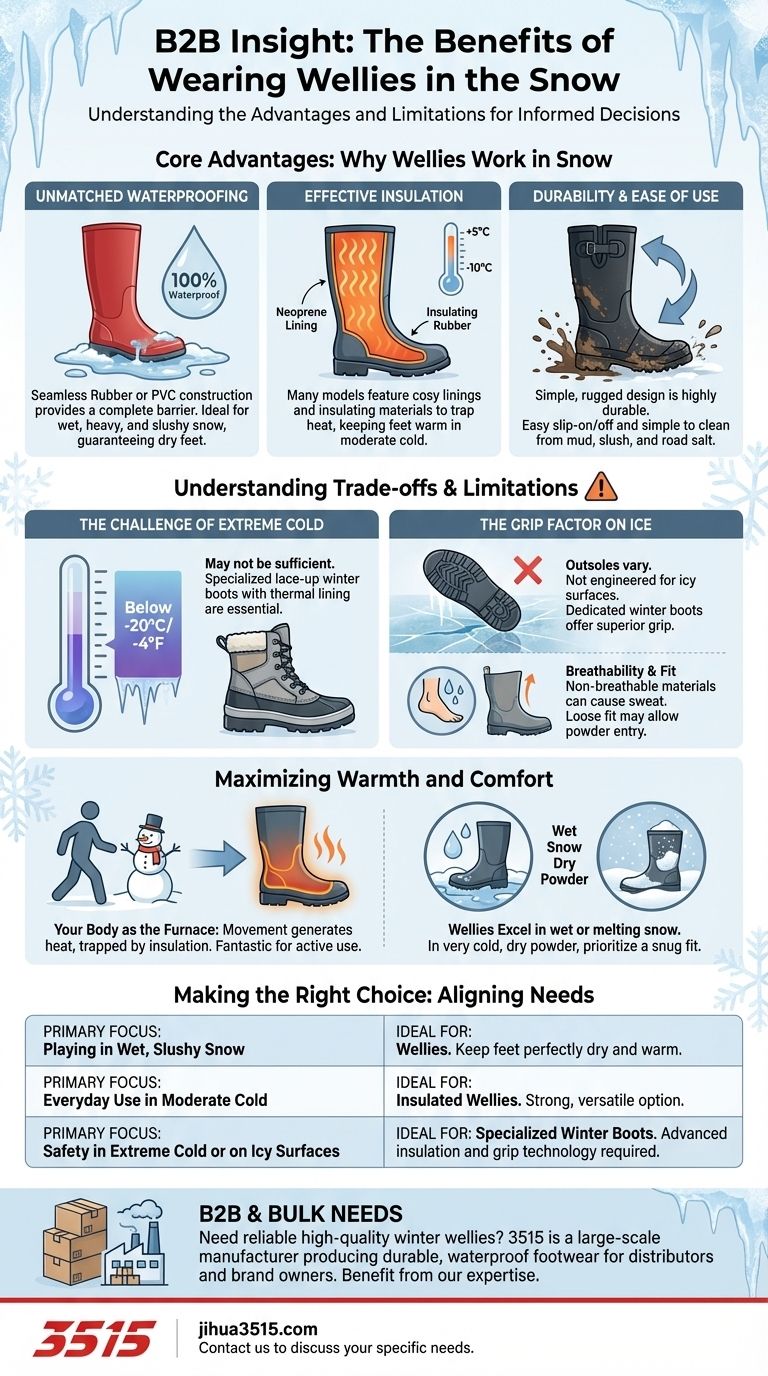
The primary benefit of a welly is its seamless, 100% waterproof rubber or PVC construction. Unlike stitched boots that can eventually leak, wellies provide a complete barrier against moisture.
This makes them ideal for the wet, heavy, and slushy snow common in many winter climates, guaranteeing your feet stay dry.
Effective Insulation
Many modern wellies are specifically designed for winter use. They often feature a cosy neoprene lining and are built with an insulating rubber outer layer.
These materials trap heat effectively, keeping feet warm and comfortable even in negative temperatures.
Durability and Ease of Use
The simple, rugged design of a welly makes it highly durable and able to withstand significant wear and tear.
They are also incredibly easy to slip on and off and simple to clean, which is a major benefit when dealing with mud, slush, and road salt.
Understanding the Trade-offs and Limitations
To make an informed decision, you must also understand where wellies fall short compared to specialized winter footwear. Their strengths in some areas create weaknesses in others.
The Challenge of Extreme Cold
While insulated wellies are warm, they may not be sufficient for extreme cold (below -20°C / -4°F).
In these conditions, specialized lace-up winter boots with very high levels of thermal lining are essential to prevent cold-related injuries.
The Grip Factor on Ice
The outsoles on wellies vary. While many have deep treads suitable for snow and mud, they are not specifically engineered for icy surfaces.
Dedicated winter boots often feature specialized rubber compounds and tread designs, similar to winter tires, for superior grip on ice.
Breathability and Overall Fit
The same rubber that makes wellies waterproof also makes them non-breathable. For long periods of high activity, this can lead to sweaty feet, which then become cold.
Furthermore, their looser, pull-on fit can sometimes allow deep, powdery snow to enter from the top, a problem solved by the snug, lace-up design of other winter boots.
How to Maximize Warmth and Comfort
Your activity level and the type of snow you're in play a crucial role in how well your wellies perform.
Your Body as the Furnace
Staying active is key to keeping your feet warm. Movement generates body heat, which is then trapped by the boot's insulation.
This makes wellies a fantastic option for active outdoor play, like building a snowman or walking through snowy fields.
Wet Snow vs. Dry Powder
Wellies truly excel in wet or melting snow where waterproofing is the top priority.
In very cold, dry, powdery snow, the priorities shift to maximum insulation and a snug fit to keep the powder out.
Making the Right Choice for Your Winter Needs
Use your primary goal to determine if wellies are the correct tool for the job.
- If your primary focus is playing in wet, slushy snow: Wellies are the ideal choice for keeping feet perfectly dry and warm.
- If your primary focus is everyday use in moderate cold: A pair of well-insulated wellies is a strong, versatile option.
- If your primary focus is safety in extreme cold or on icy surfaces: You must invest in specialized winter boots with advanced insulation and grip technology.
Ultimately, choosing the right footwear is about matching the boot's strengths to the specific winter conditions you face.
Summary Table:
| Benefit | Key Feature | Ideal For |
|---|---|---|
| Unmatched Waterproofing | Seamless rubber/PVC construction | Wet, heavy, and slushy snow |
| Effective Insulation | Neoprene lining & insulating rubber | Moderate cold temperatures |
| Durability & Ease | Rugged design, easy to clean | Active outdoor play and everyday use |
Need a reliable supply of high-quality winter wellies?
As a large-scale manufacturer, 3515 produces a comprehensive range of durable, waterproof footwear for distributors, brand owners, and bulk clients. Our production capabilities encompass all types of insulated boots and wellies designed to perform in snowy conditions.
Contact us today to discuss your specific needs and benefit from our manufacturing expertise.
Visual Guide
Related Products
- Wholesale Durable Camouflage Canvas Shoes with High-Traction Cleated Rubber Sole
- Wholesale Breathable Training Shoes Custom Athletic Footwear Manufacturer
- Durable Waterproof Rain Boots | Custom Manufacturer for Wholesale & Brands
- Lightweight Breathable Training Shoes for Wholesale & Custom OEM Manufacturing
- Wholesale Durable Safety Boots Manufacturer Customizable Steel Toe Work Boots
People Also Ask
- Why is the selection of high-strength fabric materials necessary in the production of canvas shoes and training shoes?
- What are the properties of canvas as a shoe material? A Guide to Lightweight Comfort & Style
- Can canvas shoes be worn in rainy conditions? The Truth About Water Resistance
- What are some examples of vulcanized shoes? Discover the Flexibility and Board Feel of Classic Sneakers
- What are the characteristics of canvas as a shoe material? A Guide to Lightweight, Breathable Footwear