
In short, mid-height hiking shoes offer a crucial middle ground of ankle support. They provide a noticeable increase in stability compared to low-cut shoes by physically bracing the ankle joint, which helps prevent common rolls and sprains on uneven or rocky terrain. This design offers a balance, giving you more confidence than a shoe but more flexibility than a full boot.
The core benefit of a mid-height hiking shoe is not absolute injury prevention, but rather a significant reduction in risk. It provides a moderate level of structural support that improves stability on tricky terrain without the weight and rigidity of a traditional high-cut boot.
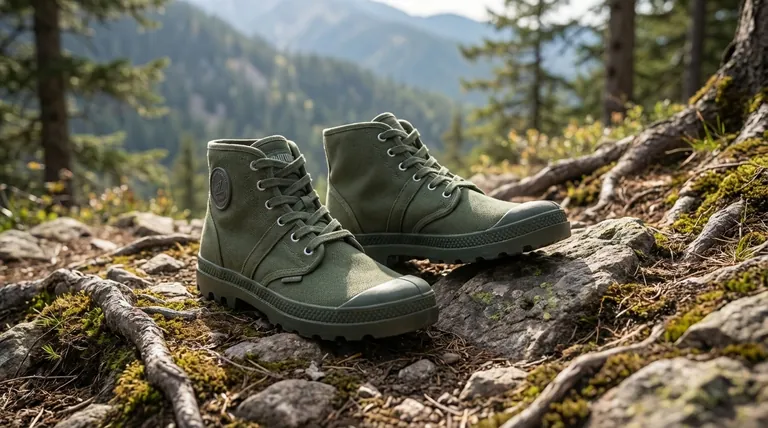
How Mid-Height Shoes Enhance Ankle Stability
The support offered by a mid-height shoe comes from a combination of its physical structure and its interaction with your body's natural sense of balance.
A Physical Brace for the Ankle
The collar of a mid-height shoe extends just over the ankle bones. This "cuff" serves as a light, external brace.
By wrapping around the joint, it physically limits the extreme side-to-side motion that results in an ankle roll or sprain. This is especially valuable when you misstep on a root or rock.
Improved Proprioception
Proprioception is your body's awareness of its position in space. The pressure of the shoe's cuff against your ankle provides constant sensory feedback to your brain.
This heightened awareness makes you more conscious of your foot placement, allowing you to make micro-adjustments and maintain balance before a potential misstep becomes an injury.
Protection from Direct Impact
Beyond joint stability, the mid-height design also provides a physical shield for your ankle bones.
This protects you from painful impacts with rocks, branches, and other trail hazards that low-cut shoes would leave exposed.
The Spectrum of Support: Finding the Right Fit
The decision to use a mid-height shoe becomes clearer when you understand where it fits between its low-cut and high-cut counterparts.
Low-Cut Shoes: For Smooth Trails
Low-cut hiking shoes and trail runners offer virtually no ankle support. Their advantage is maximum flexibility and minimal weight.
They are best suited for well-maintained trails and hikers who have strong, stable ankles and are not carrying a heavy pack.
Mid-Height Shoes: The Versatile All-Rounder
This is the sweet spot for the majority of hikers. Mid-height shoes provide the necessary support to confidently tackle varied and unpredictable terrain.
They are ideal for most day hikes and light backpacking trips where you might encounter rocks, roots, and moderate inclines.
High-Cut Boots: For Maximum Stability
High-cut boots offer the highest level of ankle support. Their rigid structure is essential for stabilizing the ankle under heavy loads.
Choose a high-cut boot when carrying a heavy backpack, navigating very steep or rugged off-trail terrain, or if you have a history of significant ankle injuries.
Understanding the Trade-offs
While beneficial, the support from a mid-height shoe is not a guarantee against injury and comes with certain considerations.
Support is Not a Substitute for Care
Even the most supportive boot cannot prevent an injury if you are fatigued or careless with foot placement. Proper hiking technique remains your primary defense.
The Critical Role of Pack Weight
Carrying a heavy pack raises your center of gravity and dramatically increases the forces acting on your ankles with every step.
As your pack weight increases, the need for more substantial ankle support from a mid or high-cut boot becomes more critical.
Flexibility vs. Rigidity
The trade-off for increased support is a slight reduction in ankle flexibility. While this is precisely the point, some hikers prefer the freedom of movement a low-cut shoe provides on less demanding terrain.
Making the Right Choice for Your Hike
Select your footwear by honestly assessing your typical hike, your body, and the weight you'll be carrying.
- If your primary focus is speed and agility on well-maintained trails: Low-cut shoes offer the best performance, assuming you have strong ankles.
- If your primary focus is all-around capability for most day hikes and light backpacking: Mid-height shoes provide the ideal balance of support, protection, and flexibility.
- If your primary focus is maximum stability with a heavy pack or on rugged terrain: High-cut boots are the safest and most supportive choice, especially if you are prone to ankle issues.
Ultimately, choosing the right level of ankle support is about aligning your gear with the demands of the trail.
Summary Table:
| Feature | Low-Cut Shoes | Mid-Height Shoes | High-Cut Boots |
|---|---|---|---|
| Ankle Support | Minimal | Moderate | Maximum |
| Best For | Smooth trails, strong ankles | Varied terrain, day hikes, light packs | Heavy packs, rugged terrain, injury-prone ankles |
| Flexibility | High | Balanced | Low |
| Weight | Lightest | Moderate | Heaviest |
Ready to equip your next adventure with the right support?
As a large-scale manufacturer, 3515 produces a comprehensive range of high-quality hiking footwear for distributors, brand owners, and bulk clients. Whether you need durable mid-height shoes for versatile trail performance or specialized boots for maximum stability, our production capabilities ensure top-tier quality and reliability for your inventory.
Contact us today to discuss your footwear needs and discover how 3515 can be your trusted manufacturing partner.
Visual Guide

Related Products
- Durable Rubber Sole Outdoor Shoes Wholesale & Custom Manufacturing
- Wholesale High-Traction Camo Boots - Custom Manufacturer for Brands
- Durable Leather High-Ankle Tactical Boots for Wholesale & Custom Manufacturing
- Wholesale Durable Camouflage Canvas Shoes with High-Traction Cleated Rubber Sole
- Durable Mid-Cut Tactical Boots for Wholesale & Private Label
People Also Ask
- What is the function of the sole in outdoor shoes? Find the Perfect Grip and Support
- What role do outdoor shoes and sneakers play in navigating external terrains? Engineered Stability for Every Surface
- How is AI utilized in the design of outdoor and safety footwear? Harnessing Big Data for Market-Driven Shoe Innovation
- Why is durability important when selecting outdoor shoes? A Guide to Safety & Long-Term Value
- What are the key components of outdoor shoes that affect comfort and sturdiness? A Guide to Durable, High-Performance Footwear














