The primary benefits of foam shoe soles are superior shock absorption, adaptive support, and design versatility. This unique combination makes foam the dominant material in modern athletic and casual footwear, where comfort and performance are the highest priorities.
While traditional materials like leather offer rigid durability, foam excels by absorbing impact and conforming to your foot. The core benefit isn't just comfort—it's a functional design choice that reduces physical stress on your body.
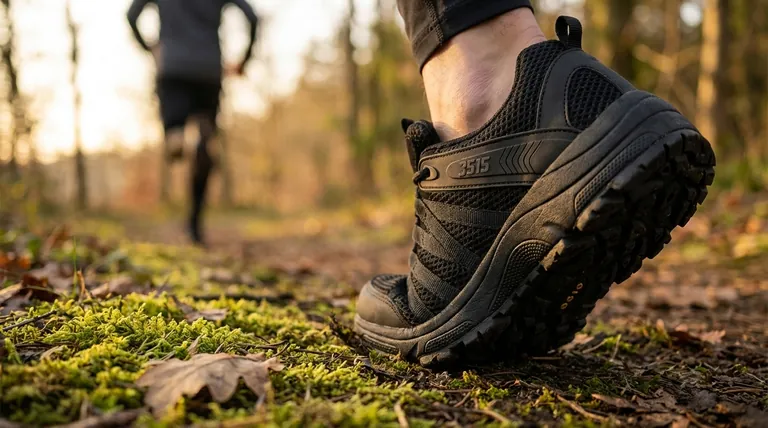
The Mechanics of Comfort: How Foam Works
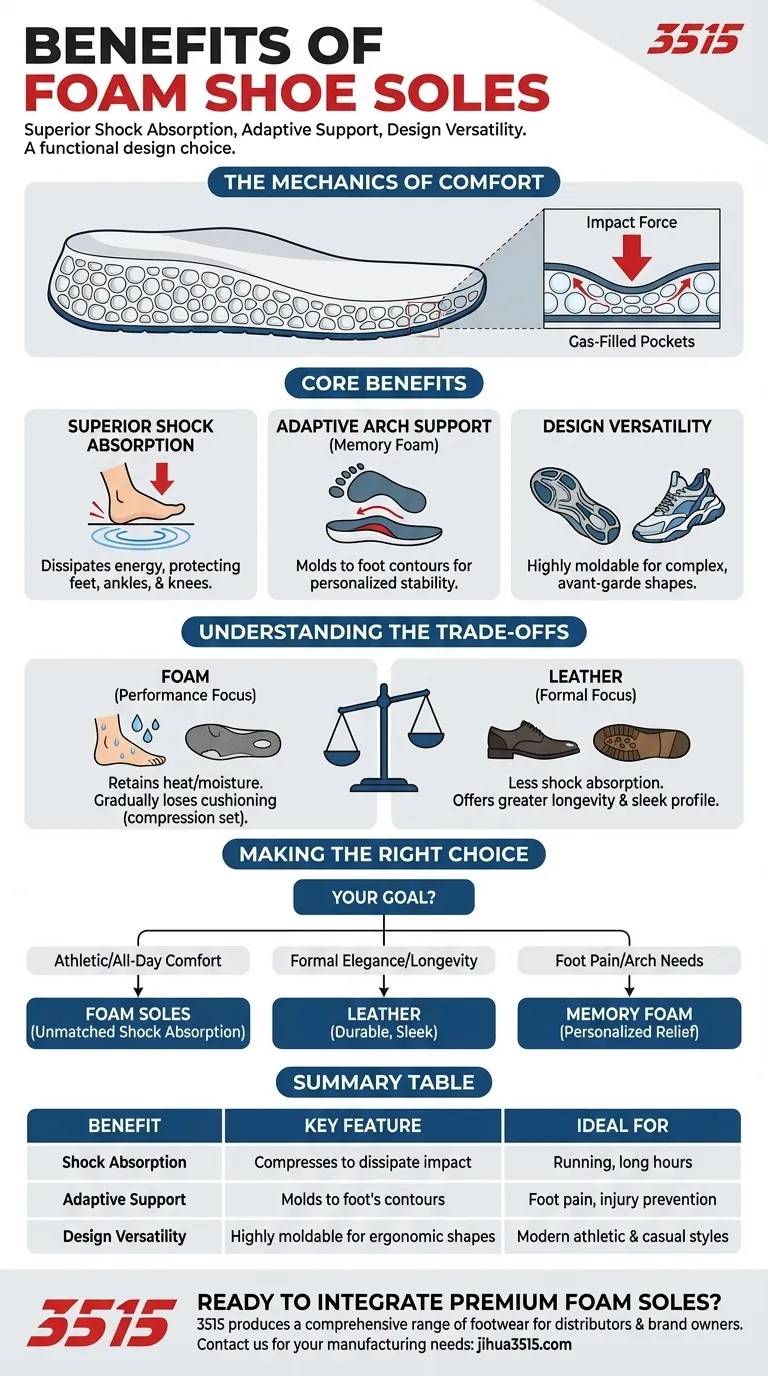
Foam's unique properties are rooted in its cellular structure. Unlike a solid material, foam is a matrix of tiny, gas-filled pockets that can compress and rebound, creating a cushioning effect that serves several key functions.
Superior Shock Absorption
Every step you take sends an impact shock from the ground up through your body. Foam soles are engineered to absorb a significant portion of this force.
The material compresses upon impact, dissipating energy that would otherwise travel into your feet, ankles, and knees. This makes foam an ideal choice for high-impact activities like running or for anyone spending long hours on their feet.
Adaptive Arch Support
Certain types of foam, particularly memory foam, go beyond simple cushioning. This material reacts to body heat and pressure, allowing it to mold to the unique contours of your foot.
This adaptive quality provides personalized arch support and helps stabilize your natural gait. For individuals with foot pain or athletes seeking to reduce injury risk, this customized fit is a critical benefit.
Design and Maintenance Versatility
Foam is a highly moldable material, giving designers the freedom to create complex, ergonomic, and even avant-garde sole shapes that are difficult to achieve with traditional materials.
Furthermore, foam is generally non-porous and relatively easy to clean, making it a practical choice for everyday wear.
Understanding the Trade-offs
No material is perfect for every application. To make an informed choice, it's crucial to understand the inherent limitations of foam soles, especially when compared to materials like leather.
Heat and Moisture Retention
A significant drawback of foam is its tendency to retain heat and sweat. The same structure that provides cushioning also limits airflow.
While this can provide warmth in sedentary situations, it may lead to discomfort during prolonged or intense physical activity. This makes material choice critical for high-performance athletic footwear.
Durability vs. Cushioning
The primary function of foam—compressing to absorb shock—is also the source of its main durability issue. Over time and with repeated impact, foam cells can break down and fail to rebound fully.
This means a foam sole will gradually lose its cushioning and supportive properties. In contrast, a denser material like leather, often used in dress shoes, offers far greater longevity but provides minimal shock absorption.
Making the Right Choice for Your Goal
Selecting the right sole material depends entirely on the intended purpose of the shoe. Aligning the material's properties with your needs will ensure better comfort, performance, and value.
- If your primary focus is athletic performance or all-day walking comfort: Foam soles are the superior choice for their unmatched shock absorption and adaptive support.
- If your primary focus is formal elegance and maximum lifespan: A traditional material like leather is better suited for dress shoes, offering a sleek profile and years of durability with proper care.
- If you have specific foot pain or arch support needs: Prioritize shoes with memory foam variants that will conform to your foot's unique shape for personalized relief.
Understanding the distinct properties of your shoe's sole empowers you to choose footwear that truly serves its purpose.
Summary Table:
| Benefit | Key Feature | Ideal For |
|---|---|---|
| Shock Absorption | Compresses to dissipate impact force | Running, long hours on feet |
| Adaptive Support | Molds to foot's contours (e.g., memory foam) | Foot pain, injury prevention |
| Design Versatility | Highly moldable for ergonomic shapes | Modern athletic & casual styles |
Ready to integrate premium foam soles into your footwear line?
As a large-scale manufacturer, 3515 produces a comprehensive range of footwear for distributors, brand owners, and bulk clients. Our production capabilities encompass all types of shoes and boots, including advanced foam sole technology for superior comfort and performance.
Contact us today to discuss your manufacturing needs and bring high-comfort footwear to your market.
Visual Guide
Related Products
- Durable Rubber Sole Outdoor Shoes Wholesale & Custom Manufacturing
- Durable Rubber-Soled Utility Shoes for Wholesale & Custom Brand Manufacturing
- Wholesale Durable Camo Canvas Shoes with High-Traction Rubber Soles
- Wholesale Durable Camouflage Canvas Shoes with High-Traction Cleated Rubber Sole
- Wholesale Breathable Training Shoes Custom Athletic Footwear Manufacturer
People Also Ask
- What is the function of the sole in outdoor shoes? Find the Perfect Grip and Support
- What role do outdoor shoes and sneakers play in navigating external terrains? Engineered Stability for Every Surface
- How is AI utilized in the design of outdoor and safety footwear? Harnessing Big Data for Market-Driven Shoe Innovation
- Why is durability important when selecting outdoor shoes? A Guide to Safety & Long-Term Value
- What are the key components of outdoor shoes that affect comfort and sturdiness? A Guide to Durable, High-Performance Footwear