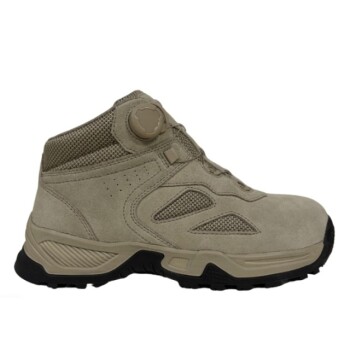
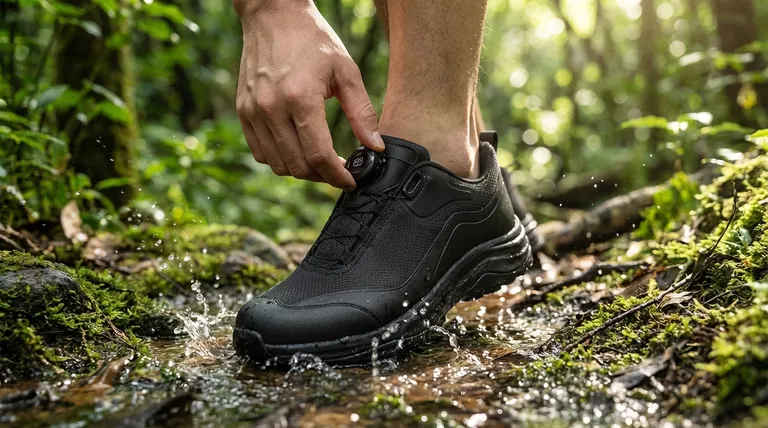
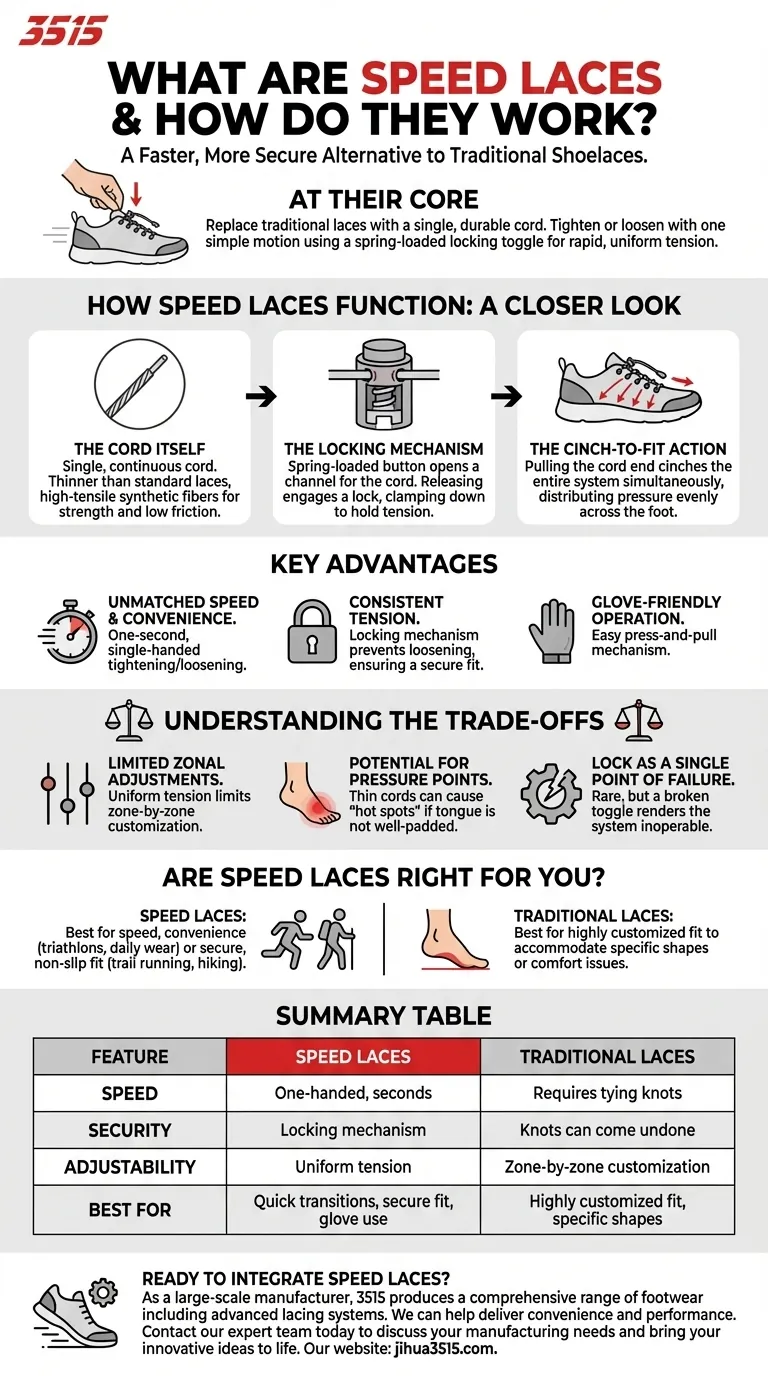
At their core, speed laces are a footwear fastening system designed to replace traditional shoelaces with a faster, more secure alternative. They work by using a single, thin, durable cord that runs through the shoe's eyelets and is secured by a spring-loaded locking toggle, allowing you to tighten or loosen the entire shoe with one simple motion.
The primary purpose of a speed lacing system is to provide rapid, uniform tension across the foot that won't come undone during activity. It trades the zone-by-zone customizability of traditional laces for unmatched convenience and reliability.
How Speed Laces Function: A Closer Look
To understand why speed laces are effective, it's helpful to break down their core components and mechanics. The system is simple but relies on a few key elements working in concert.
The Cord Itself
The "lace" in a speed lace system is typically a single, continuous cord. It's noticeably thinner than a standard shoelace but is engineered for exceptional strength and low friction.
These cords are often made from high-tensile synthetic fibers, making them highly resistant to abrasion and snapping, which is why they are trusted on rugged hiking and trail running shoes.
The Locking Mechanism
The heart of the system is the locking device, often a plastic or metal toggle. This small piece has a spring-loaded button or catch.
When you press the button, it opens a channel, allowing the lace to slide freely through it. Releasing the button engages the lock, which clamps down and holds the cord firmly in place at your desired tension.
The Cinch-to-Fit Action
Because the lace is a single loop, pulling the end of the cord through the unlocked toggle cinches the entire system simultaneously. This distributes tightening pressure evenly across the top of your foot, from the toes to the ankle, in one fluid motion.
Key Advantages Over Traditional Laces
The design of speed laces offers several practical benefits, particularly for athletes or individuals who value efficiency and security in their footwear.
Unmatched Speed and Convenience
The most obvious benefit is speed. Tightening or loosening your shoes becomes a one-second, single-handed action. This is a significant advantage for triathletes during transitions or for anyone who needs to adjust their shoes quickly.
Consistent Tension That Stays Put
Unlike traditional knots that can loosen over time, the locking mechanism on a speed lace system is designed to hold its tension. Once you set it, it stays put, providing a consistent and secure fit throughout your activity.
Glove-Friendly Operation
The simple press-and-pull mechanism is easy to operate even when wearing gloves. This makes speed laces a popular choice for cold-weather activities like winter running or hiking.
Understanding the Trade-offs
While highly effective, speed lacing systems are not without their compromises. Objectivity requires acknowledging where they may fall short for some users.
Limited Zonal Adjustments
The greatest strength of speed laces—uniform tension—is also their primary limitation. You cannot easily make one part of the shoe tighter while leaving another part looser, a level of customization that is possible with traditional lacing techniques.
Potential for Pressure Points
Because the cords are very thin, they can sometimes create pressure points or "hot spots" on the top of the foot if the shoe's tongue isn't well-padded. This is less of an issue on footwear designed with these systems in mind.
The Lock as a Single Point of Failure
The system is incredibly reliable, but the locking mechanism is a mechanical part that could potentially break or fail. While rare, a broken toggle would render the entire lacing system inoperable until replaced.
Are Speed Laces Right for You?
Choosing between speed laces and traditional laces depends entirely on your specific needs and the activities you engage in.
- If your primary focus is speed and convenience (e.g., triathlons, daily wear): Speed laces are an excellent choice for their unmatched efficiency and ease of use.
- If your primary focus is a secure, non-slip fit for dynamic activity (e.g., trail running, hiking): The reliable, consistent tension of speed laces makes them a superior option for preventing loosening on uneven terrain.
- If your primary focus is a highly customized fit to accommodate specific foot shapes or comfort issues: Traditional laces offer more control for micro-adjustments and are likely the better solution.
Ultimately, speed laces offer a modern solution to the age-old problem of keeping your shoes perfectly secured with minimal effort.
Summary Table:
| Feature | Speed Laces | Traditional Laces |
|---|---|---|
| Speed | One-handed, seconds to tighten/loosen | Requires tying/untying knots |
| Security | Locking mechanism prevents loosening | Knots can come undone |
| Adjustability | Uniform tension across the foot | Zone-by-zone customization |
| Best For | Quick transitions, secure fit, glove use | Highly customized fit, specific foot shapes |
Ready to integrate speed laces into your next footwear line?
As a large-scale manufacturer, 3515 produces a comprehensive range of footwear for distributors, brand owners, and bulk clients. Our production capabilities encompass all types of shoes and boots, including advanced lacing systems like speed laces. We can help you deliver the convenience and performance your customers demand.
Contact our expert team today to discuss your manufacturing needs and bring your innovative footwear ideas to life.
Visual Guide
Related Products
- Wholesale Lightweight Tactical Boots with Dial Closure OEM & Bulk Orders
- Premium Wholesale Wheat Nubuck Safety Boot with Rapid Lacing System
- Premium Wholesale Tactical Style Safety Shoes Boots with Quick Lacing
- Advanced KPU Athletic Safety Shoe with Steel Toe Cap Anti-Slip Rotary Lacing System
- Wholesale Training Shoes with Dial Lacing System Custom OEM Manufacturing
People Also Ask
- What role does repairable design play in tactical boots? Extend Lifespan & Cut Total Ownership Costs
- What is the correct way to store tactical boots when not in use? Extend Their Lifespan with Expert Tips
- What steps can be taken to protect the soles of tactical boots? Essential Maintenance for Maximum Durability
- What is the recommended method for cleaning tactical boots? Preserve Performance & Extend Lifespan
- What factors should be considered when choosing between tactical boots and sneakers for daily activities? Find Your Perfect Fit