
To choose the right size wellies for a child, you must measure their foot length accurately and test the fit while they are wearing thick socks. Unlike other shoes, you should not "size up" because wellies are already designed with the necessary growing room. This ensures a snug fit that prevents tripping and keeps the boots from getting stuck in the mud.
The most critical mistake to avoid is buying a size up to allow for growth. Wellington boot manufacturers already account for extra space, so your primary goal is to match the child's current, measured foot size for optimal safety and comfort.
Why a Proper Fit is Non-Negotiable
A poorly fitting welly isn't just an inconvenience; it can be a safety hazard. The right fit is essential for confident and comfortable outdoor play.
Preventing Slips and Trips
Wellies that are too large can easily slip off or get suctioned off in a deep, muddy puddle. This looseness also creates a significant tripping hazard, as the child's foot moves around inside the boot while running.
Ensuring Comfort and Support
A correctly sized boot provides the necessary foot support for active children. It prevents discomfort and blisters that can occur when a foot slides back and forth in a boot that is too big.
The Step-by-Step Measurement Process
Never rely on a child's standard shoe size alone. A quick measurement right before you buy is the most reliable method for getting the perfect fit.
For Older, Standing Children
This is the most accurate method. Ask the child to stand barefoot on a piece of paper placed on a hard floor.
Mark the longest point of their big toe and the very back of their heel. Then, simply measure the distance between these two marks to get the precise insole length you need.
For Babies and Toddlers
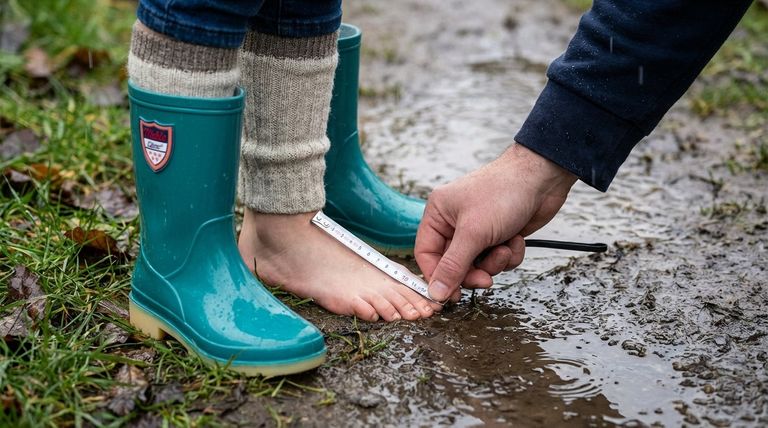
If the child cannot stand still, have them sit comfortably. Place a measuring tape along the sole of their bare foot, measuring from the back of the heel to the tip of their longest toe. This gives a reliable insole length.
Common Pitfalls to Avoid
Parents often make a few common mistakes when buying wellies. Understanding these will help you avoid them.
The Myth of "Sizing Up"
It is a persistent myth that you should buy wellies a size larger for thick socks or growth. Manufacturers have already built this "grow room" and sock space into their sizing. Buying the child's current, true size is the correct approach.
The Problem with Buying Too Far in Advance
Children's feet grow in unpredictable spurts. Buying wellies at the end of a season for the next year is a gamble that rarely pays off. Always measure and buy them close to when they will be needed.
Forgetting the Sock Test
The final check is crucial. Before your child wears the wellies outside, have them try them on at home with the thickest pair of socks they are likely to wear. This confirms the fit is snug but not uncomfortably tight.
Beyond Size: Other Fit Considerations
While length is key, a few other features contribute to a great fit.
The Importance of Boot Height
Consider the boot's height. Taller wellies offer better protection for splashing in deep puddles, while shorter, more flexible boots may be better for toddlers who need maximum mobility.
Features That Can Affect Fit
Look for features like adjustable cuffs, which can create a snugger fit around the calf to keep water and debris out. Removable liners can also affect the internal volume, so be sure to test the fit with and without them.
Making the Right Choice for Your Child
Use these guidelines to select the perfect pair of boots based on your priority.
- If your primary focus is accuracy: Always measure the child's bare feet right before you buy, using the paper method for the most reliable result.
- If your primary focus is safety: Resist the urge to size up; a proper fit now is far safer and more effective than a loose boot they might eventually grow into.
- If your primary focus is comfort: Never skip the final test of trying the wellies on with thick socks to ensure a snug, supportive fit for active play.
Choosing the right wellies empowers your child to explore the outdoors with confidence and comfort.
Summary Table:
| Key Consideration | Why It Matters |
|---|---|
| Measure Foot Length | The most accurate way to determine the correct size. |
| Do NOT Size Up | Manufacturers already include necessary growing room. |
| Test with Thick Socks | Confirms a snug, comfortable fit for active play. |
| Prioritize Safety | A proper fit prevents slips, trips, and boots getting stuck. |
Ready to outfit your young explorers with perfectly fitting footwear?
As a large-scale manufacturer, 3515 produces a comprehensive range of durable and comfortable wellington boots for distributors, brand owners, and bulk clients. Our expertise ensures every pair is designed with the right fit and safety features for active children.
Contact us today to discuss your bulk wellies needs and discover how we can support your business with high-quality, reliable footwear.
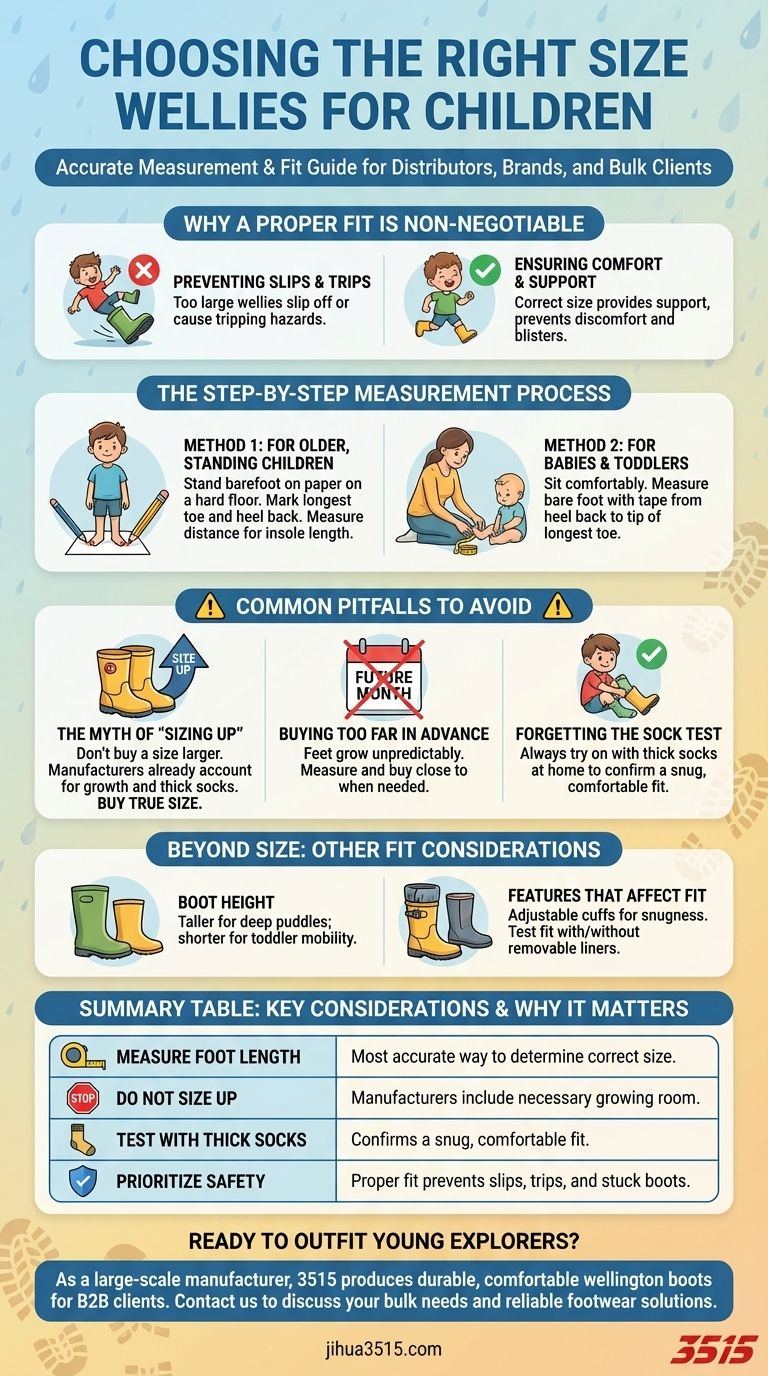
Visual Guide
Related Products
People Also Ask
- What are the main materials for waterproof rain boots? Choose the Right Material for Durability & Comfort
- What is the overall recommendation for choosing rain boot materials? A Guide to Rubber vs. PVC
- How does boot height affect waterproofing? Choose the Right Height for Ultimate Protection
- Why are rain boots more flexible and comfortable than snow boots? The Key Differences Explained
- What are the best types of shoes for different gardening conditions? Find Your Perfect Match.
