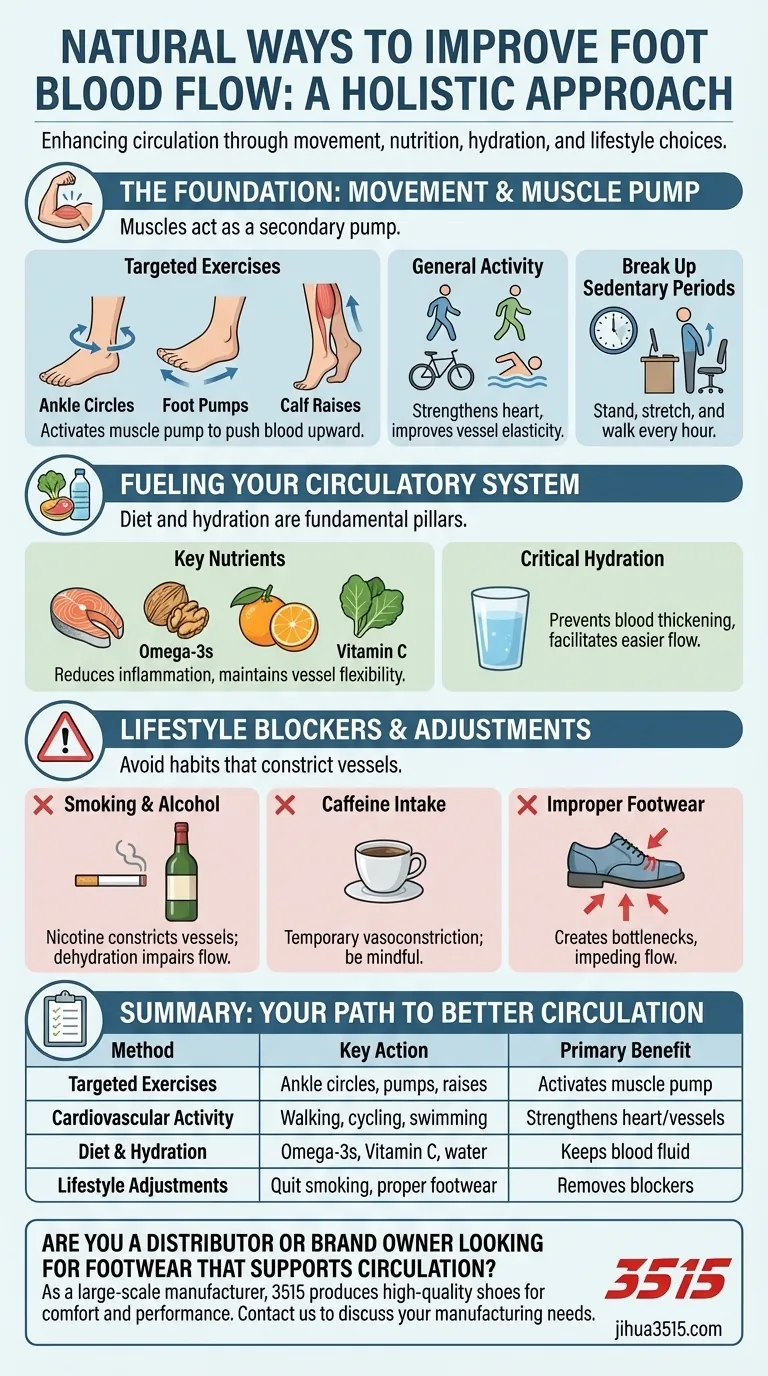
Improving blood flow to your feet is achieved through a combination of consistent physical activity, a nutrient-focused diet, proper hydration, and smart lifestyle choices. Natural methods focus on enhancing your body's overall cardiovascular system, which in turn ensures adequate circulation reaches your extremities.
Poor circulation in the feet is rarely an isolated issue; it's a signal from your body's larger cardiovascular system. The most effective approach is not a single quick fix, but a holistic strategy that combines targeted movement with systemic support through diet and lifestyle.

The Foundation: Why Movement is Non-Negotiable
Your circulatory system relies on movement to function optimally. The muscles in your legs and feet act as a secondary pump, helping to push blood back up toward your heart against gravity.
Targeted Foot and Ankle Exercises
Simple, low-impact movements can be remarkably effective. Exercises like ankle circles, foot pumps (pointing and flexing), and calf raises directly engage the muscles in your lower legs.
This action creates a "muscle pump" effect, squeezing the veins and propelling blood upward, preventing it from pooling in your feet.
The Power of General Activity
Activities like brisk walking, cycling, or swimming are crucial. They strengthen your heart, improve the elasticity of your blood vessels, and boost overall circulation efficiency.
Consistent cardiovascular exercise conditions your entire system to deliver oxygen-rich blood more effectively to every part of your body, including your toes.
Breaking Up Sedentary Periods
Long periods of sitting allow blood to settle in the lower extremities, slowing down circulation. It's vital to stand up, stretch, and walk around for a few minutes every hour.
This simple habit interrupts circulatory stagnation and reactivates the muscle pumps in your legs.
Fueling Your Circulatory System
What you consume directly impacts the health of your blood vessels and the viscosity of your blood. A supportive diet and proper hydration are fundamental pillars of good circulation.
Key Nutrients for Vascular Health
Foods rich in omega-3 fatty acids, like salmon and walnuts, can help reduce inflammation and improve blood vessel function.
Nutrients like Vitamin C, found in citrus fruits and leafy greens, are essential for maintaining the integrity and flexibility of your blood vessel walls.
The Critical Importance of Hydration
When you are dehydrated, your blood volume decreases and its consistency thickens. This makes it significantly harder for your heart to pump blood throughout your body, especially to distant areas like your feet.
Staying well-hydrated ensures your blood remains fluid and can travel easily through even the smallest capillaries.
Understanding Lifestyle Blockers
Certain common habits can actively work against your circulatory health by constricting blood vessels and impeding flow. Awareness is the first step toward mitigating their impact.
The Impact of Smoking and Alcohol
Nicotine is a potent vasoconstrictor, meaning it causes your blood vessels to narrow, directly restricting the amount of blood that can pass through.
Excessive alcohol consumption can lead to dehydration and other cardiovascular issues that impair healthy circulation over time.
The Effect of Caffeine
Caffeine can also have a temporary vasoconstrictive effect. While moderate intake is generally fine for most, being mindful of your consumption is wise if you are experiencing symptoms of poor circulation.
The Mistake of Improper Footwear
Consistently wearing socks or shoes that are too tight can physically constrict your feet and ankles. This creates a bottleneck that directly impedes blood from flowing freely to and from your toes.
Making the Right Choice for Your Goal
Improving circulation is a matter of building consistent, positive habits. Your specific focus will determine your starting point.
- If your primary focus is immediate relief from cold feet: Perform targeted foot and ankle exercises throughout the day and ensure you are wearing warm, non-restrictive socks.
- If your primary focus is long-term circulatory health: Prioritize a routine of daily walking, maintain consistent hydration, and incorporate foods rich in omega-3s into your diet.
- If your primary focus is reversing negative impacts: The most critical first step is to reduce or eliminate habits like smoking and prolonged periods of inactivity.
By actively managing these foundational habits, you empower your body to maintain robust circulation from your heart to your toes.
Summary Table:
| Method | Key Action | Primary Benefit |
|---|---|---|
| Targeted Exercises | Ankle circles, foot pumps, calf raises | Activates muscle pump to push blood upward |
| Cardiovascular Activity | Brisk walking, cycling, swimming | Strengthens heart and improves vessel elasticity |
| Diet & Hydration | Omega-3s, Vitamin C, consistent water intake | Reduces inflammation and keeps blood fluid |
| Lifestyle Adjustments | Quit smoking, limit alcohol, wear proper footwear | Removes blockers that constrict blood vessels |
Are you a distributor, brand owner, or bulk client looking for high-quality footwear that supports healthy foot circulation? As a large-scale manufacturer, 3515 produces a comprehensive range of footwear designed for comfort, performance, and all-day wear. Our production capabilities encompass all types of shoes and boots, ensuring your customers receive the best in foot health. Contact us today to discuss your manufacturing needs and how we can bring value to your business.
Visual Guide