
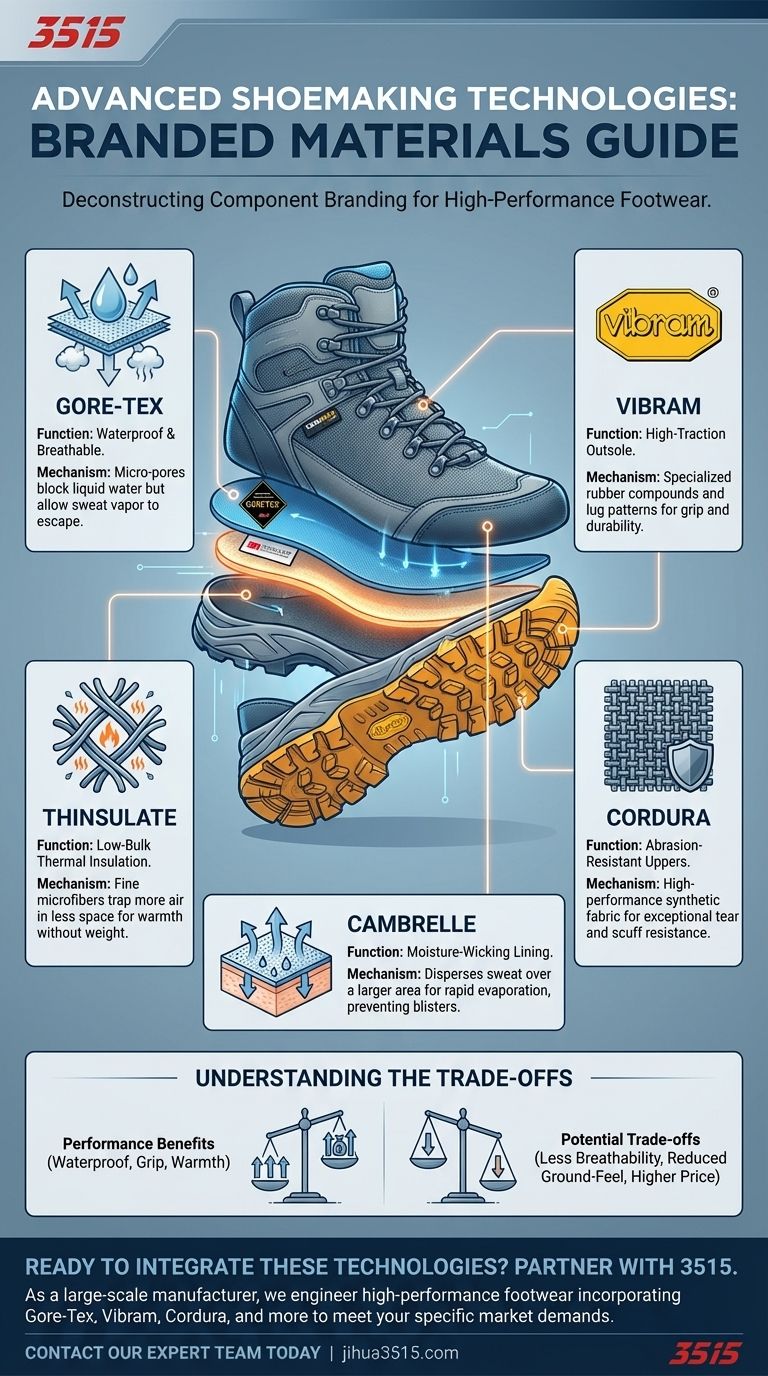
In advanced footwear, key branded materials are used to provide specialized performance features like waterproofing, durability, insulation, and grip. The most common and respected names you will encounter are Gore-Tex, for waterproof breathability; Vibram, for high-traction outsoles; Thinsulate, for low-bulk warmth; Cordura, for abrasion-resistant uppers; and Cambrelle, for moisture-wicking linings.
The presence of these branded materials signifies that a shoe manufacturer has integrated technology from a specialized, third-party expert to solve a specific performance challenge. This is less about marketing and more about engineering a shoe with proven, best-in-class components.
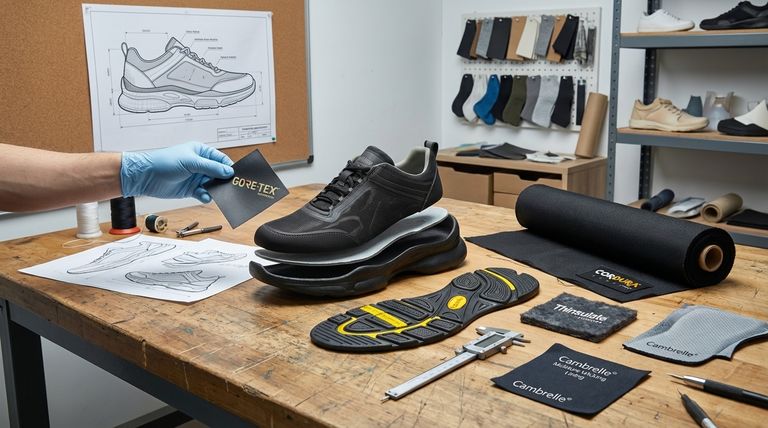
Deconstructing the High-Performance Shoe
When you buy a high-performance shoe or boot, you are not just buying a product from a single brand like Salomon or The North Face. You are often buying a system of integrated components, many of which are made by other highly specialized companies.
This is a concept known as component branding. Think of it like the "Intel Inside" sticker on a laptop. The shoe brand designs the overall product, but they rely on the proven expertise of another company to perfect a critical function like waterproofing or grip.
Key Technologies and the Problems They Solve
Each branded material is engineered to excel at a specific task. Understanding their function allows you to look past a shoe's aesthetics and evaluate its true technical capabilities.
Gore-Tex: The Standard for Waterproof Breathability
Gore-Tex is a membrane with microscopic pores that are smaller than a water droplet but larger than a water vapor molecule.
This brilliant design achieves two things simultaneously: it blocks external water (like rain and puddles) from getting in, while allowing internal water vapor (sweat) to escape. This is the essence of "waterproof-breathable" technology, keeping your feet dry from both the outside and the inside.
Vibram: The Foundation of Grip and Durability
Vibram is synonymous with high-performance rubber outsoles. You can often identify them by a distinctive yellow octagon logo on the bottom of the shoe.
The company specializes in creating specific rubber compounds and lug patterns designed for different environments. A Vibram sole intended for slick, wet rock will have a different chemical makeup and tread design than one engineered for long-lasting durability on city pavement.
Thinsulate: Low-Profile Thermal Insulation
Thinsulate, developed by 3M, is an insulation made of extremely fine microfibers that trap air molecules between them.
Because the fibers are so fine, they can trap more air in less space than traditional insulators like foam or felt. This provides exceptional warmth for cold-weather footwear without adding significant bulk or weight, preserving the shoe's athletic feel.
Cordura: Unmatched Abrasion Resistance
Cordura is not a single material, but a family of high-performance synthetic fabrics known for their exceptional resistance to tears, scuffs, and abrasions.
When used in a shoe's upper, Cordura fabric provides rugged durability that far surpasses traditional leather or standard nylon. It's a hallmark of footwear designed for demanding use in rocky or abrasive environments, such as technical hiking or tactical applications.
Cambrelle: Mastering Moisture Management Inside the Shoe
Cambrelle is a specialized lining material found on the inside of many high-end boots and shoes. Its primary job is to manage the microclimate around your foot.
It excels at wicking moisture (sweat) away from the skin and dispersing it over a larger area to speed up evaporation. This helps prevent the dampness that leads to blisters and discomfort, keeping the foot cooler and drier during intense activity.
Understanding the Trade-offs
No single material is perfect for every situation. Integrating these advanced technologies involves balancing performance benefits with potential downsides.
The Cost Factor
Specialized components from Gore-Tex or Vibram are expensive. Their inclusion significantly increases the research, development, and manufacturing cost of a shoe, which is passed on to the consumer. A higher price tag is an unavoidable part of gaining this level of engineered performance.
The Performance Compromise
A fully waterproof Gore-Tex boot will inherently be less breathable than a non-waterproof mesh shoe, making it feel warmer in hot, dry conditions. Likewise, a super-durable and hard Vibram outsole may offer less ground-feel or flexibility than a softer sole. The key is to match the technology to its intended environment.
Matching the Technology to Your Needs
Use your understanding of these components to select footwear engineered for your specific goal.
- If your primary focus is staying dry on wet trails: Prioritize a shoe with a Gore-Tex (or similar) waterproof-breathable membrane.
- If your primary focus is reliable grip and long-term durability: Look for the yellow Vibram octagon on the outsole.
- If your primary focus is warmth in cold conditions: Seek out boots specifically featuring Thinsulate insulation.
- If your primary focus is extreme toughness for rugged work or hiking: Ensure the upper is constructed with a durable material like Cordura fabric.
By understanding these core material brands, you can decode a shoe's capabilities and make a choice based on performance engineering, not just marketing claims.
Summary Table:
| Branded Material | Key Function | Common Use Case |
|---|---|---|
| Gore-Tex | Waterproof & Breathable Membrane | Hiking Boots, Rain Boots |
| Vibram | High-Traction Outsoles | Mountaineering, Work Boots |
| Thinsulate | Low-Bulk Thermal Insulation | Winter & Cold-Weather Boots |
| Cordura | Abrasion-Resistant Uppers | Tactical & Rugged Work Boots |
| Cambrelle | Moisture-Wicking Lining | Performance & Athletic Footwear |
Ready to integrate these high-performance materials into your footwear line?
As a large-scale manufacturer, 3515 produces a comprehensive range of footwear for distributors, brand owners, and bulk clients. Our production capabilities encompass all types of shoes and boots, and we can expertly incorporate branded components like Gore-Tex, Vibram, and Cordura to meet your specific performance and market demands.
Contact our expert team today to discuss your project and discover how we can engineer high-performance footwear for your brand.
Visual Guide
Related Products
- Wholesale Comfort Leather Business Shoes with Dial Lacing System
- Durable Rubber Sole Outdoor Shoes Wholesale & Custom Manufacturing
- Wholesale Modern Business Shoes with Dial Closure System for Bulk Orders
- Wholesale Breathable & Cushioned Training Shoes Custom Factory Production
- Wholesale Smart Casual Sneakers with Dial Closure | Factory Direct Manufacturing
People Also Ask
- What kind of shoes do businessmen wear? Master the Dress Code for Professional Success
- What are the essential business shoes every man should own? Build a Professional Wardrobe Foundation
- What type of boots are suitable for challenging weather conditions in a business setting? | Durable & Professional Footwear
- How does leather compare to other shoe materials in terms of durability and comfort? A Material Guide for Footwear
- What are the options for waterproofing leather shoes? Protect Your Footwear for the Long Haul


















