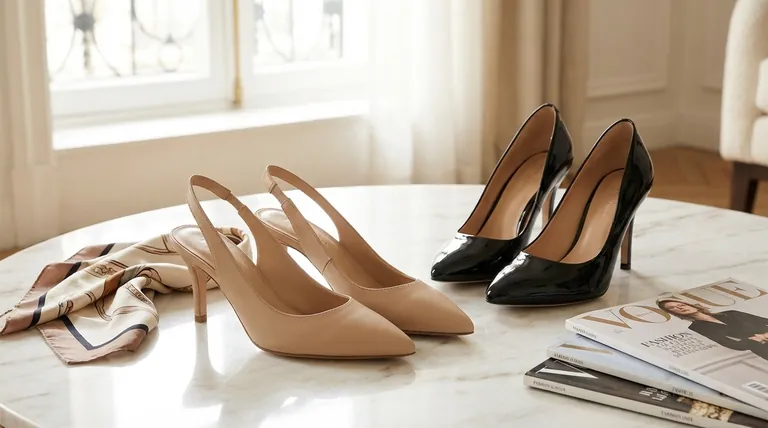
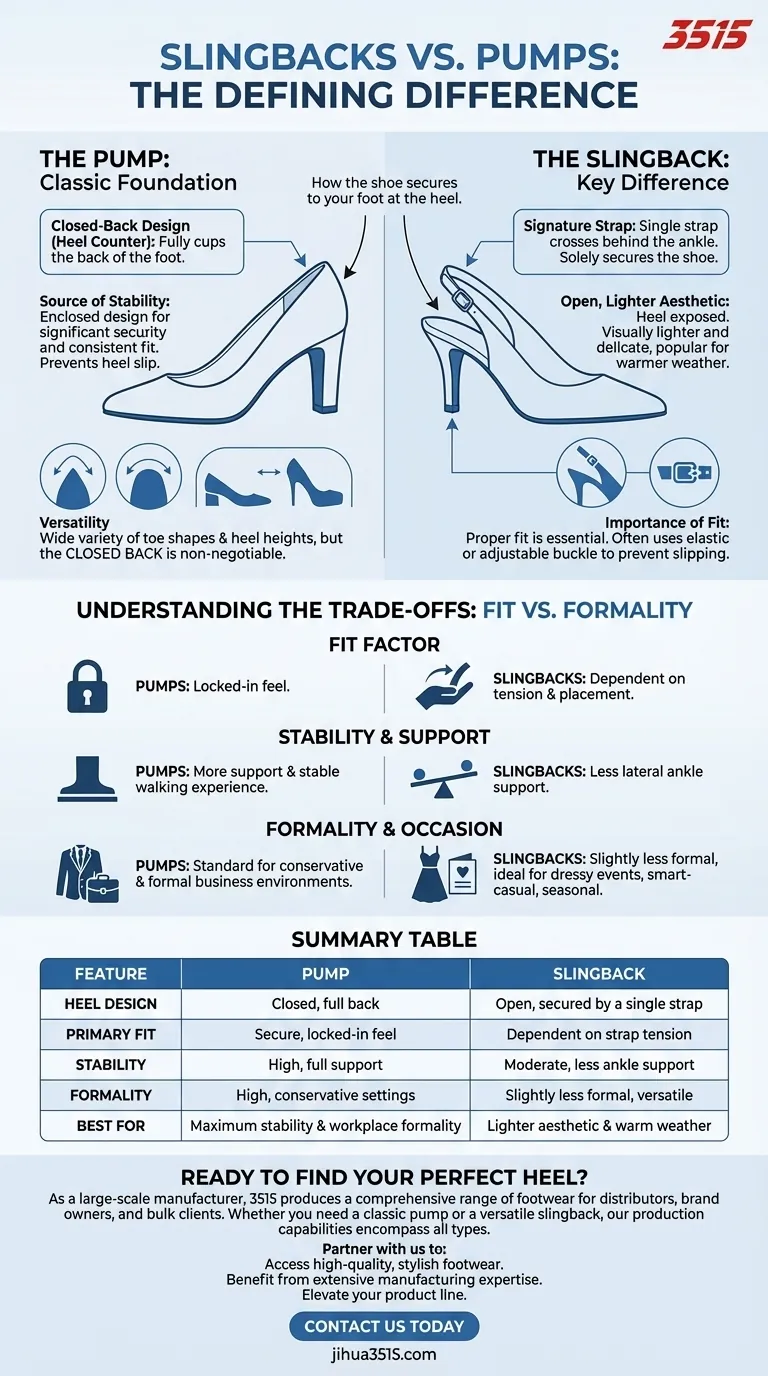
The defining difference between a slingback and a pump is how the shoe secures to your foot at the heel. A classic pump has a full, closed back that envelops the entire heel for a secure fit. In contrast, a slingback leaves the heel exposed, using only a single strap that wraps around the back of the ankle to hold the shoe in place.
While both are foundational styles of heeled footwear, the choice between them is a deliberate one. The pump provides a traditional, enclosed structure for stability, while the slingback offers a lighter, more open silhouette that directly impacts fit, feel, and formality.
The Anatomy of the Pump: The Classic Foundation
A pump is often considered the quintessential dress shoe, and its design is defined by its simple, effective structure.
The Closed-Back Design
The most critical feature of a pump is its closed heel, known as a heel counter. This structured part of the shoe fully cups the back of your foot.
The Source of Its Stability
This enclosed design provides significant stability and security. It prevents your heel from slipping out and offers a consistent fit, which is why it's a staple in professional and formal settings.
Versatility in Form
Pumps can feature a wide variety of toe shapes (pointed, round, square) and heel heights (from low block heels to high stilettos), but the closed back remains its non-negotiable characteristic.
The Anatomy of the Slingback: The Key Difference
The slingback is a direct variation of the pump, distinguished entirely by its namesake feature.
The Signature Strap
Instead of a full heel counter, the slingback uses a single strap that crosses behind the ankle. This strap is solely responsible for securing the shoe to your foot.
An Open, Lighter Aesthetic
This design choice leaves the majority of the heel exposed. The result is a shoe that appears visually lighter and more delicate than a traditional pump, making it a popular choice for warmer weather.
The Importance of Fit
Because the strap does all the work, a proper fit is essential. Many slingback straps incorporate a small piece of elastic or an adjustable buckle to ensure they stay in place without slipping down the heel.
Understanding the Trade-offs: Fit vs. Formality
Choosing between these two styles involves balancing practical considerations with the desired aesthetic.
The Fit Factor
Pumps offer a more "locked-in" feel. A slingback's fit is entirely dependent on the strap's tension and placement, which can sometimes slip or dig in if not perfectly adjusted.
Stability and Support
The full structure of a pump generally provides more support and a more stable walking experience. A slingback relies on the thin strap, offering less lateral support for the ankle.
Formality and Occasion
Pumps are the undisputed standard for the most conservative and formal business environments. Slingbacks are slightly less formal due to their exposed heel, making them exceptionally well-suited for dressy events, smart-casual settings, and seasonal occasions.
Making the Right Choice for Your Goal
Your final decision should be guided by the context in which you'll be wearing the shoe.
- If your primary focus is maximum stability and workplace formality: Choose the classic pump for its secure, enclosed, and timeless design.
- If your primary focus is a lighter, warm-weather aesthetic: The slingback is the ideal choice for its open-heeled silhouette that feels less constraining.
- If your primary focus is a versatile "dress-up, dress-down" option: The slingback often bridges the gap between formal and casual more easily than a traditional pump.
Understanding this key design difference empowers you to select the precise silhouette for your intended purpose.
Summary Table:
| Feature | Pump | Slingback |
|---|---|---|
| Heel Design | Closed, full back | Open, secured by a single strap |
| Primary Fit | Secure, 'locked-in' feel | Dependent on strap tension |
| Stability | High, full support | Moderate, less ankle support |
| Formality | High, ideal for conservative settings | Slightly less formal, versatile |
| Best For | Maximum stability & workplace formality | Lighter aesthetic & warm weather |
Ready to Find Your Perfect Heel?
As a large-scale manufacturer, 3515 produces a comprehensive range of footwear for distributors, brand owners, and bulk clients. Whether you need a classic pump for a formal collection or a versatile slingback for seasonal trends, our production capabilities encompass all types of shoes and boots.
Partner with us to:
- Access high-quality, stylish footwear built for comfort and durability.
- Benefit from our extensive manufacturing expertise to meet your specific design and volume needs.
- Elevate your product line with foundational styles that customers love.
Contact us today to discuss your footwear requirements and discover how we can bring your vision to life.
Visual Guide
Related Products
- Wholesale Durable Camouflage Canvas Shoes with High-Traction Cleated Rubber Sole
- Customizable Slip-On Safety Shoes Direct from the Factory for Wholesale
- Durable Rubber Sole Outdoor Shoes Wholesale & Custom Manufacturing
- Lightweight Breathable Sneakers with Wet-Traction Grip for Wholesale & Private Label
- Lightweight Breathable Training Shoes for Wholesale & Custom OEM Manufacturing
People Also Ask
- Why is the selection of high-strength fabric materials necessary in the production of canvas shoes and training shoes?
- What are the properties of canvas as a shoe material? A Guide to Lightweight Comfort & Style
- Can canvas shoes be worn in rainy conditions? The Truth About Water Resistance
- What are some examples of vulcanized shoes? Discover the Flexibility and Board Feel of Classic Sneakers
- What are the characteristics of canvas as a shoe material? A Guide to Lightweight, Breathable Footwear