
In the world of outdoor gear, the term 'alpine boot' almost always refers to one specific thing: a hard-shelled, rigid boot designed exclusively for downhill skiing. Its sole purpose is to lock your foot into a ski binding, allowing you to transfer precise movements and immense force from your legs directly to your skis. While the term is sometimes used colloquially for general winter footwear, its technical meaning is tied strictly to the sport of skiing.
The critical distinction to understand is that true alpine boots are highly specialized equipment for the sport of downhill skiing, not for general walking or hiking. Their rigidity, essential for ski control, makes them impractical and uncomfortable for any other activity.
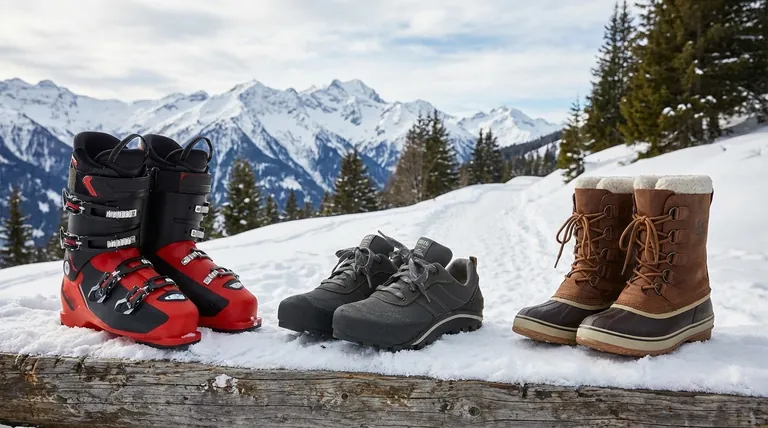
The Anatomy of a True Alpine (Downhill Ski) Boot
To understand why an alpine boot is so specialized, you must first understand its components. Each part is engineered for a single goal: performance on skis.
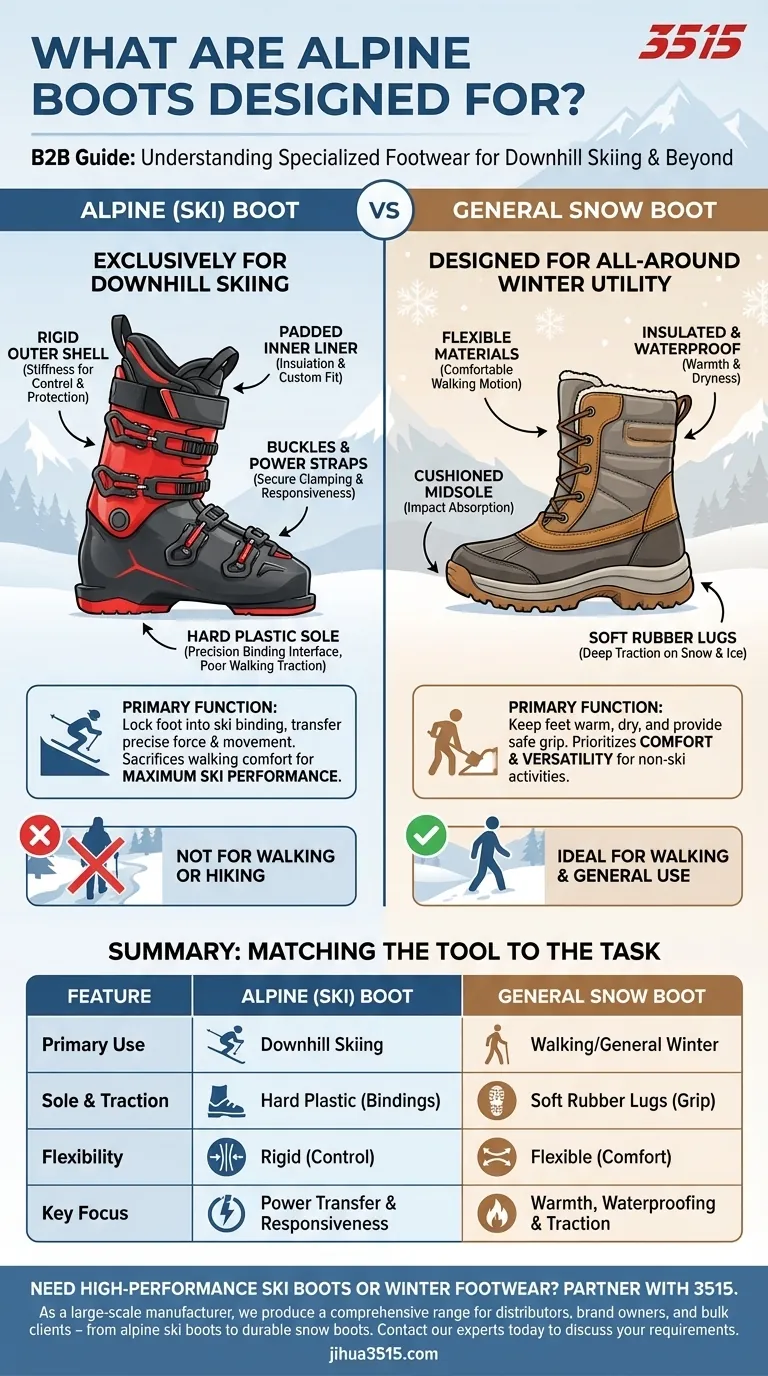
A Rigid Outer Shell
The most noticeable feature is the hard plastic outer shell. This unforgiving structure provides the stiffness needed to steer a ski at high speed and protects the foot and ankle from impact.
A Padded Inner Liner
Inside the shell is a removable, padded liner. This component provides insulation for warmth and customizes the fit to the skier's foot, ensuring comfort and preventing unwanted movement inside the boot.
Buckles and Power Straps
A series of micro-adjustable buckles clamps the shell securely around the foot and leg. A large velcro strap at the top, known as a power strap, cinches the boot cuff for maximum responsiveness.
The Sole and Binding Interface
The sole of an alpine boot is made of hard plastic designed to interface perfectly with a ski binding's toe and heel pieces. It offers very poor traction for walking on anything other than a rubber mat.
Distinguishing From General Snow Boots
The confusion often arises because people need boots for "alpine," or mountain, environments. However, the boot for walking around a ski town is fundamentally different from the one used for skiing down the mountain.
Designed for Warmth and Dryness
General snow boots are designed to keep your feet warm and dry in cold, wet conditions. They are typically waterproof or highly water-resistant, with rubber soles to keep moisture out.
Prioritizing Walking Comfort
Unlike rigid ski boots, snow boots are built with flexible materials and cushioned soles. Their primary function is comfortable walking through snow, slush, or on icy sidewalks.
Traction on Snow and Ice
The outsoles of snow boots feature deep, soft rubber lugs designed to grip slippery surfaces. This is in direct contrast to the smooth, hard plastic sole of an alpine ski boot.
Understanding the Trade-offs: Specialization vs. Versatility
Choosing the wrong boot for the activity is not just uncomfortable—it can be dangerous. The design of each boot type involves a clear set of trade-offs.
The Alpine Boot: Maximum Ski Performance
The alpine boot sacrifices all walking comfort and versatility for one thing: absolute control over a ski. Its stiffness is its greatest asset on the slopes and its greatest liability everywhere else.
The Snow Boot: All-Around Winter Practicality
A snow boot is the versatile choice for almost any non-skiing winter activity. It provides warmth, waterproofing, and safe traction for everything from shoveling the driveway to walking around town.
The Risk of Misuse
You cannot ski safely in snow boots, as they offer no control and will not lock into a binding correctly. Likewise, you cannot comfortably or safely walk or hike any significant distance in alpine ski boots due to their rigidity and complete lack of traction.
Making the Right Choice for Your Activity
Selecting the correct winter footwear means matching the boot's design to your intended purpose.
- If your primary focus is downhill skiing: You must use a true alpine ski boot that is properly fitted to you and your ski bindings.
- If your primary focus is walking, commuting, or general play in the snow: You need a standard snow boot designed for warmth, waterproofing, and traction.
- If your primary focus is winter hiking or snowshoeing: Look for a specialized winter hiking boot that offers insulation, waterproofing, and critical ankle support for uneven terrain.
Choosing the right boot is about matching the tool to the task, ensuring both safety and performance in winter conditions.
Summary Table:
| Feature | Alpine (Ski) Boot | General Snow Boot |
|---|---|---|
| Primary Use | Downhill Skiing | Walking in Snowy Conditions |
| Sole & Traction | Hard Plastic for Bindings | Soft Rubber Lugs for Grip |
| Flexibility | Rigid for Ski Control | Flexible for Walking Comfort |
| Key Design Focus | Power Transfer & Responsiveness | Warmth, Waterproofing & Traction |
Need High-Performance Ski Boots or Winter Footwear? Partner with 3515.
As a large-scale manufacturer, 3515 produces a comprehensive range of specialized footwear for distributors, brand owners, and bulk clients. Our production capabilities encompass all types of boots, from high-performance alpine ski boots to durable winter snow boots.
We can help you source or develop the perfect footwear for your customers' needs. Contact our experts today to discuss your requirements and discover how we can add value to your business.
Visual Guide
Related Products
- Durable High-Ankle Tactical Boots for Wholesale & Custom Manufacturing
- Durable High-Ankle Tactical Boots Wholesale Manufacturer for Custom & Bulk Orders
- Durable Leather High-Ankle Tactical Boots for Wholesale & Custom Manufacturing
- Wholesale Lightweight Tactical Boots Custom Manufacturer for Desert & Combat Use
- High-Traction Suede Tactical Boots Wholesale & Custom Manufacturing
People Also Ask
- How do tactical boots protect against injuries? Discover the Integrated Safety System
- What are the different types of tactical boots available? Find the Right Boot for Your Mission
- How does additive manufacturing equipment reduce environmental risks? Sustainable Tactics for Modern Footwear Production
- How is the compatibility of polymer materials demonstrated in smart footwear? Enhancing Tactical & Training Performance
- What are the main construction similarities between tactical boots and tactical sneakers? Built for Performance & Durability



















