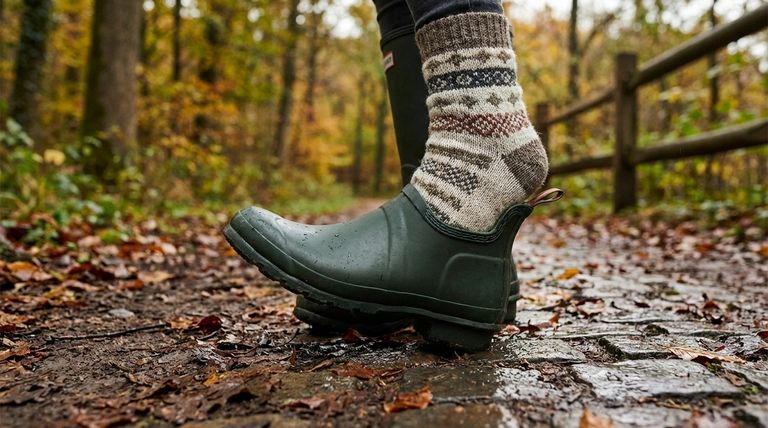
The general consensus is that you should buy your standard shoe size. Most wellington boots are specifically engineered to fit true to size. Manufacturers design the internal cavity with enough volume to accommodate the thick, cozy socks you will likely wear during autumn and winter, eliminating the need to calculate size adjustments yourself.
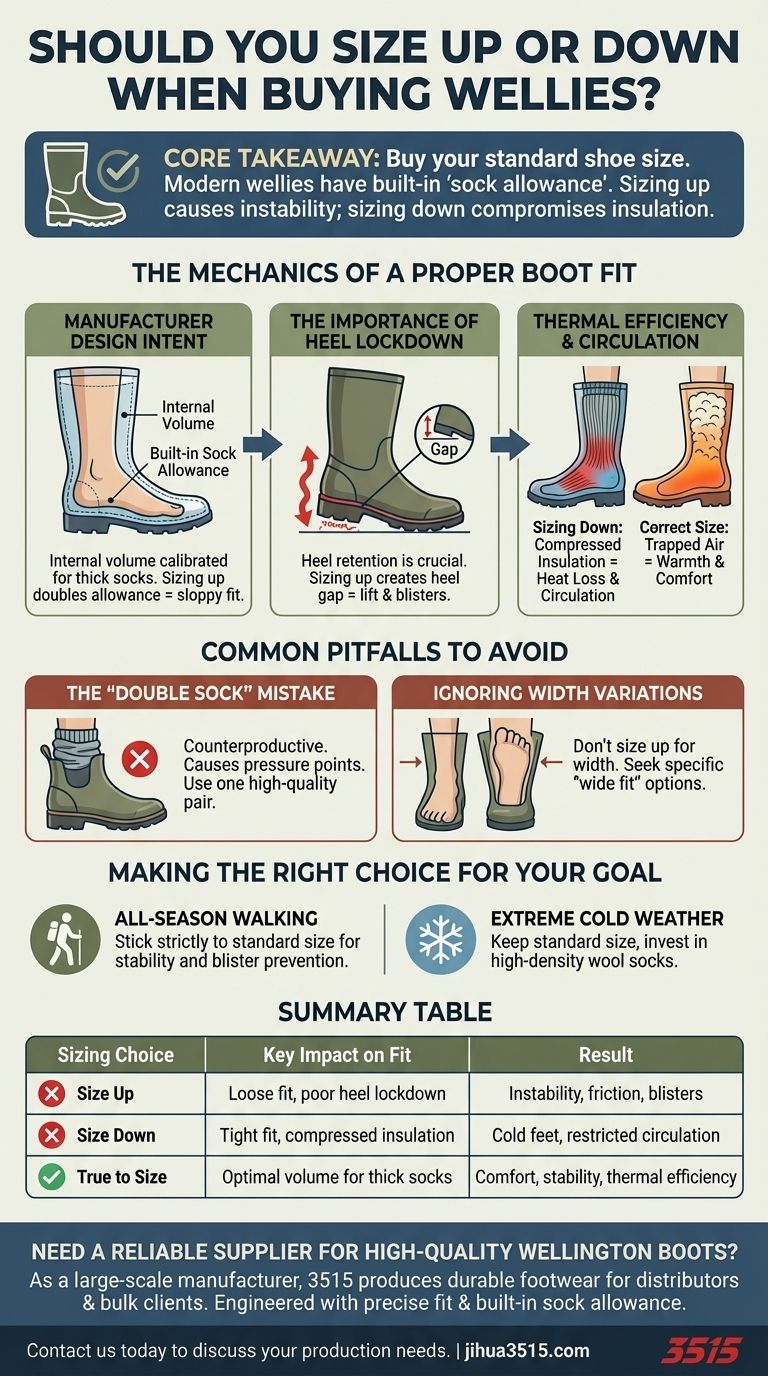
Core Takeaway Modern wellies are constructed with "sock allowance" built directly into the design. Sizing up usually results in instability and friction, while sizing down compromises insulation; sticking to your usual size ensures the balance of comfort and performance.
The Mechanics of a Proper Boot Fit
To understand why your standard size is usually the correct choice, you must look beyond the number on the sole. You must consider how the boot interacts with your foot mechanics and your choice of insulation.
Manufacturer Design Intent
Boot manufacturers anticipate the context in which their product will be used. They know these boots are destined for cold walks and inclement weather.
Therefore, the internal volume is calibrated to handle thick thermal socks without feeling tight. If you size up, you are essentially doubling the allowance, resulting in a loose, sloppy fit.
The Importance of Heel Lockdown
The most critical technical aspect of a wellie fit is heel retention. Because rubber boots lack laces or buckles to tighten the upper, the fit around the heel and ankle is your only source of stability.
If you size up, you introduce a gap at the heel. This causes your foot to lift inside the boot with every step. This repetitive friction is the primary cause of severe blistering during long walks.
Thermal Efficiency and Circulation
Sizing down is equally detrimental, particularly for winter wear. A boot that fits too snugly compresses the insulation of your socks.
Warmth is generated by trapping air in the fibers of your socks. If a tight boot compresses these fibers, you lose heat retention. Furthermore, a tight fit restricts blood circulation, making your feet feel colder regardless of the outside temperature.
Common Pitfalls to Avoid
While "true to size" is the golden rule, there are nuances to consider to ensure you don't end up with a regretful purchase.
The "Double Sock" Mistake
A common error is sizing up with the intention of wearing two or three pairs of socks. This is generally counterproductive.
Multiple layers of socks often bunch up, causing pressure points and discomfort. It is far more effective to buy your correct size and wear a single pair of high-quality, technical wool socks.
Ignoring Width Variations
While the length of the boot is usually standard, the width (or last) can vary significantly between brands.
If you have particularly wide feet, do not size up in length to accommodate the width. This will leave you with a boot that is too long and clumsy. Instead, seek out brands that specifically offer "wide fit" options or adjustable gussets.
Making the Right Choice for Your Goal
Selecting the right size is about matching the boot's volume to your specific usage requirements.
- If your primary focus is general all-season walking: Stick strictly to your standard shoe size to ensure the boot moves with your foot, preventing fatigue and blisters.
- If your primary focus is extreme cold weather: Keep your standard size, but invest in high-density wool socks; the boot's design will handle the thickness without requiring a larger shell.
Trust the engineering behind the boot and prioritize a secure, stable fit over the temptation to compensate with sizing math.
Summary Table:
| Sizing Choice | Key Impact on Fit | Result |
|---|---|---|
| Size Up | Loose fit, poor heel lockdown | Instability, friction, blisters |
| Size Down | Tight fit, compressed insulation | Cold feet, restricted circulation |
| True to Size | Optimal volume for thick socks | Comfort, stability, thermal efficiency |
Need a reliable supplier for high-quality wellington boots?
As a large-scale manufacturer, 3515 produces a comprehensive range of durable footwear for distributors, brand owners, and bulk clients. Our production capabilities encompass all types of wellies and boots, engineered with the precise fit and built-in sock allowance discussed in this article. We ensure your customers get the comfort and performance they expect.
Contact us today to discuss your production needs and elevate your footwear offerings.
Visual Guide
Related Products
- Wholesale Durable Camouflage Canvas Shoes with High-Traction Cleated Rubber Sole
- Wholesale Breathable Training Shoes Custom Athletic Footwear Manufacturer
- Durable Waterproof Rain Boots | Custom Manufacturer for Wholesale & Brands
- Wholesale Durable Safety Boots Manufacturer Customizable Steel Toe Work Boots
- Wholesale Durable & Breathable Training Shoes for Custom Brands
People Also Ask
- Why is the selection of high-strength fabric materials necessary in the production of canvas shoes and training shoes?
- What are the properties of canvas as a shoe material? A Guide to Lightweight Comfort & Style
- Can canvas shoes be worn in rainy conditions? The Truth About Water Resistance
- What are some examples of vulcanized shoes? Discover the Flexibility and Board Feel of Classic Sneakers
- What are the characteristics of canvas as a shoe material? A Guide to Lightweight, Breathable Footwear