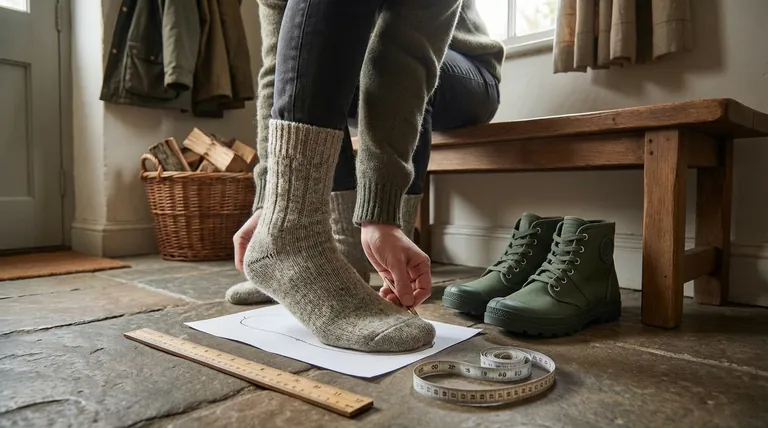
To accurately measure your feet for wellies, you must measure the length of both feet from heel to toe while standing on a flat surface. For a truly successful fit, however, this measurement must be compared against the specific manufacturer's size chart while also accounting for the thickness of the socks you intend to wear.
The key to finding the right wellies isn't just measuring your foot length; it's about understanding that a proper fit also depends on calf circumference, sock choice, and the specific design of the boot itself.
The Foundation: Getting Your Core Measurements Right
Achieving a comfortable and functional fit starts with a few simple but critical measurements. Rushing this step is the most common cause of poorly fitting boots.
Step 1: Measure Foot Length Correctly
Place a piece of paper on a hard floor. While standing and wearing the type of socks you'd typically use with wellies, place one foot firmly on the paper.
Trace the outline of your foot. Use a ruler to measure the distance from the very back of your heel to the tip of your longest toe.
Repeat this process for your other foot. It is very common for one foot to be slightly larger than the other, so always use the measurement of your larger foot.
Step 2: Measure at the Right Time of Day
Your feet naturally swell slightly throughout the day due to activity and gravity.
To get the most accurate measurement, measure your feet in the late afternoon or evening when they are at their largest.
Step 3: Account for Calf Circumference
A wellie that fits your foot but is too tight on your calf will be uncomfortable and restrict movement. One that is too loose will slouch and chafe.
Using a flexible tape measure, measure around the widest part of your calf. Compare this measurement to the boot's specifications, which are often listed on the manufacturer's website.
Understanding the Trade-offs and Common Pitfalls
Simply matching your foot length to a size chart can lead to problems. Understanding the nuances of a wellington boot fit is crucial for avoiding discomfort.
The Problem of Heel Slip
A small amount of "heel lift" or slip (around a quarter-inch) is normal and expected in a wellington boot because of its rigid construction.
However, if your heel lifts excessively and your foot slides forward, the boot is too large. This causes friction, leading to blisters and instability.
Tightness vs. Security
Your wellies should feel snug and secure around your ankle and the top of your foot to prevent sliding, but they should never feel tight.
Your toes should have enough room to wiggle freely. Constricted toes can lead to poor circulation, cold feet, and cramping.
Ignoring Brand-Specific Sizing
Sizing is not standardized across footwear brands. A size 8 in one brand can be significantly different from a size 8 in another.
Never assume your standard shoe size will translate directly. Always consult the specific sizing chart provided by the wellie manufacturer and use your precise foot and calf measurements.
Making the Right Choice for Your Goal
Your ideal fit is directly related to how you plan to use your boots. Use your measurements to guide your choice based on your primary activity.
- If your primary focus is heavy-duty work or long walks: Prioritize a snug fit with excellent ankle support and just enough room for thick, thermal socks to prevent blisters and ensure stability.
- If your primary focus is casual gardening or festival wear: A slightly more relaxed fit might be acceptable for easy on-and-off, but ensure it's not so loose that it causes chafing during movement.
- If you have wider calves or a high instep: Actively seek out brands offering boots with adjustable side gussets, wider calf options, or shorter boot heights to ensure a comfortable fit.
Taking these extra moments to measure correctly ensures your wellies will be a source of comfort and protection, not a cause of frustration.
Summary Table:
| Key Measurement | Why It Matters | Pro Tip |
|---|---|---|
| Foot Length (Standing) | Determines basic boot size. | Always measure your larger foot in the late afternoon when feet are largest. |
| Calf Circumference | Ensures comfort around the leg. | Use a flexible tape measure on the widest part of your calf. |
| Intended Sock Thickness | Affects the final interior space needed. | Wear the socks you plan to use with the wellies when measuring. |
Get the Perfect Fit with 3515 Factory Direct Wellies
As a large-scale manufacturer, 3515 produces a comprehensive range of durable footwear for distributors, brand owners, and bulk clients. Why struggle with inconsistent sizing charts? Our production capabilities encompass all types of safety, work, and casual wellington boots, and we can guide you to the ideal fit for your specific needs and market.
Let us help you provide your customers with superior comfort and performance.
Contact our experts today for a consultation and pricing to discuss your requirements.
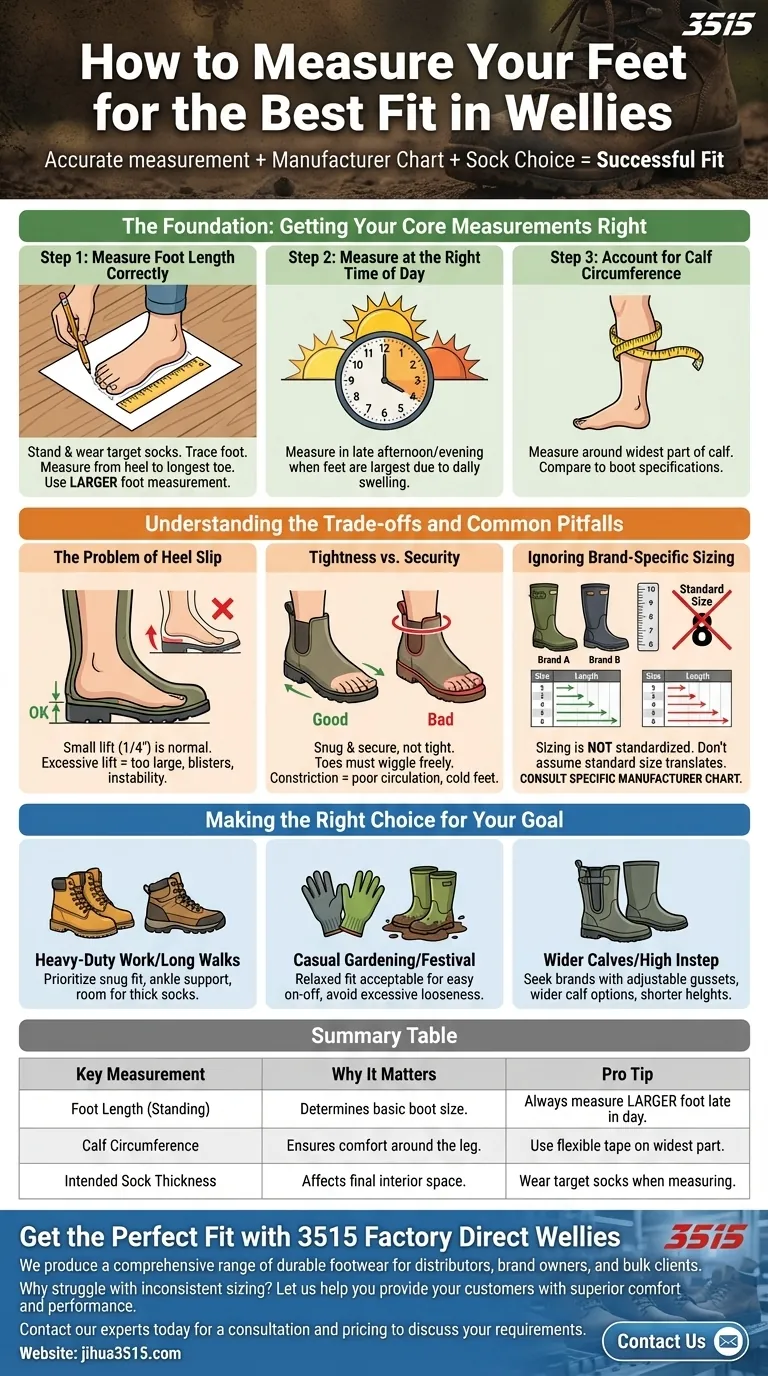
Visual Guide
Related Products
- Wholesale Durable Camouflage Canvas Shoes with High-Traction Cleated Rubber Sole
- Wholesale Breathable Training Shoes Custom Athletic Footwear Manufacturer
- Durable Waterproof Rain Boots | Custom Manufacturer for Wholesale & Brands
- Lightweight Breathable Training Shoes for Wholesale & Custom OEM Manufacturing
- Wholesale Durable & Breathable Training Shoes for Custom Brands
People Also Ask
- Why is the selection of high-strength fabric materials necessary in the production of canvas shoes and training shoes?
- What are the properties of canvas as a shoe material? A Guide to Lightweight Comfort & Style
- Can canvas shoes be worn in rainy conditions? The Truth About Water Resistance
- What are some examples of vulcanized shoes? Discover the Flexibility and Board Feel of Classic Sneakers
- What are the characteristics of canvas as a shoe material? A Guide to Lightweight, Breathable Footwear