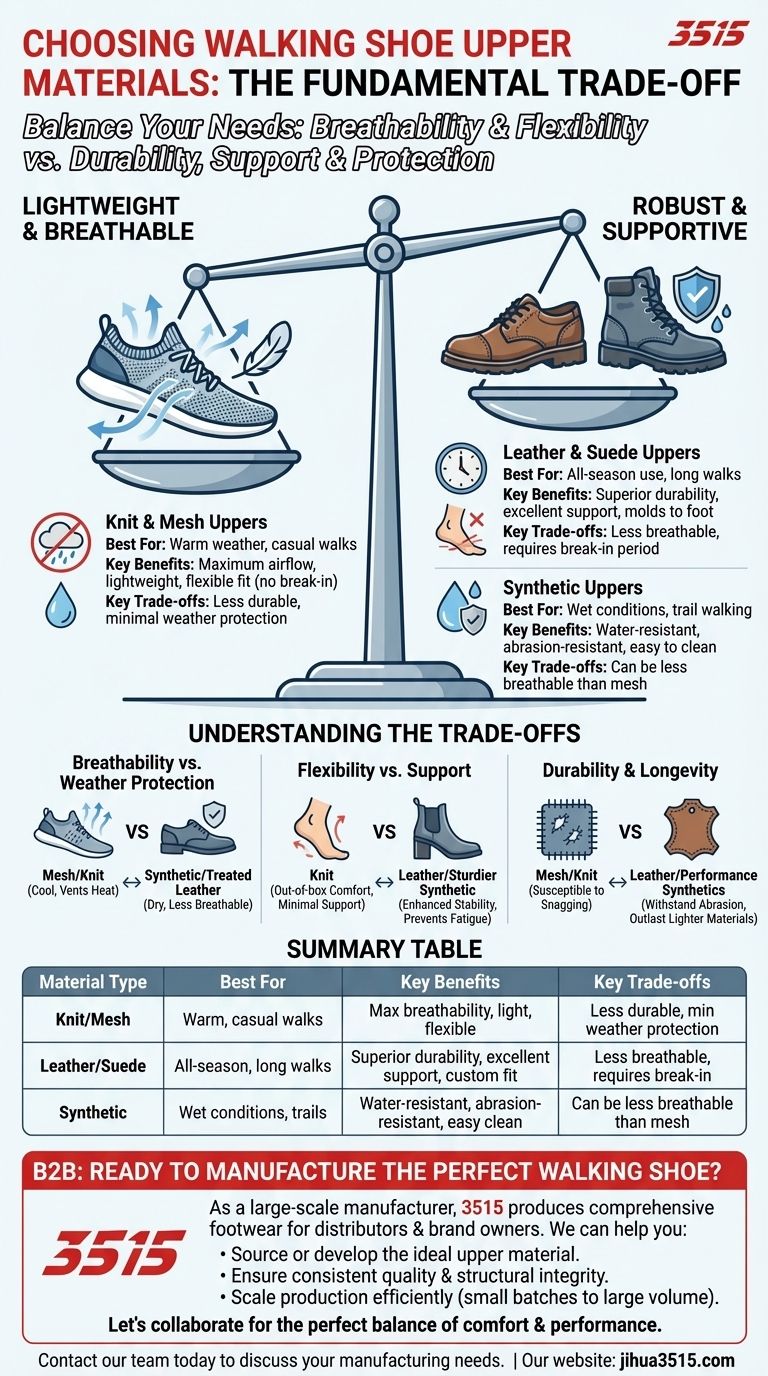
When choosing the upper for your walking shoes, your decision boils down to a fundamental trade-off between breathability and durability. For a soft, lightweight, and highly breathable experience, especially in warm weather, knit and mesh uppers are the superior choice. If your priority is greater support, longevity, and protection from the elements, you should opt for leather, suede, or robust synthetic materials.
The ideal upper material is not about which is universally "best," but which best aligns with your walking environment and comfort priorities. Breathable meshes excel in dry conditions, while robust leathers and synthetics offer the superior protection and support needed for more demanding use.
The Role of the Upper in a Walking Shoe
The "upper" is everything on the shoe above the sole. Its primary job is to hold your foot securely onto the midsole and outsole, providing stability and structure. It also serves as the first line of defense against weather, debris, and abrasion. The material used directly impacts the shoe's weight, flexibility, breathability, and overall durability.
A Breakdown of Common Upper Materials
Different materials are engineered to serve different purposes. Understanding their core properties is key to making an informed choice.
Knit and Mesh Uppers
These materials are engineered for maximum airflow and minimal weight. They often provide a flexible, sock-like fit that requires little to no break-in period.
This makes them an excellent choice for casual walks, treadmill use, and walking in warm, dry climates where ventilation is a top priority.
Leather and Suede Uppers
Leather is a classic material valued for its exceptional durability and support. It naturally wicks moisture and offers a degree of breathability.
Over time, leather molds to the shape of your foot, providing a custom fit. This makes it ideal for serious walkers who need long-lasting support and wear resistance.
Synthetic Uppers
This broad category includes materials like synthetic leather and various engineered textiles. They often excel in specific performance areas.
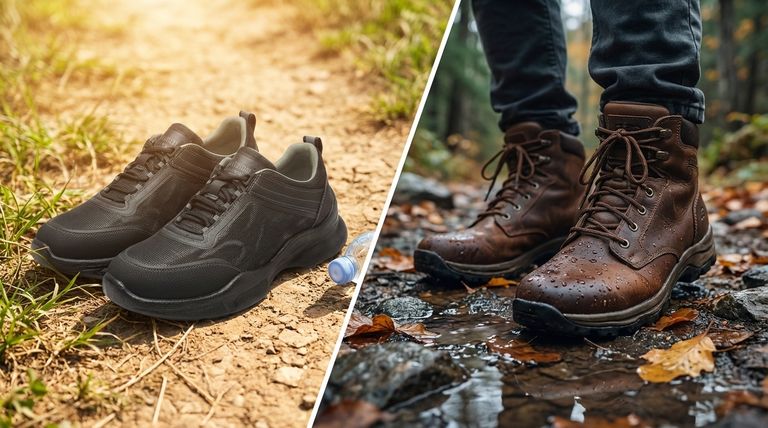
Synthetic uppers can be designed to be highly water-resistant, easy to clean, and extremely resistant to abrasion, making them a practical choice for trail walking or use in wet weather.
Understanding the Trade-offs
No single material is perfect for every situation. The right choice for you depends on which benefits you value most and which downsides you can accept.
Breathability vs. Weather Protection
The open weave of mesh and knit uppers allows heat and moisture to escape easily, keeping your feet cool. However, this same design offers virtually no protection from rain or puddles.
Conversely, waterproof synthetic or treated leather uppers will keep your feet dry but will be significantly less breathable, which can lead to sweaty, uncomfortable feet in warm conditions.
Flexibility vs. Support
Lightweight knit uppers offer incredible flexibility and out-of-the-box comfort. The trade-off is that they provide minimal structural support for the foot.
Leather and sturdier synthetic uppers are more rigid. This structure provides enhanced stability, which is beneficial for longer walks or for individuals who require more foot support to prevent fatigue.
Durability and Longevity
High-quality leather and performance synthetics are built to withstand abrasion and repeated stress. They will almost always outlast lighter materials.
Mesh and knit fabrics, while comfortable, are more susceptible to snagging, tearing, and wearing through, especially if used on rugged trails or by walkers with a history of wearing holes in their shoes.
Making the Right Choice for Your Needs
Match the material directly to your most common walking scenario for the best experience.
- If your primary focus is maximum breathability for casual or warm-weather walks: Choose a shoe with a lightweight knit or mesh upper.
- If your primary focus is durability, foot support, and all-season use: Opt for a high-quality leather or robust synthetic upper.
- If your primary focus is walking in wet, muddy, or unpredictable conditions: Prioritize a waterproof synthetic upper for the best element protection.
By matching the upper material to your specific walking habits, you ensure every step is taken in comfort and confidence.
Summary Table:
| Material Type | Best For | Key Benefits | Key Trade-offs |
|---|---|---|---|
| Knit/Mesh | Warm weather, casual walks | Maximum breathability, lightweight, flexible fit | Less durable, minimal weather protection |
| Leather/Suede | All-season use, long walks | Superior durability, excellent support, molds to foot | Less breathable, requires break-in period |
| Synthetic | Wet conditions, trail walking | Water-resistant, abrasion-resistant, easy to clean | Can be less breathable than mesh options |
Ready to Manufacture the Perfect Walking Shoe?
As a large-scale manufacturer, 3515 produces a comprehensive range of footwear for distributors, brand owners, and bulk clients. Our production capabilities encompass all types of shoes and boots, including those with specialized uppers.
We can help you:
- Source or develop the ideal upper material for your target market's needs, whether it's high-breathability knit or durable, waterproof synthetics.
- Ensure consistent quality and structural integrity in every pair, providing the support and longevity your customers expect.
- Scale production efficiently to meet your demand, from small batches to large-volume orders.
Let's collaborate to create walking shoes that offer the perfect balance of comfort and performance.
Contact our team today to discuss your manufacturing needs and get a quote.
Visual Guide
Related Products
- Wholesale Durable Camouflage Canvas Shoes with High-Traction Cleated Rubber Sole
- Durable Rubber Sole Outdoor Shoes Wholesale & Custom Manufacturing
- Premium Suede Sport Safety Shoes for Wholesale & Bulk Orders
- Durable Goodyear Welt Leather Work Boots for Wholesale & Private Label
- Wholesale Comfortable Business Casual Shoes Custom Manufacturing
People Also Ask
- Why is the selection of high-strength fabric materials necessary in the production of canvas shoes and training shoes?
- What are the properties of canvas as a shoe material? A Guide to Lightweight Comfort & Style
- Can canvas shoes be worn in rainy conditions? The Truth About Water Resistance
- What are some examples of vulcanized shoes? Discover the Flexibility and Board Feel of Classic Sneakers
- What are the characteristics of canvas as a shoe material? A Guide to Lightweight, Breathable Footwear