Proper care for leather motorcycle boots requires a disciplined cycle of cleaning with a specific leather cleaner, conditioning with a balm to maintain structural flexibility, and storing them in a cool, dry environment. This routine prevents the leather from drying out, cracking, and ultimately failing to protect your feet during a ride.
Effective boot maintenance is not merely cosmetic; it is a safety protocol. Dried, cracked leather loses its abrasion resistance and structural integrity, compromising the gear's ability to protect you in the event of a crash.
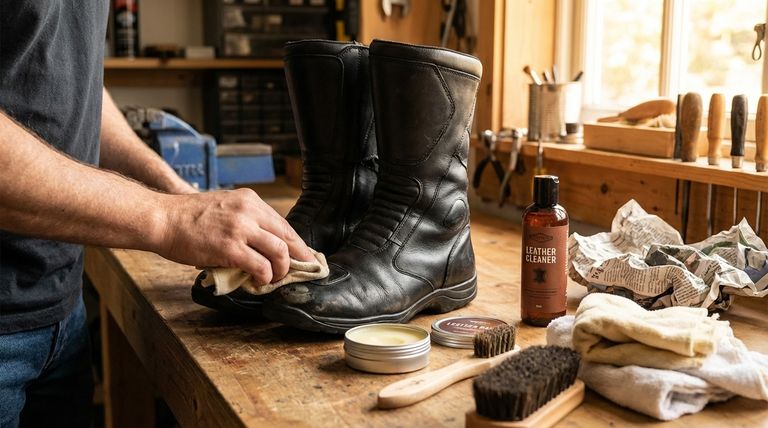
The Standard Care Protocol
Cleaning Essentials
For standard cowhide boots, your first step is removing road grime and dirt. Use a soft cloth and a dedicated leather cleaner to gently wipe away debris.
Dirt left on the surface acts as an abrasive, slowly wearing down the finish. Regular cleaning prevents these particles from embedding into the pores of the leather.
Conditioning for Longevity
Once clean, you must replenish the leather's natural oils using a quality leather balm. This step is critical to maintain softness and prevents the material from becoming brittle and cracking.
For heavy-duty usage, such as daily commuting or touring, consider a Heavy Duty Leather Preservative. You can supplement this with leather oil for quick touch-ups between major treatments to keep the boots pliable.
Handling Synthetic Materials
If your boots are synthetic leather, the process is less intensive but equally important. Wipe them down after every ride with a damp cloth and a gentle cleanser to remove sweat and chemicals.
Adjusting for Material Type
Suede and Nubuck
Boots with a velvet-like finish require a different approach to avoid ruining the nap. Do not use standard heavy balms on these materials.
Instead, use a soft bristle brush to remove loose dirt after every use. Protection should come from a dedicated waterproofing agent designed specifically for textured leathers.
Exotic Leathers
Boots made from ostrich or alligator skin generally follow the standard cleaning and storage protocols of cowhide. However, they are often more sensitive to drying out.
You must condition exotic leathers more frequently than standard boots. Always verify that your cleaner and conditioner have been tested for that specific animal hide to avoid discoloration.
Storage and Preservation
controlling the Environment
Store your boots in a cool, dry place with good air circulation. Avoid damp areas which encourage mold, and keep them away from direct sunlight, which causes rapid fading and discoloration.
Shape Retention and Drying
Moisture buildup inside the boot is just as damaging as external water. Stuff newspaper inside each boot during storage.
This technique serves two purposes: it absorbs internal moisture and helps the boot retain its proper shape.
Common Pitfalls to Avoid
Neglecting the "Cool Down"
Never speed up the drying process with high heat (like a radiator or hair dryer). While the references emphasize storing in a cool place, active heating is the fastest way to crack leather fibers.
Using the Wrong Product
Do not assume one product fits all boots. Using a heavy wax on suede will ruin the finish, while using a light spray on heavy-duty touring boots may not provide enough deep conditioning. Match the chemical to the material.
Making the Right Choice for Your Goal
To maximize the lifespan of your gear, tailor your care routine to your riding habits:
- If your primary focus is daily commuting: Prioritize the use of Heavy Duty Leather Preservatives to withstand frequent exposure to road grime and weather.
- If your primary focus is style (Suede/Nubuck): Rely on a soft bristle brush and waterproofing agents, avoiding heavy balms that will flatten the texture.
- If your primary focus is long-term storage: Ensure the boots are stuffed with newspaper and kept in a temperature-controlled area to prevent dry rot and deformation.
Treat your boots as essential safety equipment, and they will return the favor by lasting for years.
Summary Table:
| Step | Key Action | Purpose |
|---|---|---|
| 1. Clean | Use a soft cloth and leather cleaner. | Remove abrasive dirt and grime. |
| 2. Condition | Apply a leather balm or heavy-duty preservative. | Replenish oils to prevent cracking. |
| 3. Store | Keep in a cool, dry place, stuffed with newspaper. | Absorb moisture and retain shape. |
| 4. Avoid | High-heat drying and incorrect products. | Prevent damage to leather fibers. |
As a large-scale manufacturer, 3515 produces a comprehensive range of durable footwear for distributors, brand owners, and bulk clients. Our production capabilities encompass all types of motorcycle boots designed for long-term performance and safety. Let us help you source or create the perfect gear for your customers.
Contact us today to discuss your footwear needs!
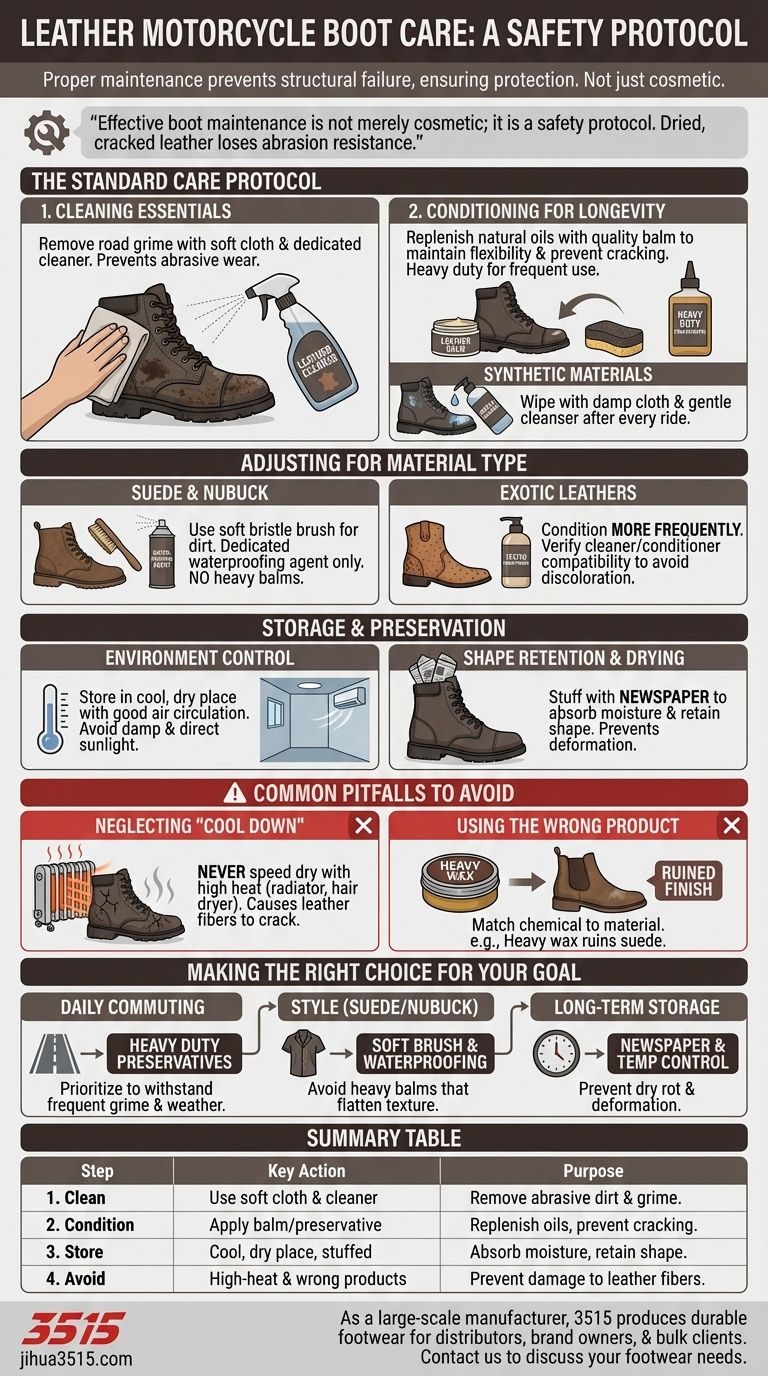
Visual Guide
Related Products
- Durable Goodyear Welt Leather Work Boots for Wholesale & Private Label
- Durable Leather Tactical Boots Wholesale & Custom Manufacturing for Brands
- Durable Leather High-Ankle Tactical Boots for Wholesale & Custom Manufacturing
- Durable Leather Moc Toe Work Boots for Wholesale & Custom Manufacturing
- Durable Leather Work Boots Wholesale Manufacturer & Custom Factory
People Also Ask
- What is the difference between full-grain and top-grain leather? Premium Material Guide for Boot Manufacturers
- What are the advantages of leather as an upper material for work boots? Unmatched Durability & Custom Comfort
- Why is it important to waterproof leather work boots? Protect Your Investment and Performance
- How should new leather work boots be broken in? A Guide to Comfort and Durability
- What are the advantages of leather uppers in work boots? Unmatched Durability & Protection