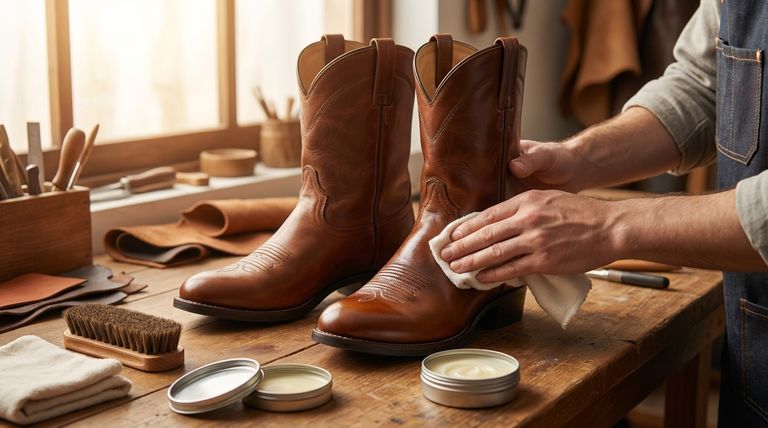
To properly condition cowboy boots, you should apply a small, quarter-sized amount of conditioner to a clean, soft cloth. Massage it gently into the clean, dry leather using small, circular motions, ensuring you achieve a thin, even coat across the entire surface of the boot.
The goal of conditioning is not to saturate the leather but to methodically replenish its natural oils. Think of it as moisturizing skin—a consistent, light application is far more effective and safer for the material than a single, heavy soaking.
The Core Principle: Why Conditioning is Crucial
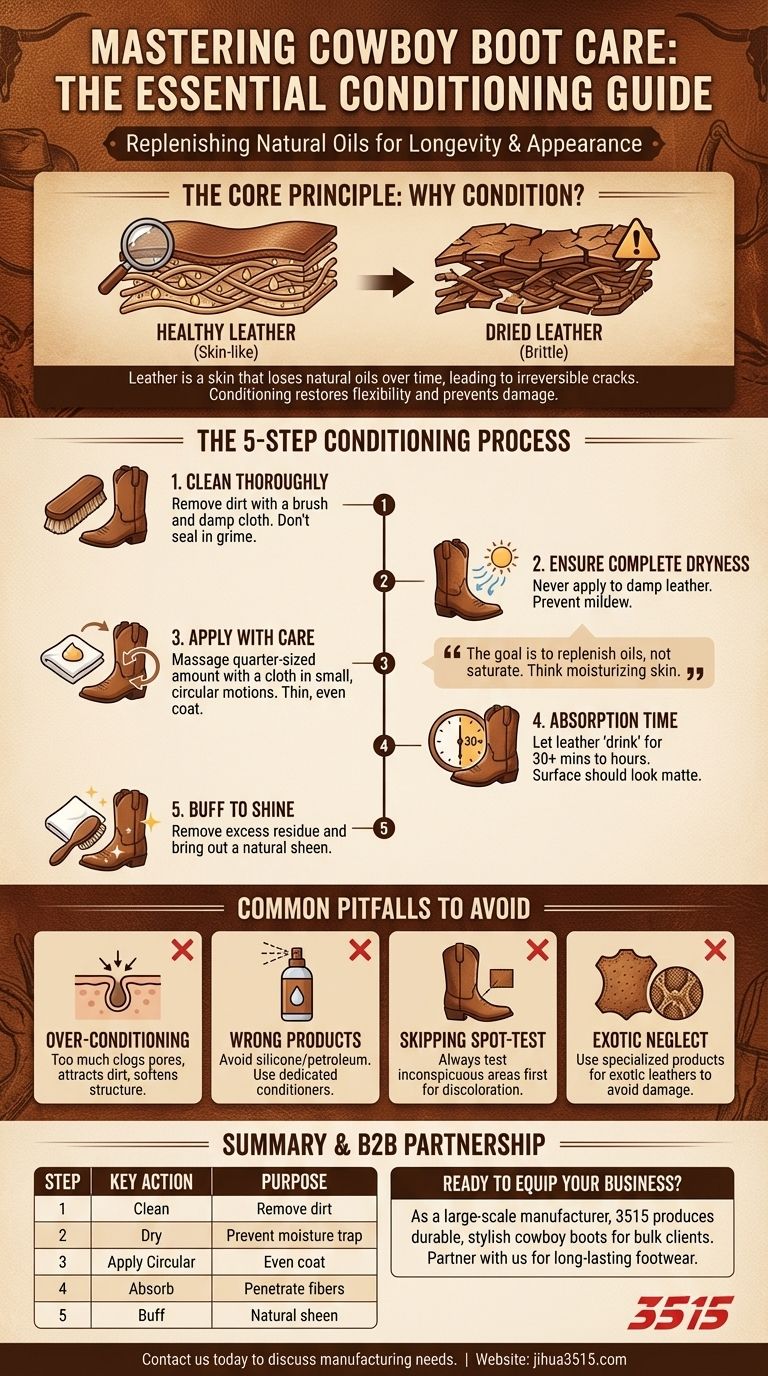
Proper conditioning is the single most important maintenance task for extending the life and look of your cowboy boots. It directly addresses the nature of the material itself.
Leather is a Skin
At its core, leather is a natural material that contains oils and fats. Over time, exposure to sun, dust, and moisture leaches these oils out, causing the leather's fibers to become brittle and stiff.
Preventing Irreversible Damage
Conditioner reintroduces essential moisture and oils back into the leather's pores. This process keeps the fibers flexible and resilient, preventing the fine cracks that eventually turn into splits and tears—damage that is often impossible to repair.
Restoring a Clean Finish
A well-conditioned boot not only feels better but also looks better. It restores the leather's subtle sheen and rich color, which fades as the material dries out.
The Complete Conditioning Process: A Step-by-Step Guide
Applying conditioner is just one step in a complete maintenance routine. Following these steps in order ensures the conditioner can do its job effectively without trapping dirt or causing damage.
Step 1: Thorough Cleaning is Non-Negotiable
You must start with a clean surface. Applying conditioner over dirt and grime grinds the abrasive particles into the leather's pores and seals them in. Use a horsehair brush to remove loose dust and a slightly damp cloth to wipe away any stubborn dirt.
Step 2: Ensure the Boots are Completely Dry
Never apply conditioner to damp leather. This can trap excess moisture, which can lead to mildew or discoloration. Let your boots air dry naturally for several hours or overnight after cleaning.
Step 3: The Application Technique
Dispense a quarter-sized amount of conditioner onto a clean, lint-free cloth—not directly onto the boot. Gently massage it into the leather using small, circular motions. Pay special attention to areas that flex and crease, like the vamp (the area over the top of your foot).
Step 4: Allow Time for Absorption
Set the boots aside for at least 30 minutes, or up to several hours. This gives the leather time to "drink" the conditioner and pull the oils deep into its fibers. The leather should look slightly darker and have a matte, damp appearance.
Step 5: Buff Away the Excess
Once the conditioner has been absorbed, take a new, clean cloth or a soft horsehair brush and buff the entire boot. This removes any unabsorbed, sticky residue from the surface and brings out a soft, natural sheen.
Common Pitfalls and How to Avoid Them
Knowing what not to do is as important as knowing the correct procedure. Mishandling the conditioning process can do more harm than good.
The Danger of Over-Conditioning
More is not better. Using too much conditioner can clog the leather's pores, preventing it from breathing. This makes the leather feel greasy, attracts more dirt, and can overly soften the material, compromising its structure.
Using the Wrong Product
Avoid all-in-one "shine" products that contain silicone or petroleum. These ingredients create a plastic-like seal on the surface that prevents the leather from breathing and can dry it out from within over the long term. Stick to dedicated leather conditioners.
Forgetting to Spot-Test
Before applying a new conditioner to your entire boot, always test it on a small, inconspicuous area, like the inner part of the shaft. This ensures it doesn't cause any unexpected discoloration to your specific type of leather.
Neglecting Exotic Leathers
Materials like ostrich, alligator, or snakeskin have a different structure and require specialized care. Using a standard cowhide conditioner on these exotic materials can stain or damage their unique texture. Always use a product explicitly labeled for exotic leathers.
Making the Right Choice for Your Boots
Your conditioning strategy should adapt to your boots' condition and your wear patterns.
- If your primary focus is routine maintenance: For boots worn regularly, a thorough cleaning and conditioning every 3 to 6 months is the ideal cadence to maintain leather health.
- If your primary focus is restoring very dry boots: Apply one thin, even coat, let it fully absorb for several hours, and then assess if a second light coat is needed for particularly thirsty spots.
- If your primary focus is preserving brand-new boots: Give them a light conditioning before their first major wear to provide a foundational layer of moisture and protection.
Proper care is a simple investment of time that pays off in decades of reliable wear from your boots.
Summary Table:
| Step | Key Action | Purpose |
|---|---|---|
| 1 | Clean Boots Thoroughly | Remove dirt and grime to allow proper absorption. |
| 2 | Ensure Boots are Dry | Prevent trapping moisture and causing mildew. |
| 3 | Apply Conditioner in Circular Motions | Achieve a thin, even coat to replenish oils. |
| 4 | Let it Absorb (30+ mins) | Allow conditioner to penetrate leather fibers. |
| 5 | Buff Away Excess | Remove residue and bring out a natural sheen. |
Ready to Equip Your Business with High-Quality Footwear?
As a large-scale manufacturer, 3515 produces a comprehensive range of durable and stylish cowboy boots, perfect for distributors, brand owners, and bulk clients. Our expertise ensures every pair is crafted for longevity, making proper care easy and effective.
Partner with us to offer your customers boots built to last.
Contact us today to discuss your manufacturing needs and discover how we can support your business with reliable, high-volume production.
Visual Guide
Related Products
- Wholesale High-Traction Camo Boots - Custom Manufacturer for Brands
- Durable Spiked Camouflage Boots Wholesale & Factory Production
- High-Traction Suede Tactical Boots Wholesale & Custom Manufacturing
- Wholesale Lightweight Tactical Boots Custom Manufacturer for Desert & Combat Use
- Durable Leather Tactical Boots Wholesale & Custom Manufacturing for Brands
People Also Ask
- What are the key features of the new line of camo boots? Built for Extreme Cold & Rugged Terrain
- Are camo boots necessary for hunting success? Prioritize Performance Over Pattern
- How does the Rank Score Test identify the primary causes of premature failure in tactical and work boots? Key Insights
- What is the technical logic behind using closed-eye testing for tactical boots? Unlocking Peak Footwear Stability
- What shoes to wear for a security job? Durable, Protective Footwear for Long Shifts