
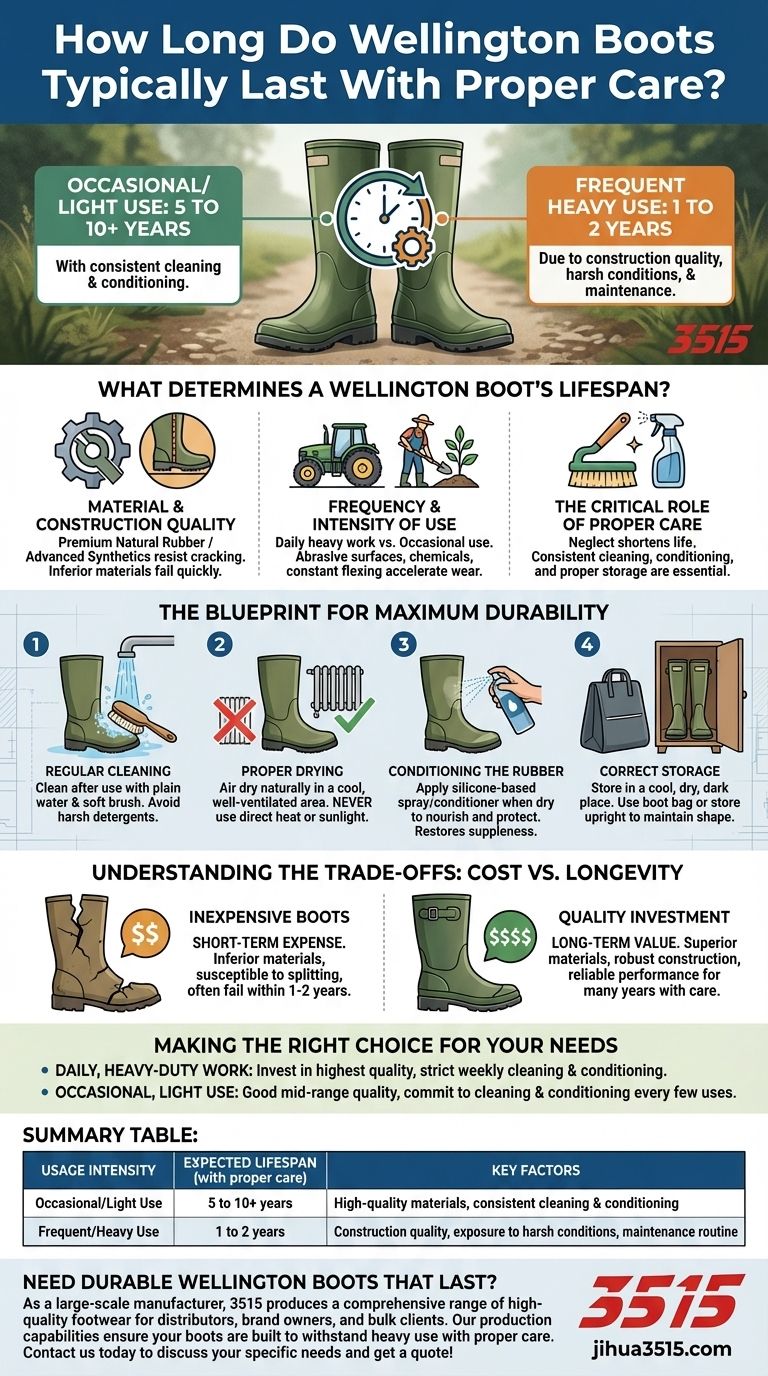
With proper care, a high-quality pair of Wellington boots can last for many years, often between 5 to 10 years or even longer for occasional use. However, for boots subjected to frequent, heavy use in harsh conditions, a lifespan of 1 to 2 years is a more realistic expectation. The ultimate durability depends entirely on the quality of the materials, the intensity of use, and the consistency of your maintenance routine.
The lifespan of your Wellington boots is not a fixed guarantee. It is a direct outcome of the initial quality you invest in and the disciplined care you provide throughout their life.
What Determines a Wellington Boot's Lifespan?
Three primary factors dictate whether your boots will last a single season or an entire decade. Understanding these elements is key to managing expectations and maximizing your investment.
Material and Construction Quality
The single most important factor is the boot's construction. Premium Wellington boots are made from high-quality natural rubber or advanced synthetic compounds that are formulated to resist cracking and degradation. In contrast, cheaper boots often use inferior materials that become brittle and fail quickly, sometimes within a year, regardless of how well you care for them.
Frequency and Intensity of Use
How you use your boots matters just as much as what they're made of. Boots worn for daily work on a farm or in construction are under constant stress and will naturally wear out faster than those used for occasional gardening or walking the dog. Abrasive surfaces, chemicals, and constant flexing all contribute to wear and tear.
The Critical Role of Proper Care
Neglect is the fastest way to shorten a boot's life. Rubber is a natural material that can dry out and crack if not maintained. A consistent care routine involving cleaning, conditioning, and proper storage is not optional—it is essential for achieving long-term durability.
The Blueprint for Maximum Durability
Following a simple but consistent maintenance schedule is the most effective way to protect your boots and extend their lifespan.
Step 1: Regular Cleaning
Always clean your boots after use, especially if they are caked in mud or have been exposed to chemicals. Use plain water and a soft brush to remove all debris. Avoid using harsh detergents, as they can strip the natural oils from the rubber and accelerate degradation.
Step 2: Proper Drying
Never dry your boots with direct heat, such as next to a radiator, fireplace, or in direct sunlight. This will cause the rubber to dry out, become brittle, and crack. Allow them to air dry naturally in a cool, well-ventilated area.
Step 3: Conditioning the Rubber
This is the most overlooked but crucial step. Once the boots are completely dry, apply a silicone-based spray or rubber conditioner. This nourishes the material, restores its natural suppleness and shine, and creates a protective barrier against the elements.
Step 4: Correct Storage
Store your boots in a cool, dry, and dark place away from direct sunlight and temperature extremes. Using a boot bag or storing them upright helps them maintain their shape and prevents creasing, which can lead to weak spots over time.
Understanding the Trade-offs: Cost vs. Longevity
When purchasing Wellington boots, you are making a clear choice between a short-term expense and a long-term investment.
The Pitfall of Inexpensive Boots
Low-cost boots may seem like a bargain, but their short lifespan often makes them more expensive in the long run. Their inferior materials and poor construction mean they are far more susceptible to splitting and leaking, often failing within one to two years even with light use.
The Value of a Quality Investment
A well-made pair of boots from a reputable brand costs more upfront because it uses superior materials and a more robust construction process. This initial investment pays off with significantly greater durability and comfort, providing reliable performance for many years when properly maintained.
Making the Right Choice for Your Needs
Your intended use should guide your purchase and your commitment to maintenance.
- If your primary focus is daily, heavy-duty work: Invest in the highest quality boots you can afford and be prepared to follow a strict weekly cleaning and conditioning routine.
- If your primary focus is occasional, light use: A good quality, mid-range boot will serve you well for years, as long as you commit to cleaning and conditioning them after every few uses.
Ultimately, treating your Wellington boots as a piece of essential equipment, rather than a disposable item, is the key to ensuring they protect you for years to come.
Summary Table:
| Usage Intensity | Expected Lifespan (with proper care) | Key Factors |
|---|---|---|
| Occasional/Light Use | 5 to 10+ years | High-quality materials, consistent cleaning & conditioning |
| Frequent/Heavy Use | 1 to 2 years | Construction quality, exposure to harsh conditions, maintenance routine |
Need durable Wellington boots that last? As a large-scale manufacturer, 3515 produces a comprehensive range of high-quality footwear for distributors, brand owners, and bulk clients. Our production capabilities ensure your boots are built to withstand heavy use with proper care. Contact us today to discuss your specific needs and get a quote!
Visual Guide
Related Products
- Durable Waterproof Rain Boots | Custom Manufacturer for Wholesale & Brands
- Durable Goodyear Welt Leather Work Boots for Wholesale & Private Label
- Wholesale Durable Leather Work Boots | 8-Inch Goodyear Welt Manufacturer
- High-Traction Suede Tactical Boots Wholesale & Custom Manufacturing
- Premium Wholesale Tactical Style Safety Shoes Boots with Quick Lacing
People Also Ask
- What are the main materials for waterproof rain boots? Choose the Right Material for Durability & Comfort
- What is the overall recommendation for choosing rain boot materials? A Guide to Rubber vs. PVC
- How does boot height affect waterproofing? Choose the Right Height for Ultimate Protection
- Why are rain boots more flexible and comfortable than snow boots? The Key Differences Explained
- What are the best types of shoes for different gardening conditions? Find Your Perfect Match.



















