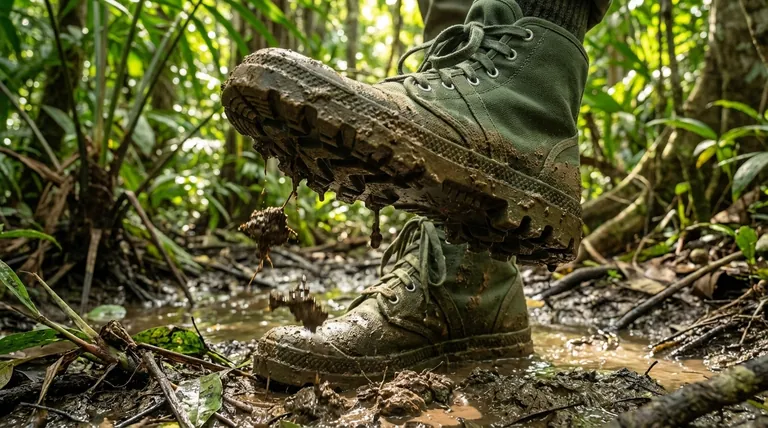
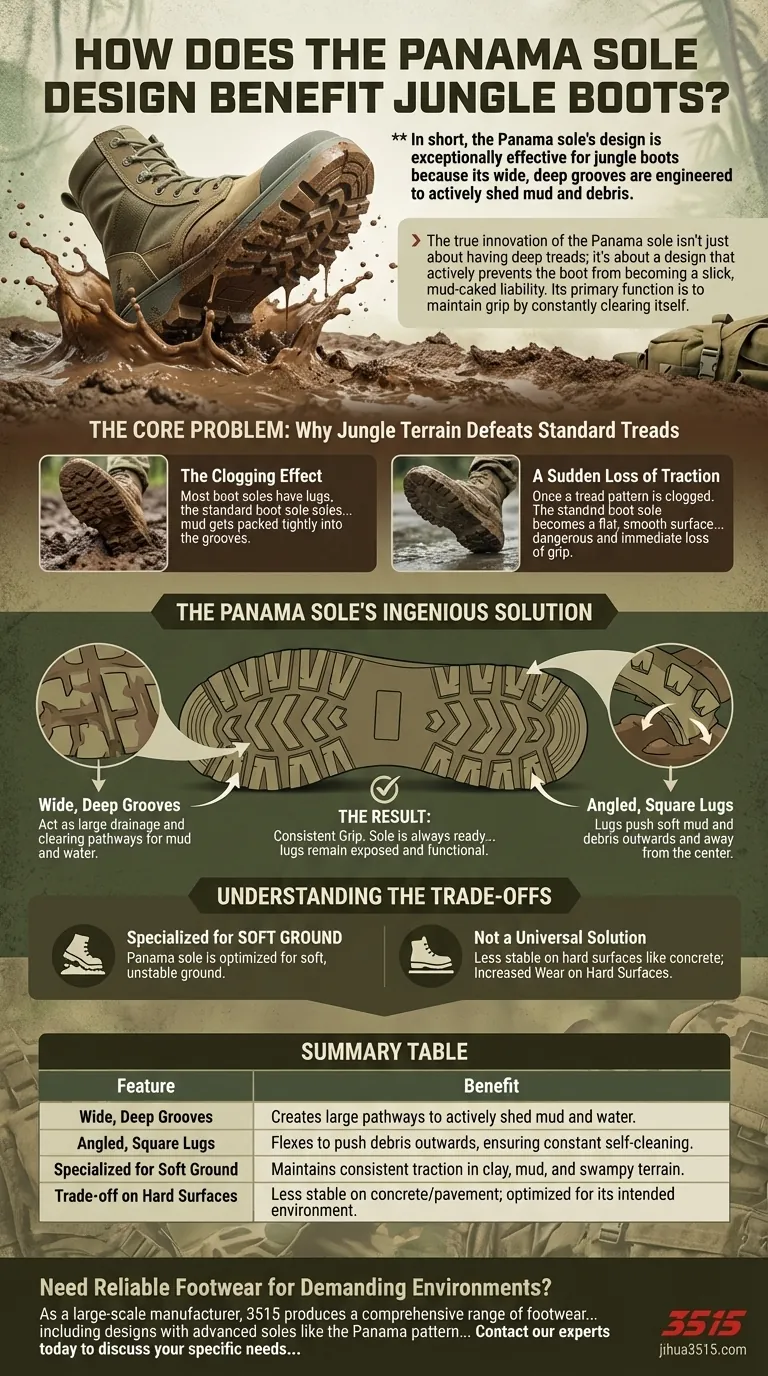
In short, the Panama sole's design is exceptionally effective for jungle boots because its wide, deep grooves are engineered to actively shed mud and debris. This self-cleaning action ensures the lugs maintain contact with the ground, providing consistent traction in the wet, swampy, and clay-like soils that would quickly clog a standard boot tread.
The true innovation of the Panama sole isn't just about having deep treads; it's about a design that actively prevents the boot from becoming a slick, mud-caked liability. Its primary function is to maintain grip by constantly clearing itself.
The Core Problem: Why Jungle Terrain Defeats Standard Treads
To appreciate the Panama sole, you must first understand the problem it solves. Jungle environments present a unique challenge that renders many conventional boot designs ineffective.
The Clogging Effect
Most boot soles have lugs designed to bite into the ground. However, in the thick, greasy mud or clay common in jungles, this mud gets packed tightly into the grooves between the lugs.
A Sudden Loss of Traction
Once a tread pattern is clogged with mud, it essentially becomes a flat, smooth surface. The lugs can no longer make contact with solid ground, resulting in a dangerous and immediate loss of grip.
The Panama Sole's Ingenious Solution
Developed in 1944 by Raymond Dobie, the Panama sole was a direct answer to the failures of previous designs in jungle and swamp conditions. Its effectiveness comes from a focus on self-cleaning.
Wide, Deep Grooves
The most noticeable feature is the set of very wide and deep channels that run through the sole. These act as large drainage and clearing pathways for mud and water.
Angled, Square Lugs
The genius of the design lies in the angled lugs. As the foot flexes while walking, these lugs are engineered to push soft mud and debris outwards and away from the center of the sole.
The Result: Consistent Grip
This constant clearing action means the sole is always ready for the next step. The lugs remain exposed and functional, allowing them to bite into the terrain and provide reliable traction where other boots would slip.
Understanding the Trade-offs
No single design is perfect for every situation. The specialization that makes the Panama sole superior in mud creates compromises on other surfaces.
Not a Universal Solution
The Panama sole is optimized for soft, unstable ground. The wide spacing and aggressive lugs can feel less stable and offer less surface contact on hard, flat surfaces like concrete or asphalt.
Increased Wear on Hard Surfaces
The tall, distinct lugs that are so effective in mud can wear down more quickly when used primarily on pavement. Designs for urban or industrial environments often use different tread patterns and rubber compounds for this reason.
Specialized vs. General-Purpose
Just as an equestrian boot needs a heel for stirrup safety or a Rigmaster boot has a pattern to lock into diamond plate, the Panama sole is a specialized tool. It sacrifices some performance on man-made surfaces for unparalleled performance in its intended environment.
Making the Right Choice for Your Terrain
The effectiveness of any boot sole is determined by how well its design matches the environment.
- If your primary focus is jungle, deep mud, or swampy terrain: The Panama sole's self-cleaning ability is critical for maintaining safe and effective traction.
- If your primary focus is mixed terrain with some hard surfaces: You might consider a hybrid tread that balances mud-shedding capabilities with increased surface area for grip on pavement.
- If your primary focus is urban or industrial environments: A sole designed specifically for concrete, asphalt, or specialized flooring will provide better longevity and grip.
Ultimately, choosing the right footwear means matching the engineering of the sole to the demands of the ground you will be walking on.
Summary Table:
| Feature | Benefit |
|---|---|
| Wide, Deep Grooves | Creates large pathways to actively shed mud and water. |
| Angled, Square Lugs | Flexes to push debris outwards, ensuring constant self-cleaning. |
| Specialized for Soft Ground | Maintains consistent traction in clay, mud, and swampy terrain. |
| Trade-off on Hard Surfaces | Less stable on concrete/pavement; optimized for its intended environment. |
Need Reliable Footwear for Demanding Environments?
As a large-scale manufacturer, 3515 produces a comprehensive range of footwear for distributors, brand owners, and bulk clients. Our production capabilities encompass all types of specialized shoes and boots, including designs with advanced soles like the Panama pattern for superior performance in challenging terrain.
Let us help you equip your team or customers with the right footwear for the job. Contact our experts today to discuss your specific needs and discover how we can deliver quality, durability, and the right traction for your market.
Visual Guide
Related Products
- Durable Spiked Camouflage Boots Wholesale & Factory Production
- Wholesale Leather Work Boots with Customizable Wedge Sole for Brands
- Wholesale Leather Ankle Boots with Lug Soles for Custom Brand Manufacturing
- Wholesale Waterproof Tactical Boots Custom Suede & High-Traction Soles
- Durable Rubber Sole Outdoor Shoes Wholesale & Custom Manufacturing
People Also Ask
- How does boot height affect waterproofing? Choose the Right Height for Ultimate Protection
- What are the best types of shoes for different gardening conditions? Find Your Perfect Match.
- What role does camouflage play in hunting boots? It's More Than Just a Pattern
- What should you look for to ensure boots are fully waterproof? The Essential 2-Part System
- How does boot construction affect waterproofing? The Science Behind Truly Dry Feet