In short, the midsole is the most critical component for comfort in a walking shoe. Located between the part your foot touches (the insole) and the part that touches the ground (the outsole), the midsole is the primary layer responsible for absorbing shock and providing stability with every step you take.
The core function of the midsole is to act as your foot's suspension system. It cushions the impact of your foot striking the ground, reducing stress not just on your feet, but on your ankles, knees, and back as well.
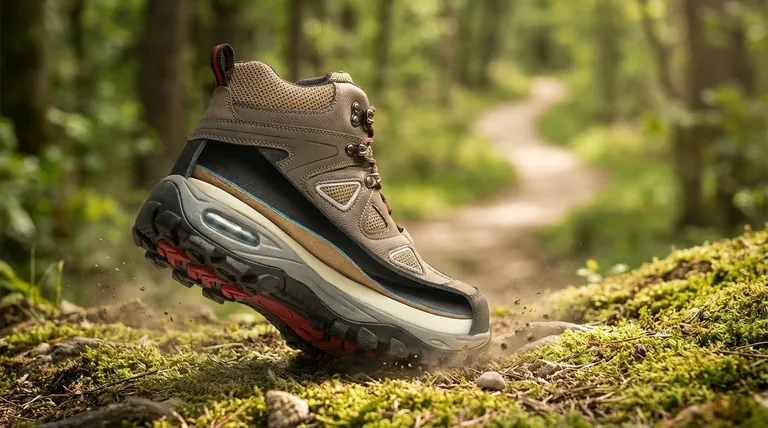
The Anatomy of a Comfortable Shoe
To understand the midsole's role, it's helpful to quickly distinguish it from the other key parts of a shoe's sole.
The Insole: Direct Foot Contact
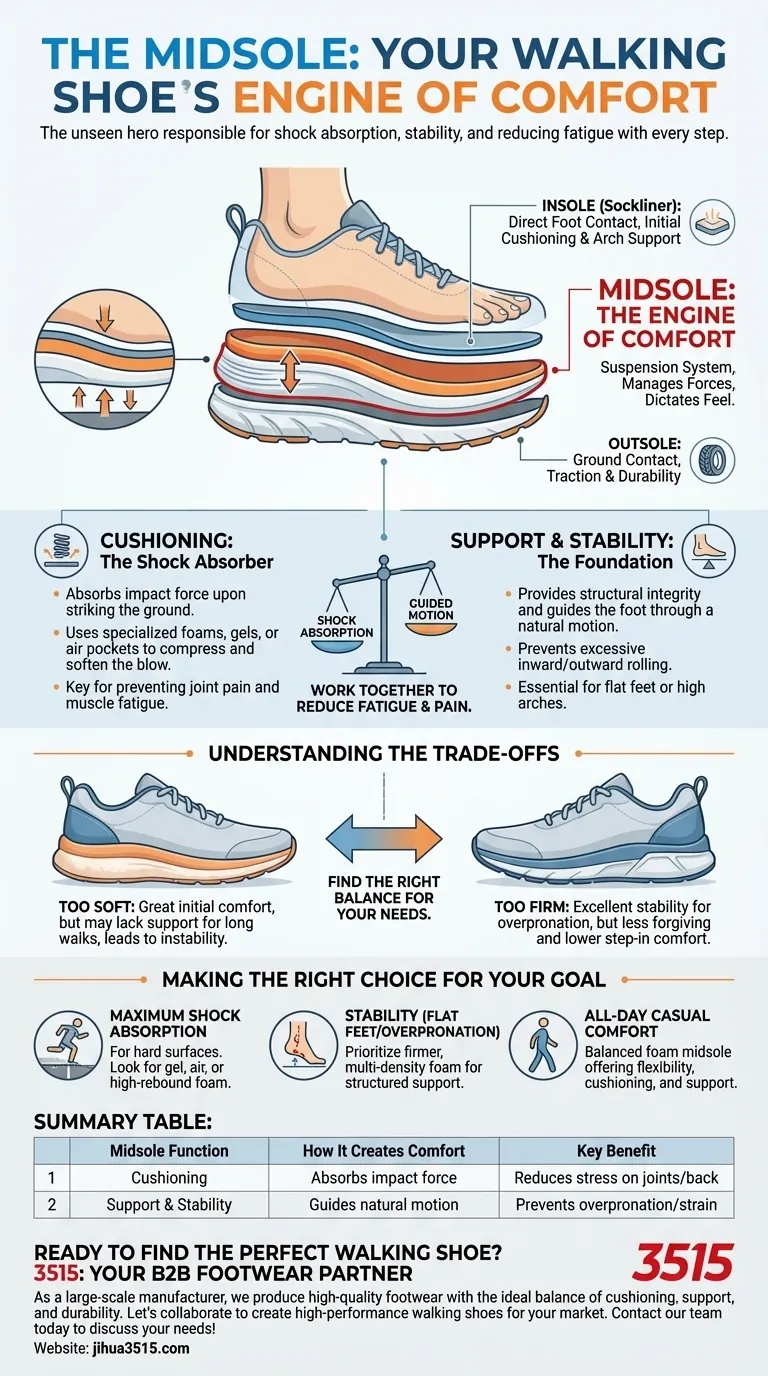
The insole (or sockliner) is the removable pad inside the shoe that your foot rests on directly. Its main job is to provide initial, soft cushioning and some degree of arch support.
The Midsole: The Engine of Comfort
This is the hidden but essential layer. The midsole dictates the shoe's overall feel, from its cushioning level to its stability. It manages the forces generated every time you take a step.
The Outsole: Ground Contact
This is the durable, rubber bottom of the shoe. Its primary purpose is to provide traction and resist wear and tear.
How Midsoles Create Comfort
The midsole's contribution to comfort comes down to two key functions: cushioning and support. These elements work together to reduce fatigue and prevent pain.
Cushioning: The Shock Absorber
Every time your foot hits the ground, it creates an impact force. The midsole's primary job is to absorb and dissipate this force.
Materials like specialized foams, gels, or even air pockets are used to compress upon impact, softening the blow. This reduction in shock is crucial for preventing joint pain and muscle fatigue during and after a walk.
Support and Stability: The Foundation
Beyond simple softness, the midsole provides structural integrity. It helps guide your foot through a natural walking motion, preventing it from rolling too far inward or outward.
This is especially important for individuals with specific foot types, such as flat feet or high arches. A well-designed midsole provides the necessary support to keep the foot properly aligned, reducing strain on ligaments and tendons.
Understanding the Trade-offs
Not all midsoles are created equal, and there is often a trade-off between cushioning and stability.
The Softer, the Better? Not Always.
Extremely soft, plush midsoles can feel comfortable at first, but they may lack the necessary support for longer walks. Overly soft foam can compress too much, offering diminishing shock absorption and potentially leading to instability.
The Firmness Factor
Conversely, a firmer midsole might offer excellent stability and support, which is ideal for people who overpronate (their foot rolls inward). However, it might feel less forgiving and provide less initial "step-in" comfort. The right balance depends entirely on your foot mechanics and personal preference.
Making the Right Choice for Your Goal
Choosing the right walking shoe means matching the midsole's characteristics to your needs.
- If your primary focus is maximum shock absorption for walking on hard surfaces: Look for shoes explicitly advertised with gel, air, or high-rebound foam midsoles.
- If your primary focus is stability due to flat feet or overpronation: Prioritize shoes with firmer, multi-density foam midsoles that provide structured support, especially through the arch.
- If your primary focus is all-day casual comfort and general use: A balanced foam midsole that offers a good mix of flexibility, cushioning, and support is your most reliable option.
Ultimately, the midsole is the unseen workhorse that determines whether a shoe feels comfortable and supportive or leads to fatigue and pain.
Summary Table:
| Midsole Function | How It Creates Comfort | Key Benefit |
|---|---|---|
| Cushioning | Absorbs impact force when your foot strikes the ground. | Reduces stress on feet, ankles, knees, and back. |
| Support & Stability | Guides the foot through a natural walking motion. | Prevents overpronation/supination and reduces strain. |
Ready to Find the Perfect Walking Shoe?
Understanding the midsole is the first step. As a large-scale manufacturer, 3515 produces a comprehensive range of high-quality footwear for distributors, brand owners, and bulk clients. Our expertise ensures every pair delivers the ideal balance of cushioning, support, and durability your customers need.
Let's collaborate to create comfortable, high-performance walking shoes for your market.
Contact our team today to discuss your manufacturing needs!
Visual Guide
Related Products
- Durable Rubber Sole Outdoor Shoes Wholesale & Custom Manufacturing
- Wholesale Durable Camouflage Canvas Shoes with High-Traction Cleated Rubber Sole
- Advanced KPU Athletic Safety Shoe with Steel Toe Cap Anti-Slip Rotary Lacing System
- Premium Suede Sport Safety Shoes for Wholesale & Bulk Orders
- Wholesale Comfortable Business Casual Shoes Custom Manufacturing
People Also Ask
- What is the function of the sole in outdoor shoes? Find the Perfect Grip and Support
- What role do outdoor shoes and sneakers play in navigating external terrains? Engineered Stability for Every Surface
- How is AI utilized in the design of outdoor and safety footwear? Harnessing Big Data for Market-Driven Shoe Innovation
- Why is durability important when selecting outdoor shoes? A Guide to Safety & Long-Term Value
- What are the key components of outdoor shoes that affect comfort and sturdiness? A Guide to Durable, High-Performance Footwear