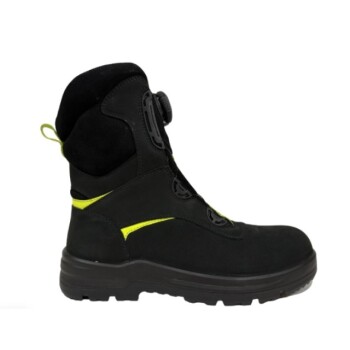
The design of a sit-and-reach test box facilitates the study of high-top tactical boots by creating a standardized, immutable environment for measuring flexibility. By utilizing a stable foot support plane and a fixed zero-point scale, the box eliminates variables like bouncing or poor posture. This isolation allows researchers to attribute changes in range of motion directly to the restrictive nature of the boot’s collar rather than human error.
The rigid structure and fixed scaling of the test box provide the objective baseline necessary to quantify exactly how much a high-top boot restricts joint mobility, enabling a precise balance between ankle protection and operational agility.
The Mechanics of Standardization
To accurately assess how footwear impacts human movement, variables must be controlled. The sit-and-reach box achieves this through specific structural features.
The Fixed Zero-Point Scale
The device typically employs a fixed scale, often starting at a zero-point such as -25 cm.
This creates a universal baseline for measurement. Regardless of the user's height or limb length, the starting point remains constant, allowing for direct comparisons between barefoot tests and tests performed while wearing tactical boots.
The Stable Foot Support Plane
The box features a vertical, rigid plane against which the feet are placed.
This ensures the user's feet remain perpendicular to the legs during the stretch. It locks the distal end of the kinetic chain, forcing the flexion to occur at the hips and lower back, rather than being cheated by foot movement.
Isolating the Boot's Impact
The primary value of the test box in tactical gear research is its ability to generate "authentic flexibility data."
Preventing Compensatory Movements
The physical constraints of the box design prevent bouncing movements or postural deviations.
Bouncing (ballistic stretching) can falsify range-of-motion results. By enforcing a static hold against the measurement scale, the box ensures the recorded flexibility is genuine and sustainable.
Quantifying Collar Restriction
High-top tactical boots are designed to support the ankle, but this support inevitably restricts movement.
By comparing sit-and-reach scores with and without the boots, researchers can isolate the exact degree to which the shoe collar restricts the joint range of motion. The box provides the data needed to prove if a boot is too rigid for dynamic movement.
Understanding the Trade-offs
While the sit-and-reach box is an excellent tool for standardization, it highlights a critical design conflict in tactical footwear.
Protection vs. Mobility
The data derived from these tests often reveals an inverse relationship between ankle support and flexibility.
A higher, stiffer collar offers maximum protection against rolling an ankle but yields lower scores on the sit-and-reach test. This data forces manufacturers to make objective decisions about balancing ankle protection with the necessary range of movement required for field operations.
Making the Right Choice for Your Goal
The utility of this testing method depends on what you are trying to achieve with your equipment selection or design.
- If your primary focus is Product Development: Use the box to iteratively test prototype collar materials, aiming for the highest flexibility score that still meets minimum support standards.
- If your primary focus is Gear Procurement: Use the test data to disqualify boots that restrict range of motion beyond the operational requirements of your field personnel.
Objective measurement is the only way to ensure safety does not come at the cost of performance.
Summary Table:
| Feature | Function in Boot Research | Benefit to Data Integrity |
|---|---|---|
| Fixed Zero-Point Scale | Creates a universal baseline | Enables direct comparison between barefoot and boot tests |
| Stable Foot Plane | Locks distal kinetic chain | Forces flexion at hips/back to prevent cheating via foot movement |
| Rigid Box Structure | Prevents compensatory bouncing | Ensures recorded flexibility is genuine and sustainable |
| Collar Restriction Data | Quantifies joint range of motion | Identifies the exact trade-off between ankle support and mobility |
Optimize Performance with 3515’s Precision-Engineered Footwear
At 3515, we understand that tactical excellence requires the perfect balance between robust protection and operational agility. As a premier large-scale manufacturer, we leverage data-driven design to ensure our footwear meets the rigorous demands of professionals worldwide.
Whether you are a distributor or a brand owner, our comprehensive production capabilities deliver high-performance solutions across all categories, including:
- Flagship Safety Shoes & Tactical Boots: Engineered for maximum support without compromising mobility.
- Outdoor & Training Gear: Built for durability in high-intensity environments.
- Dress & Formal Shoes: Premium quality for diverse bulk requirements.
Partner with a manufacturer that prioritizes objective testing and superior craftsmanship. Contact us today to discuss your bulk requirements and custom production needs.
References
- Hsiu-Hsi Chiang, Chien‐Chang Ho. Low Cardiorespiratory Fitness, Muscular Fitness, and Flexibility Are Associated with Body Fat Distribution and Obesity Risk Using Bioelectrical Impedance in Taiwanese Adults. DOI: 10.3390/ijerph19148858
This article is also based on technical information from 3515 Knowledge Base .
Related Products
- High-Traction Suede Tactical Boots Wholesale & Custom Manufacturing
- Durable High-Ankle Tactical Boots Wholesale Manufacturer for Custom & Bulk Orders
- Durable Leather High-Ankle Tactical Boots for Wholesale & Custom Manufacturing
- Durable High-Ankle Tactical Boots for Wholesale & Custom Manufacturing
- Wholesale Tactical Boots High-Traction & Reflective for Bulk & Brand Orders
People Also Ask
- Why is sequential analysis utilized to evaluate tactical boots? Master Dynamic Boot Development and Ergonomic Performance
- How does the material of tactical boots affect their performance? Choose the Right Material for Your Mission
- How do tactical boots differ from regular boots? Performance, Durability & Design Explained
- How do military uniforms and tactical boots impact the prediction of thermal risk? Essential Safety Insights
- What are the benefits of integrating FES and sEMG into tactical boots? Safety, Reliability & Field-Ready Performance