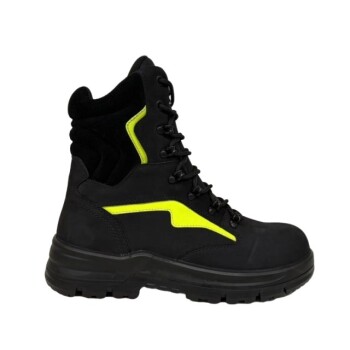
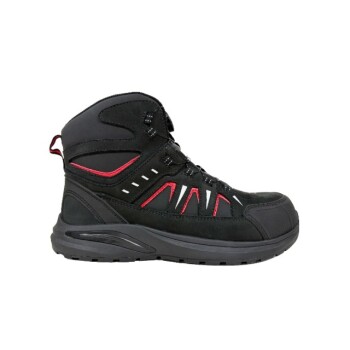
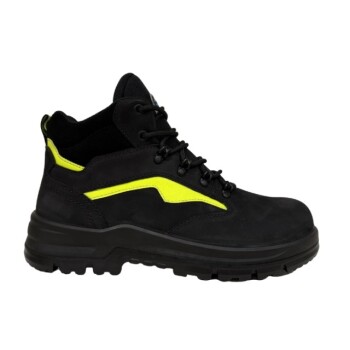
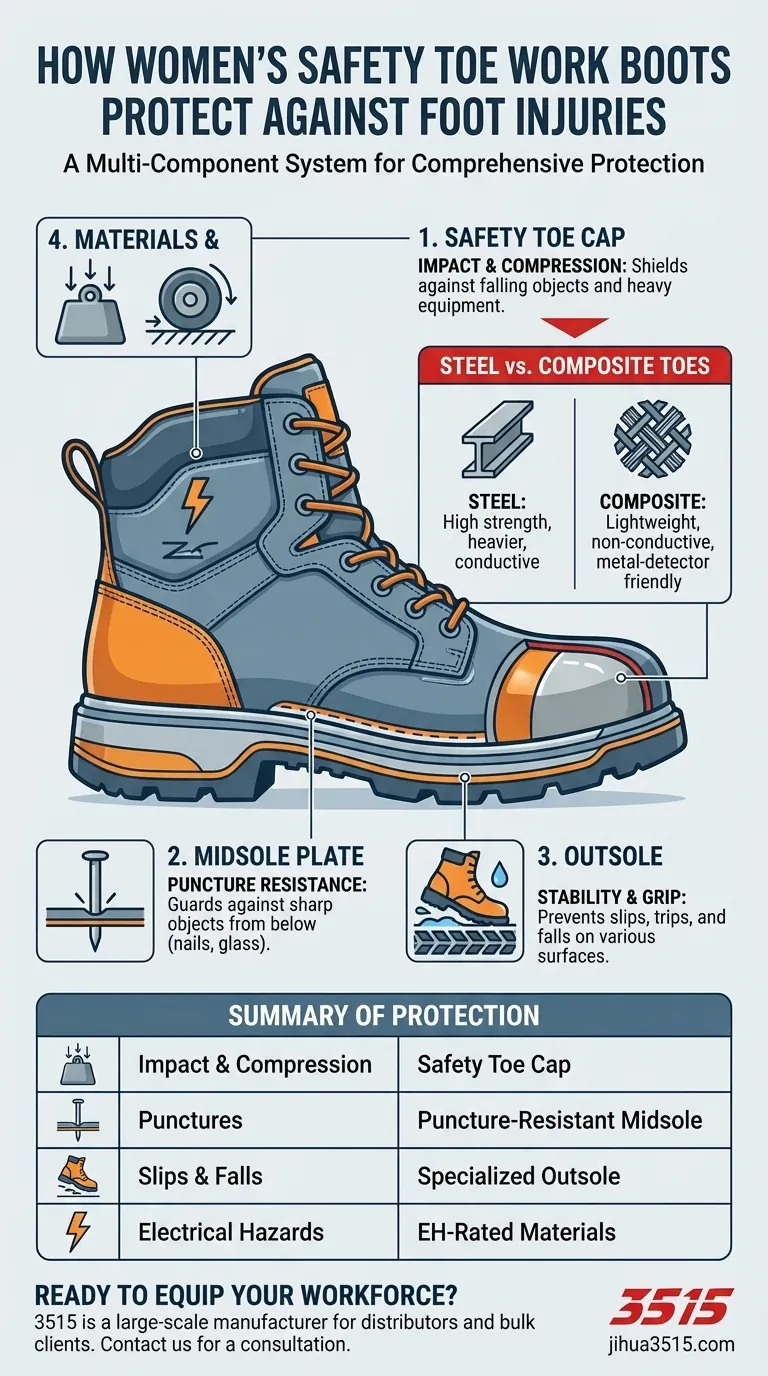
At their core, women's safety toe work boots protect your feet through a multi-component system designed to counter specific workplace hazards. This system goes far beyond a simple reinforced toe, incorporating features that guard against impact from falling objects, compression from heavy equipment, punctures from below, and environmental dangers like electrical shock and slippery surfaces.
A safety toe work boot is not a single feature; it's an integrated system of protection. Understanding how the toe cap, midsole, outsole, and upper materials work together is the key to mitigating the full spectrum of potential foot injuries.
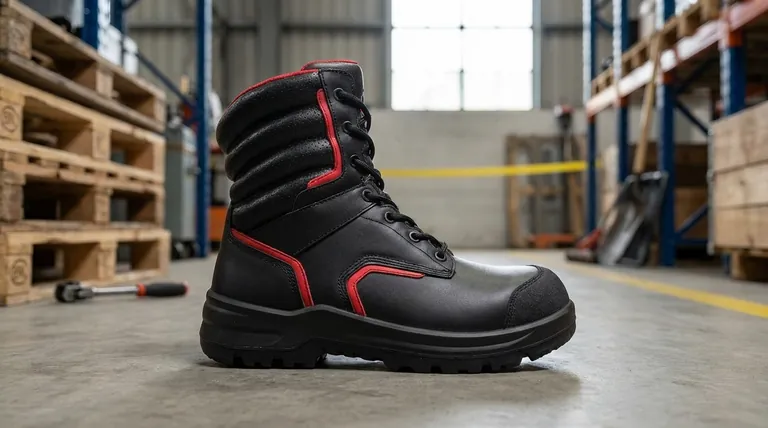
The Anatomy of Protection: A Systemic Approach
A truly protective work boot functions as a complete shield for your foot. Each component is engineered to defend against a different type of threat, and their combined effectiveness is what ensures your safety.
The Safety Toe: Your First Line of Defense
The most recognized feature is the safety toe cap. Its primary job is to protect your toes from two distinct dangers.
First is impact, which involves a heavy object falling directly onto the boot. Second is compression, which occurs when a heavy object, like a vehicle wheel or pallet, rolls over the foot.
The Midsole: Guarding From Below
Beneath your foot lies the midsole. High-quality safety boots incorporate a puncture-resistant plate, often made of steel or a flexible composite material like Kevlar.
This plate is critical for preventing injuries from sharp objects on the ground, such as nails, scrap metal, or glass, which could otherwise pierce the sole of the boot.
The Outsole: Ensuring Stability and Grip
The outsole is the part of the boot that contacts the ground. Its design is fundamental to preventing one of the most common workplace accidents: slips, trips, and falls.
Specialized tread patterns and oil-resistant materials provide crucial traction on wet, uneven, or slippery surfaces, forming a stable base that helps prevent sprains, fractures, and more severe fall-related injuries.
Materials and Construction: Shielding From Other Hazards
The materials used in the boot's upper construction provide protection against a range of environmental and workplace-specific dangers.
Many safety boots carry an Electrical Hazard (EH) rating, indicating they are built with non-conductive materials to provide secondary protection against accidental contact with live electrical circuits. Additionally, abrasion-resistant and cut-resistant materials shield against lacerations from tools or rough surfaces.
Understanding the Trade-offs: Steel vs. Composite
The choice of safety toe material is a critical decision that involves balancing protection, comfort, and environmental needs. Neither option is universally "better"; they simply serve different purposes.
Steel Toe Caps: The Traditional Standard
Steel has long been the industry standard for its exceptional strength. It can often withstand higher levels of impact and compression than composite materials.
However, steel is heavier, conducts temperature (making boots colder in winter and hotter in summer), and will set off metal detectors.
Composite Toe Caps: The Modern Alternative
Composite toes are made from non-metallic materials like Kevlar, carbon fiber, or plastic. Their primary advantage is that they are much lighter than steel and do not conduct electricity or temperature.
This makes them the mandatory choice for electricians and a preferred option for anyone who must frequently pass through metal detectors. While they meet all required safety standards, they can sometimes be slightly bulkier than a steel toe to achieve the same protection rating.
Making the Right Choice for Your Goal
Selecting the correct boot requires matching its specific features to the primary hazards of your job.
- If your primary focus is protection from heavy falling or rolling objects: Prioritize a boot with a high impact and compression rating; steel toes often provide the highest level of protection in this category.
- If your primary focus is working around live electricity: You must select a non-metallic composite toe boot with a certified Electrical Hazard (EH) rating.
- If your primary focus is preventing punctures from below: Ensure the boot explicitly features a puncture-resistant midsole, regardless of the toe material.
- If your primary focus is all-day comfort and mobility: Lighter composite toe boots are often the superior choice, especially in environments with extreme temperatures or security checkpoints.
Choosing the right safety boot is a critical investment in your personal well-being and effectiveness on the job.
Summary Table:
| Protection Feature | Guards Against | Key Component |
|---|---|---|
| Impact & Compression | Falling/rolling heavy objects | Safety Toe Cap (Steel/Composite) |
| Punctures | Nails, glass, sharp debris | Puncture-Resistant Midsole |
| Slips & Falls | Slippery, uneven surfaces | Specialized Outsole with Traction |
| Electrical Hazards | Accidental contact with live circuits | EH-Rated, Non-Conductive Materials |
Ready to equip your workforce with superior safety?
As a large-scale manufacturer, 3515 produces a comprehensive range of safety footwear for distributors, brand owners, and bulk clients. Our production capabilities encompass all types of safety boots and shoes, ensuring your team has the precise protection they need.
We can help you source or create the perfect women's safety toe work boots for your specific industry hazards.
Contact our expert team today for a consultation and discover how we can support your safety and sourcing goals.
Visual Guide
Related Products
- Durable Leather Moc Toe Work Boots for Wholesale & Custom Manufacturing
- Wholesale Customizable Safety Boots Durable & Protective Footwear Manufacturing
- Durable Leather Safety Boots for Wholesale & Custom OEM Manufacturing
- Durable Moc-Toe Wedge Work Boots | Wholesale Manufacturing for Brands
- Premium Waterproof Nubuck Safety Boots for Wholesale
People Also Ask
- What are moc toe work boots designed for? Superior Comfort and Mobility for Tradespeople
- What are the key features to look for when purchasing moc toe boots? A Guide to Durability & Fit
- How did moc toe boots originate? A Legacy of Workwear Durability and Style
- What clothing items complement the Outdoorsman/Heritage Look with moc toe boots? Build a Timeless, Rugged Wardrobe
- What types of outfits can moc toe boots be worn with? Versatile Style Guide