
At its core, wearing shoes indoors transforms hard, unforgiving floors into a supportive surface for your body. The right footwear provides critical arch support and cushioning that modern flooring lacks, which helps prevent foot pain, reduce joint impact, and improve overall posture by properly aligning your feet, knees, and spine.
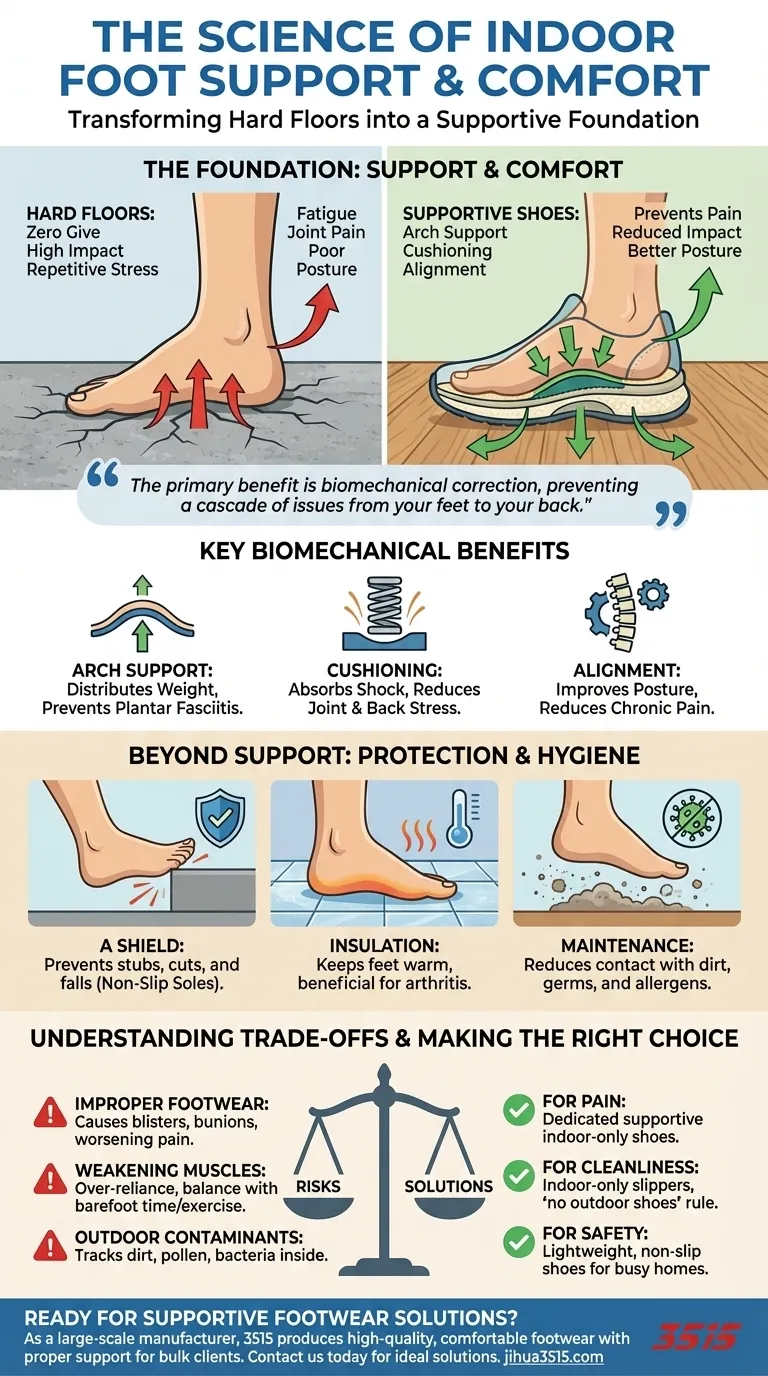
The primary benefit of wearing shoes indoors is not just about comfort, but about biomechanical correction. By providing the structure and shock absorption that hard floors lack, they can prevent a cascade of issues from your feet all the way to your back.
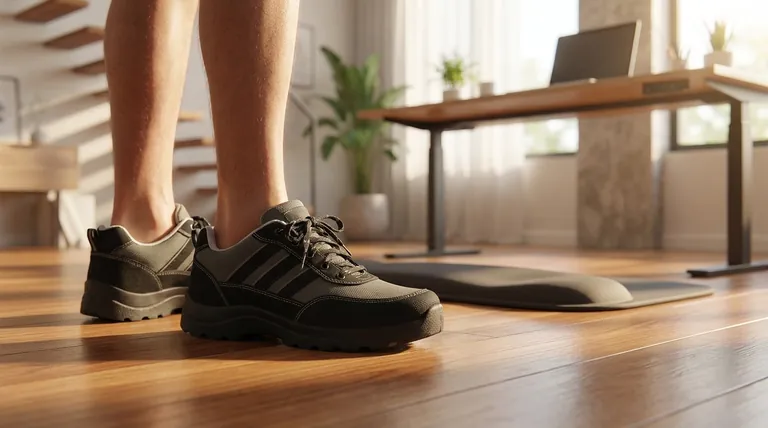
The Foundation of Support and Comfort
Walking barefoot on natural surfaces like soil or sand allows your foot to function as it was designed. Hardwood, tile, and concrete floors offer zero give, creating repetitive stress on your body. Indoor footwear acts as the necessary intermediary.
Combating Hard, Unforgiving Floors
Most modern homes are built with hard surfaces. Unlike natural ground, these materials do not absorb any of the impact from your steps. This forces your feet and joints to absorb 100% of the shock, leading to fatigue and pain over time.
The Role of Arch Support
Proper arch support is crucial because it distributes your body weight evenly across your feet. Without it, the arch can collapse under strain, leading to common and painful conditions like plantar fasciitis. Good indoor shoes prevent this by supporting the foot's natural structure.
Cushioning as a Shock Absorber
Cushioning in a shoe acts as a direct shock absorber. This reduces the jarring impact not only on your feet but also on your ankles, knees, and lower back. This is especially beneficial for anyone who stands for long periods while cooking or working from home.
Improving Posture and Alignment
Your feet are the foundation of your entire body. When they are properly supported and aligned, it creates a positive chain reaction. This helps correct your posture, align your spine, and can significantly contribute to reducing chronic back and joint pain.
Beyond Support: Protection and Hygiene
While biomechanical support is the primary benefit, indoor shoes also offer practical advantages for safety and cleanliness.
A Shield Against Everyday Hazards
Shoes provide a simple but effective barrier against common household injuries. They protect you from stubbing your toes on furniture, stepping on sharp objects like a child's toy, and can prevent falls with non-slip soles on slick surfaces.
Insulation from Cold Floors
Especially in colder seasons or climates, shoes insulate your feet from cold tile or wood floors. This thermal comfort is particularly beneficial for individuals with conditions like arthritis, where cold can exacerbate joint pain.
Maintaining Foot Hygiene
Floors accumulate dust, germs, pet hair, and other allergens. Wearing shoes indoors reduces your direct contact with these particles, helping to keep your feet clean and preventing the transfer of dirt throughout your home.
Understanding the Trade-offs and Risks
Choosing to wear shoes indoors is not without potential downsides. The key is to be aware of the risks and mitigate them with the right choices and habits.
The Danger of Improper Footwear
Wearing the wrong shoes indoors can be worse than wearing no shoes at all. Footwear that lacks adequate support or cushioning can cause blisters, foot pain, and contribute to long-term issues like bunions or plantar fasciitis.
The Risk of Weakening Foot Muscles
Over-reliance on highly supportive shoes at all times may lead to a weakening of the small, intrinsic muscles in your feet. It is essential to balance shoe-wearing with barefoot time and regular foot exercises to maintain natural strength and flexibility.
Introducing Outdoor Contaminants
The most significant risk is tracking outdoor contaminants inside. Shoes worn outside can bring in dirt, pollen, bacteria, and chemicals, which can compromise home cleanliness and air quality. This is a primary reason many opt for dedicated indoor-only shoes.
Making the Right Choice for Your Goal
The decision to wear shoes inside should be based on your personal health needs and household environment.
- If your primary focus is alleviating foot or back pain: Invest in a dedicated pair of supportive indoor-only shoes with excellent arch support and cushioning.
- If your primary focus is maximizing home cleanliness: Enforce a "no outdoor shoes" rule but consider using clean, comfortable house slippers or dedicated indoor shoes to get support without the contaminants.
- If your primary focus is preventing injuries: Choose a lightweight, non-slip shoe to navigate slippery floors or protect your feet in a bustling household with children or pets.
Ultimately, making a conscious choice about your indoor footwear is a powerful way to support your body's foundation from the ground up.
Summary Table:
| Benefit | Key Feature | Why It Matters |
|---|---|---|
| Biomechanical Support | Arch Support & Cushioning | Prevents foot pain, aligns spine, and reduces joint impact. |
| Protection & Safety | Non-Slip Soles & Toe Guard | Shields against injuries from slips, stubs, and sharp objects. |
| Hygiene & Comfort | Insulation & Barrier | Keeps feet clean, warm, and protected from cold floors and allergens. |
Ready to find the perfect supportive footwear for your home or business?
As a large-scale manufacturer, 3515 produces a comprehensive range of high-quality, comfortable footwear designed with proper arch support and cushioning for distributors, brand owners, and bulk clients. Our production capabilities encompass all types of supportive indoor shoes and slippers to meet your specific needs.
Contact us today to discuss how we can provide the ideal footwear solutions for your customers' well-being.
Visual Guide
Related Products
- Wholesale Durable Camouflage Canvas Shoes with High-Traction Cleated Rubber Sole
- Wholesale Comfortable Business Casual Shoes Custom Manufacturing
- Wholesale Modern Comfort Shoes with Dial Closure for Private Label & Bulk Orders
- Premium Suede Sport Safety Shoes for Wholesale & Bulk Orders
- Wholesale Durable & Breathable Training Shoes for Custom Brands
People Also Ask
- Why is the selection of high-strength fabric materials necessary in the production of canvas shoes and training shoes?
- What are the properties of canvas as a shoe material? A Guide to Lightweight Comfort & Style
- Can canvas shoes be worn in rainy conditions? The Truth About Water Resistance
- What are some examples of vulcanized shoes? Discover the Flexibility and Board Feel of Classic Sneakers
- What are the characteristics of canvas as a shoe material? A Guide to Lightweight, Breathable Footwear


















