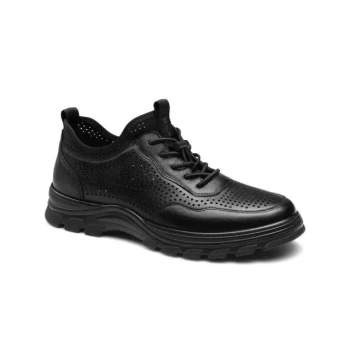
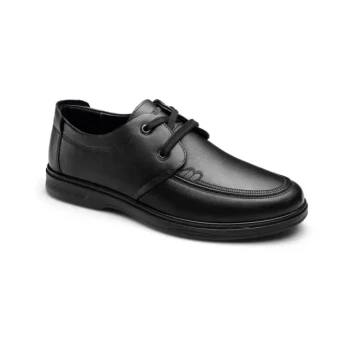
Professional footwear designed for users with metabolic conditions bridges the gap between aesthetic standards and medical necessity. By integrating wider toe boxes and specialized moisture-wicking linings, these shoes actively manage physiological issues like edema and infection risks common in corporate and industrial environments.
The core objective of these designs is to prevent skin breakdown in urban professionals who lack access to frequent rest. Effective management of foot volume and microclimate is not a luxury, but a critical preventative measure against infection.
Managing Physiological Volume Changes
The Necessity of the Wide Toe Box
Metabolic conditions frequently result in peripheral edema, causing the feet to swell throughout the workday. Standard dress shoes often constrict the foot, leading to pressure points and restricted circulation.
To counteract this, orthopedic-friendly corporate footwear incorporates wider toe boxes. This design allows the foot to expand naturally without encountering rigid barriers.
Reducing Friction and Pressure
By accommodating volume changes, these shoes prevent the friction that typically occurs when a swollen foot presses against the shoe upper.
This space is vital for preserving skin integrity. For individuals with metabolic issues, even minor friction blisters can escalate into serious health complications.
Controlling the Foot Microclimate
Breathability as Infection Control
Maintenance of a healthy environment inside the shoe—the microclimate—is essential for users with metabolic conditions. Excess moisture softens the skin, making it susceptible to bacterial and fungal entry.
Professional footwear in this category utilizes breathable, moisture-wicking linings. These materials actively pull sweat away from the skin, keeping the foot dry during prolonged wear.
The Urban Context
This feature is particularly critical for professionals working in urban or industrial settings.
These users often remain on their feet for extended periods without access to facilities for rest or hygiene. In this context, the shoe's internal lining acts as the primary defense against infection.
Understanding the Trade-offs
Aesthetic Compromises
While functional, these shoes often deviate from the sleek, tapered silhouettes of high-fashion formal wear.
The requirement for a wider toe box necessitates a bulkier profile. Users often have to accept a more utilitarian aesthetic to gain the necessary physiological protection.
Standardization vs. Customization
The primary reference notes these designs are often for "bulk corporate or industrial requirements."
This implies a focus on mass-market orthopedic solutions rather than bespoke tailoring. While effective for the general population, they may not address severe, unique foot deformities that require custom orthotics.
Making the Right Choice for Your Health
When selecting professional footwear to manage metabolic conditions, prioritize the feature that addresses your most immediate symptom.
- If your primary focus is managing swelling: Prioritize shoes with an explicitly wide toe box to ensure your foot has room to expand as the day progresses.
- If your primary focus is skin health and hygiene: Select footwear with certified moisture-wicking linings to maintain a dry microclimate and prevent bacterial growth.
Effective professional footwear should operate as a protective tool, securing your health while you secure your livelihood.
Summary Table:
| Feature | Physiological Benefit | Target Condition |
|---|---|---|
| Wide Toe Box | Accommodates swelling and reduces friction | Peripheral Edema |
| Moisture-Wicking Lining | Prevents bacterial/fungal growth and skin softening | Infection Risks |
| Orthopedic Design | Ensures circulation and preserves skin integrity | Metabolic Foot Issues |
| Industrial Durability | Provides protection during long, active workdays | Urban/Industrial Stress |
Secure Professional Excellence with 3515 Health-Focused Footwear
As a large-scale manufacturer serving distributors and brand owners, 3515 offers comprehensive production capabilities for all footwear types, anchored by our flagship Safety Shoes series. We understand that for professionals with metabolic conditions, the right shoe is a critical health tool. Our extensive portfolio covers work and tactical boots, outdoor shoes, training shoes, and sneakers, as well as Dress & Formal shoes designed to meet diverse bulk requirements without compromising physiological safety.
Partner with us to provide your clients with footwear that balances corporate aesthetics with medical-grade protection. Contact us today to discuss your bulk manufacturing needs and see how our expertise can add value to your brand.
References
- Hisham Abusaada, Abeer Elshater. Revisiting Urban Street Planning and Design Factors to Promote Walking as a Physical Activity for Middle-Class Individuals with Metabolic Syndrome in Cairo, Egypt. DOI: 10.3390/ijerph21040402
This article is also based on technical information from 3515 Knowledge Base .
Related Products
- Wholesale Leather Derby Dress Shoes Custom Manufacturer for Brands
- Wholesale Patent Oxford Dress Shoes | Custom & Bulk Manufacturing
- Wholesale Leather Derby Shoes Manufacturer | Customizable Business & Dress Footwear
- Classic Leather Derby Dress Shoes Wholesale & Custom Manufacturing
- Wholesale Comfort Dress Shoes with Dial Closure for Custom Manufacturing
People Also Ask
- What is the main difference between Derby Shoes and Oxford Shoes? It's All in the Lacing.
- What are the features and appropriate occasions for wearing derby shoes? A Guide to Versatile Style
- How do Derby shoes fit into business casual attire? Master the Perfect Balance of Professional Style
- What historical figure is associated with the Derby shoe? The Earl of Derby's Comfort Revolution
- What is the difference between Derby and Oxford shoes? A Guide to Choosing the Right Shoe